
Let’s help you
plan your journey
Explore responsibly, discover offbeat places, guided by locals, rooted in culture.
Let’s help you
plan your journey
Explore responsibly, discover offbeat places, guided by locals, rooted in culture.
Soumen Bhowmick
Soumen Bhowmick founded Pollen Dots in 2024 to plan journeys across India and Bhutan. He works in the Commercial Department of Indian Railways, where he has been since 2000. From 2016 to 2020 he was Head of Business Development and Partnerships at ScoutMyTrip, a community-driven road trip planning platform. There he built a nationwide network of local Scouts who helped travellers on the road, and grew the Road Trippers Club to 16 Indian cities. As a core member of Devil On Wheels, he helped travellers plan Himalayan trips and started Spreading Smiles. He has driven solo from Arunachal to Goa and from Himachal to Karnataka, and has run his own caravan for more than ten years. His photographs have won national and international salon awards, and his writing has appeared in Outlook Traveller.
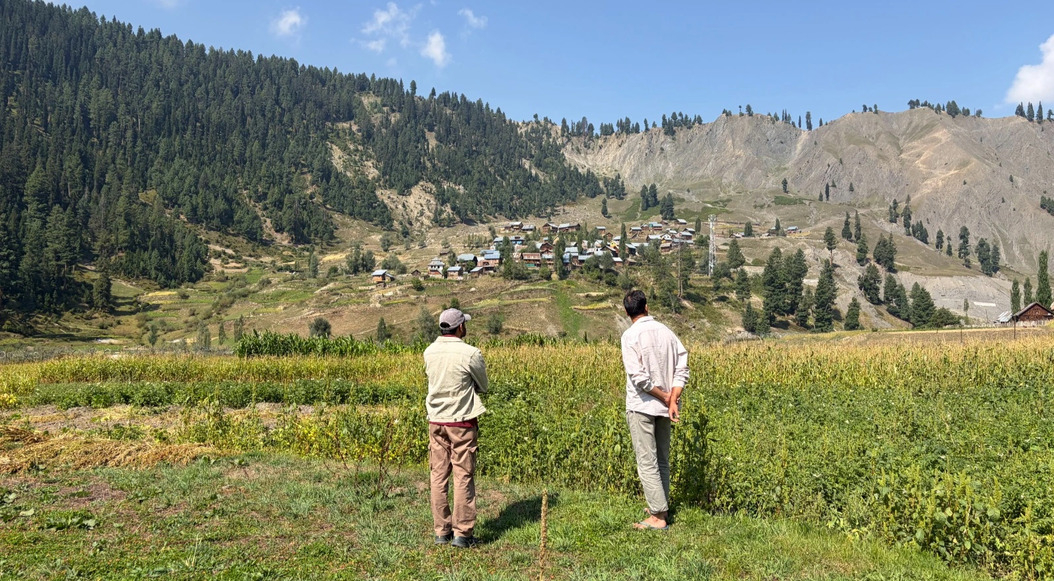
Anybody planning a customised India tour thinks hard about where to go, and almost nobody asks what the trip leaves behind. A journey changes two things, what a traveller understands and what the place actually gets, and both are settled by the company before anybody arrives. This article explains what Pollen Dots does, how those decisions get made, and why the chance to travel well should reach more people rather than fewer.
Most of what decides both of those happens before anybody leaves home. It is not glamorous work. It is choosing a month, drawing a route, deciding where the nights fall and being honest about how long the driving takes. That is the job, and it is where this company spends its time.
We plan journeys across India and Bhutan. Some are for people travelling on their own account, and some are for organisations bringing a group.
The work splits six ways. Custom journey planning, where somebody comes to us with an idea and we build the route. Ready-made journeys they can take as they are. Destination events. Corporate travel with a purpose attached. CSR work on the ground. And brand journeys, where a company travels in public to show something rather than announce it.
One idea holds those six together. The season, the route, the rooms and the pace are all chosen before a traveller arrives, which makes them our decisions and not theirs. The article that defines Care-Based Travel sets that position out in full, and why it matters to me personally is a separate piece.
Here is the part nobody says out loud.
You choose where to go and when. Somebody else chooses the route inside your dates, and the route decides whether you get two hours in a village or twenty minutes. Somebody else chooses where the nights fall, and that decides who you talk to in the evening and how much of the day you spend driving.
A traveller cannot undo any of that once the trip has started. By the time you can see the problem, the decision that caused it was taken months earlier by somebody you have never met.
This is why we do not think a journey is good because it is short, slow or expensive. A seven-day route through six places can be excellent if every stop was chosen for a reason and the driving between them was planned honestly. The same route is awful if the stops were picked off a map and the hours were underestimated. The number of places is not the test. Whether somebody did the work is the test.
Whether a journey works or not is decided by its design, not by its length.
Every journey changes two things, and a company decides most of both.
The first is what the traveller takes away. You can read about a place for a year and still be guessing. Two days of being there and paying attention does something that reading cannot. You stop needing somebody else's summary of a place. That is the thing travel offers which nothing cheaper does, and it is the reason it is worth doing properly.
The second is what the place is left with. Money reaches some people and not others, depending on where you sleep and where you eat. A village sees twenty visitors in a week or two hundred, depending on the month somebody picked. A family is treated as hosts or as scenery, depending on how the day was planned. None of that is the traveller's doing.
So the impact of a journey is not a separate programme bolted onto the end of it. It is the sum of the ordinary planning decisions, and those get made whether anybody thinks about them or not.
That leads to the part that matters most to me. If a well-designed journey does both of those things, the question becomes how many people get one. A company that sorts travellers by budget first has decided in advance how far its own work can reach.
If all you can change is the destination and the dates, it is not a customised journey. It is a package with a few switches on it.
Here is what actually differs between travellers. Budget. Pace, which is the one most people underestimate. Physical needs, which covers altitude, walking distance and how long somebody can sit in a car. Food. Interests, so that the person who came for birds is not taken round monasteries for three days. How much contact they want with other travellers. And timing, because the same place in two different months is two different places.
We ask about all of those before there is a route. The first of the nine working principles on our about page is We Listen Before We Plan, and it is first because everything else depends on it.
The journey that fails is usually the one that got seven of those right and ignored the eighth.
The design happens before you arrive, and it happens in a fixed order.
Season first, because it decides what is open, what is passable and what the place is actually like when you get there. Then the route, which means hours in the car and not kilometres on a map. Then where the nights fall, which quietly decides how much of each day you spend driving. Then the stays, chosen for where they are as much as for what they are.
The piece on planning a journey properly uses a corporate retreat as its worked example, but it describes the same Journey Architecture we use for everything, including a two-night trip.
Some journeys get designed while they are happening. You drive, you share your location with us as you go, and we send you the next stop. By lunchtime we work out where the night should be, based on where you have actually reached, and we arrange it. A two-day drive through Meghalaya run exactly that way is written up in full, including the uncomfortable parts.
It depends on the journey. I know that is not the answer anybody wants, so here is the useful version.
We do not publish a price list. Seven things set the cost. Where you go. When you go. How long you travel. How many of you there are. What standard of room you want. How much driving is involved. And what has to be arranged locally. Change any one of them and the number changes.
So we start with what you actually want and work out what it costs. If that figure does not fit your budget, we tell you, and we show you what would have to change. It is usually one of three things. A shorter trip. A different season. Or a simpler place to stay for part of the route.
What we will not do is quietly thin out a journey to reach a number and let you find out on the road. That happens a great deal in this business and it is where most complaints come from.
Some costs will not move. A permit costs what it costs. A road takes the time it takes. Rooms in Ladakh in July are expensive because everybody wants them. We would rather say that while we are planning than send you somewhere that was never going to work.
This is the part I had in mind before the company existed.
I did not want to build a luxury operator or a budget one. Both labels describe the money rather than the person. Someone travelling cheaply may care a great deal about meeting people and not at all about the room. Someone spending freely may want nothing more than a quiet week and a good bed.
Our work has gone across most of what India contains. Different incomes, ages, states, industries and reasons for travelling. I never found a pattern where the people paying more deserved more thought.
So the attention a journey gets does not go up with its price. We check the route the same way. We choose the stays the same way. If something goes wrong at two in the morning, we answer the phone the same way. That is a rule about how we work, not a nice thing to say.
It does not mean every journey is possible on every budget. It means we start with you and what you are hoping for, instead of a bracket somebody has already put you in.
Our services page uses names like Journeys Just for You and Ready-to-Flow Experiences. Here is what they mean in plain words.
Weekend getaways. One night, two or three, usually within driving distance. Built around what you want from a short break rather than a list of sights. Short trips need more design and not less, because there is no slack in them.
Road trips. Journeys where the driving is the point. These run two days or two months. The length comes from the route and the people, not from a template. Why I take country roads over highways explains how we think about routing them.
Road trip planning. For people driving themselves who want the route worked out and the nights booked, without us in the car. This is the one that most often runs live.
Custom and ready-made journeys. A custom journey starts from a conversation. A ready-made one is already routed, and you can take it as it is or change it. Both are designed the same way. The only difference is whether the design happened before you came to us or because you did.
The work for organisations splits three ways. On our services page these are called Work with Heart, Impact in Action and On-Ground Brand Movements.
MICE and corporate travel. Offsites, retreats, dealer and channel programmes, incentive trips. A group has a purpose attached to it, and that purpose usually fails for logistical reasons rather than for want of content. How to plan a corporate retreat people actually remember covers the method. What a company leaves behind when it travels covers the part most offsites never look at.
CSR travel and community engagement. Work where the point is what happens at the destination, not what the travellers get out of it.
Brand journeys and promotional drives. A company travelling in public, usually with media or creators, to show something instead of announcing it. Media drives, activations and route-based campaigns sit here.
Everything else in this article starts with the season. A destination wedding is the one journey where that decision is already made and cannot move.
The date comes from the families, the calendar, sometimes an auspicious window, and it is fixed long before anybody looks at a route. So the planning inverts. Instead of choosing the month to suit the place, you take the month you are given and work out what the place is actually like then. What will be open. Who can still be reached. What the weather will do to anything held outdoors.
The guests make it harder in a way a company group does not. An offsite travels on the company's terms and the attendees accept them. Wedding guests arrive on their own account, across a range of ages and mobility. Nobody can be told to put up with a long transfer or a room up two flights of stairs. The arrangements have to work for the least mobile person on the list, not the average one.
Company events sit here too, where the location was chosen for a reason rather than for a room rate. On our services page all of this is called Celebrations in Place.
These get sold as three different things. In practice they overlap constantly, because the decisions that make one work make the others work too.
Slow travel means giving a place enough time to stop performing for you. It is not a rule about how many stops a journey has. A week in one valley can be slow travel, and so can a ten-day route through six places if each day has room in it.
Cultural travel stops being a museum list the moment you attach it to a calendar. Festivals reorganise a place for weeks either side of the date, which is the most useful single thing to know when you are choosing dates. Twelve festivals worth planning around are set out with their months. Our Spiti journey timed to the Ladarcha fair exists for exactly that reason. Food works the same way, and what a region eats explains more about it than most guidebooks do.
Rural and village travel is where a lot of our work happens, because that is where the places we know are. The cultural places most people miss are nearly all of this kind. What makes it work is spending money locally and arriving as a guest rather than an audience. That sounds obvious and it is got wrong constantly.
Pilgrimage and spiritual travel is its own thing and we treat it that way. The Char Dham and Panch Prayag route is planned around people for whom those places are not scenery.
Most responsible travel advice is written for the traveller. Carry a bottle. Ask before you photograph somebody. Buy local. All of it is right, and none of it touches the decisions that matter most.
The operator picked the route, which decides which villages see your money. The operator picked the stays, which decides who gets employed. And the operator decides whether to tell you your dates are wrong for where you want to go, which few will do, because it costs them the booking. What to ask before you book gives you the questions to put to any company, including us.
Three other pieces follow where this leads. Where responsible travel destinations actually are and how to reach them. What travellers say about sustainable travel, against what they do, which is not a flattering comparison. And whether ecotourism in India benefits local communities, which looks at who actually gets paid.
We write those because we have to make the same decisions. Getting them wrong in public is a reasonable way to be held to them.
These three get used as badges. We would rather tell you what we do and let you decide whether the word fits.
Regenerative travel means leaving a place measurably better than you found it. The measuring is the whole claim. We design journeys to put money into village economies, to arrive when a place is not already full, and to work with people who live there. We do not measure the result, so we do not use the word about ourselves. The reserve at Selbagre in the Garo Hills is what the real thing looks like. Eighty hectares, given up by the villagers themselves in 2007 to protect the hoolock gibbon, and done by a community rather than by a travel company.
Ethical travel comes down to who gets paid and who gets asked. We book local stays and local drivers where they exist. We pay before we are chased. We do not build a journey around a community without that community knowing. That is a standard, not an achievement.
Wellness travel usually means a spa. What people actually ask us for is quieter than that. Time, fewer stops, and permission to do nothing. We plan it often, under pace and privacy rather than under a wellness label. The journeys we run through Assam and Meghalaya are built at that speed.
The three things we do run are named on our care page. Ambassador of Smiles, which is about leaving room in a route for real encounters. Architects of Cultural Exchange, which is about arriving when a place is living its own life. Stewards of Sustainability, which is about the choices a route makes about the land it crosses.
Tell us the idea before the itinerary.
The most useful first message is not a list of places. It is when you can travel, roughly how long for, who is coming, what you want out of the trip, and any budget you already have in mind. That is enough for us to tell you what is realistic and what it would cost, which is usually the first thing anybody wants to know.
If you already have a route, send it, and we will tell you what we would change and why. If you have no idea at all, that is a shorter conversation than you would expect.
And if what you want is not something we can do well, we will say so. There are places we do not know properly and seasons we would advise against. A journey we plan badly costs us more than a journey we never plan at all.
Pollen Dots plans customised journeys across India and Bhutan, for individual travellers and for organisations. It also runs corporate travel, CSR programmes, brand journeys, and destination weddings and events. A set of ready-made journeys is published as well, which can be taken as they are or changed.
There is no fixed price, because seven things set it: the destination, the season, the length, the group size, the room standard, the amount of driving and what has to be arranged locally. Pollen Dots quotes against the journey you actually want rather than against a package tier. If the figure does not fit, the options are a shorter trip, a different season, or a simpler place to stay for part of the route.
Neither, and that is deliberate. The company does not use price tiers, because budget tells you very little about what a traveller actually wants. Planning starts with the person and their requirements, and budget is one of several things that shape the result.
The difference is where the responsibility sits. Most planning hands the traveller a list of things to do well once they arrive. Pollen Dots treats the season, the route, the stays and the pace as decisions the operator makes beforehand. A journey is judged by whether those decisions were thought through, not by how long it runs.
Yes. Weekend getaways run one, two or three nights, and they are planned around what you want from a short break rather than around a list of sights. Short trips need more design than long ones, because there is no spare time in them.
Yes, and it is a different service from a guided road trip. The route, the stops and the overnight stays are planned for a self-driven journey. The plan can also be run live while you are driving, with the next stop sent to you as you go.
Offsites and retreats, dealer and channel programmes, incentive travel, CSR work on the ground, and brand journeys and promotional drives. Planning for a group is a different problem from planning for one traveller, because the purpose has to survive the logistics.
No. The published journeys run through Ladakh, Spiti, Himachal, Uttarakhand, Rajasthan, Gujarat, Kerala, Karnataka, Goa, Odisha, Jharkhand, Sikkim, Darjeeling, Bengal and Bhutan, as well as Assam, Arunachal and Meghalaya.
No. A journey covering six places can be excellent if each stop was chosen for a reason and the driving between them was planned honestly. The same route is poor if the stops came off a map and the hours were underestimated. The number of places is not the test.
No, and the word is avoided on purpose. Regenerative means leaving a place measurably better than you found it, and the measuring is the claim. Pollen Dots designs journeys to put money into local economies and to arrive when places are not already full, without claiming a result it does not measure.
For most routes, four to eight weeks is enough to get the season and the stays right. Festival dates, Ladakh in high season and anything over a long weekend need longer, often three to six months, because small places run out of rooms early.
When you can travel, roughly how long for, who is coming, what you want out of the trip, and any budget you already have in mind. A list of places is less useful than the idea behind the trip, because the route can be built once the purpose is clear.
Journeys through places the company does not know properly, and seasons it would advise against. A badly planned journey costs more in reputation than a declined one costs in revenue, so the honest answer comes at the enquiry stage.