
Let’s help you
plan your journey
Explore responsibly, discover offbeat places, guided by locals, rooted in culture.
Let’s help you
plan your journey
Explore responsibly, discover offbeat places, guided by locals, rooted in culture.
Soumen Bhowmick
Soumen Bhowmick founded Pollen Dots in 2024 to plan journeys across India and Bhutan. He works in the Commercial Department of Indian Railways, where he has been since 2000. From 2016 to 2020 he was Head of Business Development and Partnerships at ScoutMyTrip, a community-driven road trip planning platform. There he built a nationwide network of local Scouts who helped travellers on the road, and grew the Road Trippers Club to 16 Indian cities. As a core member of Devil On Wheels, he helped travellers plan Himalayan trips and started Spreading Smiles. He has driven solo from Arunachal to Goa and from Himachal to Karnataka, and has run his own caravan for more than ten years. His photographs have won national and international salon awards, and his writing has appeared in Outlook Traveller.
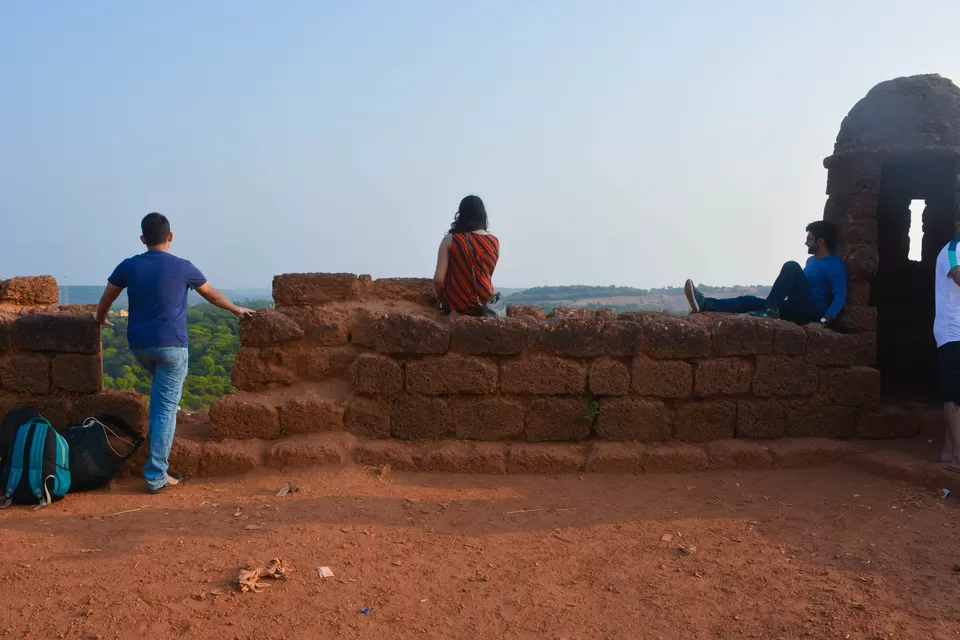
Most destinations in India are already familiar before anybody arrives, through a film, a song, a match or a chapter of history. That familiarity is made of fragments, and the trouble is that a fragment feels like knowledge, so people arrive looking for something they have already decided is there. Notice what you already think a place is, then go and find out which parts of that were true.
A city appears briefly in a film scene. A mountain road stays with you through a song. A stadium becomes familiar over years of watching matches there. A town enters your head through a novel, or a chapter of history read at school and never checked since. By the time you reach any of these places, it already exists in your head in pieces, and the pieces arrived without you choosing them.
Because places travel long before people do.
A film shoots in a valley and the valley becomes a destination. A song is set on a road and the road fills up. A team plays in a city for twenty years and the city becomes a name you have opinions about without ever having been. A textbook chapter fixes a town in your head at the age of twelve and sits there unchallenged for thirty years.
None of this is a problem by itself. It is how anybody comes to want to go anywhere.
The problem is what it does to the visit. A fragment feels like knowledge. So you arrive holding a picture, and you spend the trip checking the picture rather than looking at the place. If what is there does not match, it registers as disappointment rather than as information.
The fix is small. Know what you brought with you. That single act of noticing is most of what care-based travel asks for before a journey even starts.
More than any tourism board ever has, and usually without meaning to.
A location appears on screen for ninety seconds and becomes a place people fly to. The film was not about the place. The place was scenery. But scenery is what gets remembered, and within a year there is a viewpoint, a queue, and somebody selling tea at it.
The same happens with books, and it lasts longer. A novel set somewhere gives that place a mood, and the mood outlives everybody who read it.
What this does is narrow a place to one impression. A whole district becomes a single frame. Everything the film did not show turns invisible, including most of what the people living there would tell you about.
That is worth knowing before you go, because it explains why the famous viewpoint is crowded and the road behind it is empty.
I have written separately about how films, books and stories shaped my own sense of places, including the ones I had completely wrong.
Where it sits, what grows there, and who has passed through.
Food is the least edited thing about a place. A tourism campaign chooses what to show. A kitchen cannot easily lie about what is available.
A coastal cuisine is different from an inland one three hours away, because the ingredients are different and the storage problem is different. A border district eats like both sides of the border. A trading town eats like everywhere its traders went.
That makes food the fastest way to work out what a destination actually is, as opposed to what it is marketed as. A place that presents itself as one thing and eats like another is telling you something about its history.
Two pieces go further into this. Indian destinations explained through regional food culture takes it region by region. What local food teaches you about a place is about how to read a plate anywhere.
It becomes a different place, briefly and completely.
Streets that were quiet fill up. Buildings that were shut open. People who work elsewhere come home, and the population of a small town can double for a week. Food appears that is not made at any other time of year. The whole social order of a place gets rearranged in public, where you can see it.
This is both the best week to visit and the worst week to visit, and both are true at the same time. You will see more of what a place values in three days than in a month of ordinary visiting. You will also see none of its ordinary life, because ordinary life has been suspended.
So a festival is not a substitute for knowing a place. It is a concentrated version of one part of it.
How festivals temporarily reshape Indian destinations goes through what changes, and what it costs the people living there.
By attaching a single story to it that then refuses to move.
Sport does it fastest. A stadium, a team, one match somebody remembers, and a city acquires a character in the minds of people who have never been. Ask anybody about a cricketing city and you will get a confident answer built entirely on television.
History does it more slowly and more permanently. A place that was the site of one event becomes that event. A fort town is a fort. A battle site is a battle. Everything that happened there in the four hundred years since gets filed behind the one thing in the textbook.
Both are useful entry points and both are traps. They give you a reason to go, and then they tell you what to look at once you are there.
The test is simple. Ask what a place was doing before the thing it is known for, and what it has been doing since.
Pick for what a place makes possible, not for where it sits on a list.
A destination is not a rank. It is a set of things that can happen there and cannot happen anywhere else. A coastal town in the monsoon and the same town in January are two different propositions, and only one of them may be what you want.
Four questions do most of the sorting.
What is this place actually doing in the month I am going?
Is there more than one thing to look at, or is it one sight and a car park?
Can I get around it slowly, on foot or on a small road?
Is there any reason for somebody to talk to me, or am I only there to look?
The last one decides more than the other three. Places where you have a reason to be somewhere give you something back. Places where you only look give you photographs.
And how you get there is part of the choice. The road you take changes which version of a region you see.
Whether it would still be doing what it is doing if you did not come.
That is the whole distinction, and it is worth applying honestly, because plenty of places are both at once on different streets.
A market that would run tomorrow whether or not a visitor arrives is a living place. A stall selling only souvenirs is not, though it may be perfectly pleasant and the person running it needs the income.
Neither is better than the other. But they answer different questions. A tourist place tells you what a destination thinks visitors want. A living place tells you what the destination is.
The most useful hours are usually the ones when the tourist version is closed. Early morning, the middle of a hot afternoon, the day after a festival ends.
What ordinary life shows you is the same skill applied at the scale of a destination rather than a street.
Read about the place rather than about visiting it.
That one substitution changes everything. Travel writing tells you what to do there. Local news, district records, agricultural reports and regional writing tell you what is happening there.
Four things worth knowing before any trip.
What the main work is, and whether it is going well.
What the season is doing, since half of India runs on a completely different timetable depending on the month.
What has changed recently, because a place in the middle of something is a different place.
What the land is like, since terrain decides more than culture does about how people end up living.
None of this takes long. An hour of the right reading beats a week of the wrong kind.
And it changes what you notice once you arrive, which is the only measure that matters. A destination is not a place you go to. It is a place you understand slightly better on the way out than you did on the way in.
Whether it would still be doing what it is doing if visitors stopped coming. A market that runs tomorrow either way is a living place. A stall selling only souvenirs is not. Most places are both at once on different streets, and the useful hours are the ones when the tourist version is closed.
A location appears on screen for a minute or two and becomes somewhere people travel to, usually within a year. The film was rarely about the place, so what gets remembered is one frame. Everything outside that frame stays invisible, which is why the famous viewpoint is crowded and the road behind it is empty.
Choose for what a place makes possible rather than for where it sits on a list. Ask what it is actually doing in the month you are going, whether there is more than one thing to see, whether you can move around it slowly, and whether there is any reason for somebody to talk to you.
It is the best week and the worst week at the same time. You will see more of what a place values in three days than in a month of ordinary visiting. You will also see none of its ordinary life, because that has been suspended. Go for the festival, but do not mistake it for the place.
Read about the place rather than about visiting it. Travel writing tells you what to do there. Local news, district records and regional writing tell you what is happening there. Find out what the main work is, what the season is doing, what has changed recently, and what the land is like.
Where it sits, what grows there, and who has passed through. Food is the least edited thing about a place, because a kitchen cannot easily lie about what is available. A border district eats like both sides of the border. A trading town eats like everywhere its traders went.
Usually because you arrived holding a picture made from a film, a song or a photograph, and you spent the visit checking that picture rather than looking at the place. When what is there does not match, it registers as disappointment instead of as information. Knowing what you brought with you fixes most of it.
Long enough for a pattern to repeat, which usually means at least two full days. One night gives you a single morning and no way to tell whether it was typical. Fewer places for longer will teach you more than more places for less, almost every time.
No. Famous places are usually famous for a reason, and avoiding them on principle is its own kind of posturing. What matters is the hours you keep and how much time you give a place, not how few other visitors are there.
It depends entirely on the region. October to March suits most of the country. The Himalayas open from roughly May to October. The monsoon is remarkable in the Western Ghats and difficult almost everywhere else. Check the season for your specific route rather than for the country as a whole.
Be out at the hours the tourist version is closed. Early morning, the middle of a hot afternoon, and the day after a festival ends. Eat where local people eat, use local transport at least once, and give yourself a reason to be somewhere rather than only to look at it.