
Let’s help you
plan your journey
Explore responsibly, discover offbeat places, guided by locals, rooted in culture.
Let’s help you
plan your journey
Explore responsibly, discover offbeat places, guided by locals, rooted in culture.
Soumen Bhowmick
Soumen Bhowmick founded Pollen Dots in 2024 to plan journeys across India and Bhutan. He works in the Commercial Department of Indian Railways, where he has been since 2000. From 2016 to 2020 he was Head of Business Development and Partnerships at ScoutMyTrip, a community-driven road trip planning platform. There he built a nationwide network of local Scouts who helped travellers on the road, and grew the Road Trippers Club to 16 Indian cities. As a core member of Devil On Wheels, he helped travellers plan Himalayan trips and started Spreading Smiles. He has driven solo from Arunachal to Goa and from Himachal to Karnataka, and has run his own caravan for more than ten years. His photographs have won national and international salon awards, and his writing has appeared in Outlook Traveller.
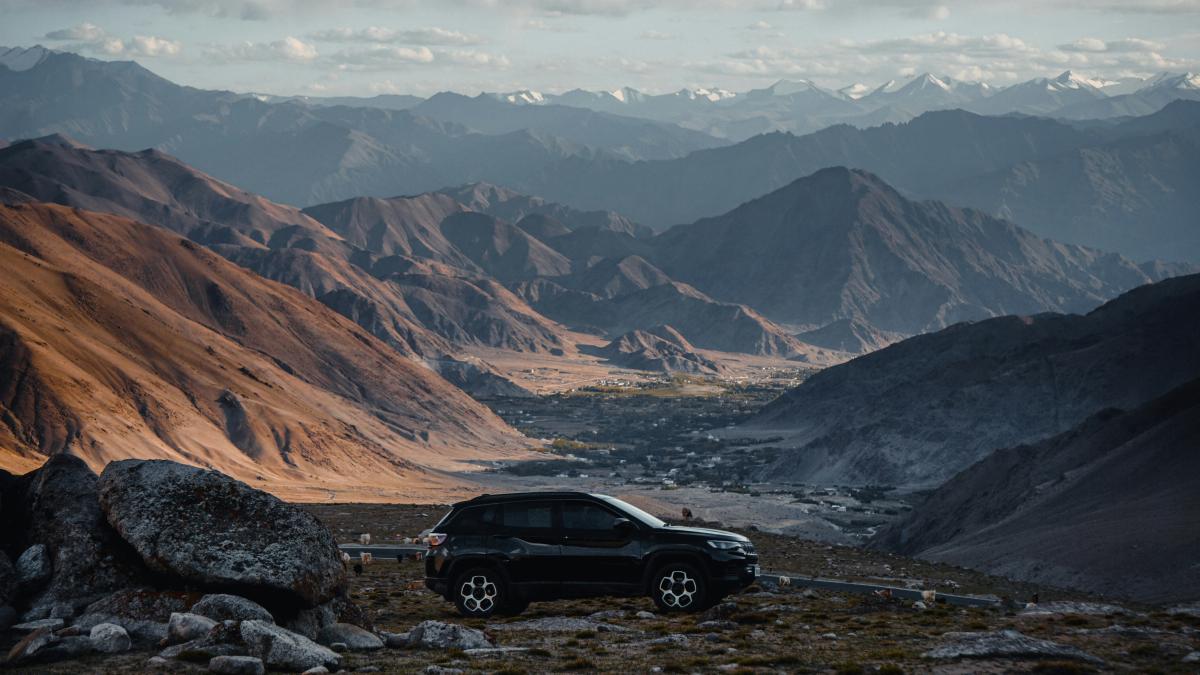
Slow road trips sound like driving slowly, which puts most people off before they have understood what is being proposed. The driving speed is the same, and what changes is the road, because a highway is built to remove everything between two points while a country road leaves all of it in. You arrive later, but you arrive having passed through villages, markets and roadside kitchens instead of past them.
I have never planned a journey by asking what the fastest route is. Not for myself, and not for anybody I have designed a road journey for. The question I start with is what kind of life runs between the two places, because that is the thing you either see or you do not, and the road decides which. Everything else about a road trip follows from that one choice.
A journey where the route was chosen for what it passes through rather than for how long it takes.
That is the whole definition. It says nothing about speed and nothing about how many days you have.
You can do it on a weekend. You can do it on a two-week drive. The only decision that matters gets made before you leave, when you look at a map and pick the line that goes through places rather than around them.
Most people do the opposite without noticing. The navigation app offers the fastest route, you accept it, and that route has been engineered to avoid exactly the things worth stopping for. Towns are bypassed. Villages are not on it at all. The road is deliberately empty, because empty is fast.
None of this is a criticism of highways. They do what they were built to do very well. It only means the default option removes the content of the journey, and nobody mentions that at the start.
This is care-based travel applied to the part of a trip most people treat as dead time.
Because on a highway you see vehicles, and on a country road you see people.
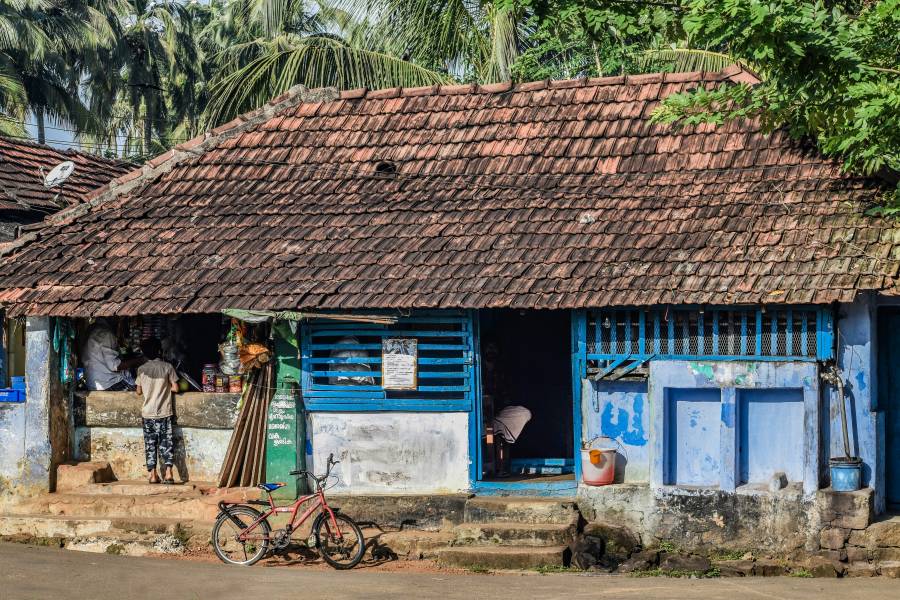
That is not a poetic distinction. It is literal. A highway is fenced, raised and separated from settlement by design, so what passes the window is other traffic. A country road runs through the middle of whatever is there.
Homes opening for the day. Fields being worked. Children cycling to school. Elders sitting outside. A weekly market assembling. Cattle being walked across in front of you.
You stop being somebody covering distance and become somebody moving through a place where people live. That changes how you drive, where you stop and what you notice, and it happens without any effort on your part.
There is a cost, and it should be said plainly. It takes longer. Surfaces are worse. You will get stuck behind a tractor. If your only measure is arrival time, the highway wins every time and you should take it.
The question is what the journey was for.
Start from the map rather than the app, and look at what the fast route is avoiding.

Four substitutions do most of the work.
State highways instead of expressways. They go through towns rather than around them, and they are usually well surfaced.
Village roads instead of bypasses. A bypass exists precisely because there was something worth going around.
Ridge roads instead of tunnels. A tunnel saves forty minutes and removes the view the whole drive was for.
Routes that follow a river instead of straight cuts. A road that follows water passes through everything that grew up along it.
Then check the season. A route that is fine in November may be closed or miserable in July, and an app will not tell you that clearly.
And look at the terrain before you commit. Why a road bends tells you a lot about what is on it. Roads that follow a ridge or a river were built around something, and that something is usually worth seeing.
The things that were never going to be on an itinerary.
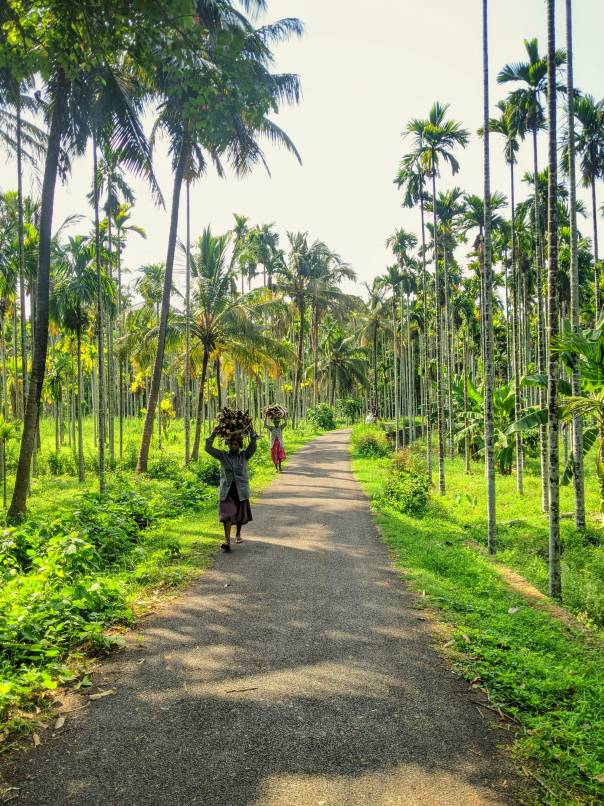
A tea stall where the owner ends up telling you about the village school. A fruit seller who insists you taste what grows behind his house. A river crossing where you stay longer than you planned. A kitchen where one dish has been made the same way for fifty years.
None of these can be scheduled and none of them appear in a search result. They exist because you were there at an ordinary hour, on a road that people actually use.
Food is the clearest example. Highway restaurants are built for people passing through and cook accordingly. A roadside kitchen on a country road cooks for the people who live there, which is why it is better and cheaper, and why the menu is three items long.
The hour matters as much as the road. What a place is doing at seven in the morning is visible from a village road and invisible from an expressway.
Mostly yes, with a few real cautions worth taking seriously.
State highways and well-used village roads carry local traffic every day, which is the best indicator there is. A road with buses on it is a road that works.
What genuinely needs care:
Drive in daylight. Most rural roads have no lighting, unmarked speed breakers, and livestock on them. Night driving is where the actual risk sits, not the road itself.
Expect the road to be shared. Cattle, tractors, pedestrians, cycles and children all use the same surface. Slow down through every settlement without exception.
Fuel earlier than you think you need to. Pumps thin out and some close early.
Check the season before you go. Monsoon damage and landslides close roads with no notice, and the closure is often local knowledge rather than published information.
Carry a spare, and expect mobile coverage to disappear for stretches.
None of this is exotic. It is the same care anybody driving locally takes, applied by somebody who does not know the road.
Less than you think, and the number is in hours rather than kilometres.
On highways people plan five hundred kilometres in a day and manage it. On country roads the same figure is exhausting and self-defeating, because you will stop for nothing in order to make the distance.
Two hundred and fifty kilometres is a comfortable day. Three hundred is a long one. Below two hundred you have time to stop properly, which is the entire reason you chose the road.
Plan by daylight rather than by distance. Work out when the light goes, subtract an hour, and let that set the day.
And leave one stop unplanned. A day scheduled to the last thirty minutes cannot absorb the thing that turns out to be the best part of it. That thing shows up on almost every journey, if there is room for it.
Yes, and the reasoning does not change. What changes is the consequence of getting it wrong.
When the people in the vehicles are journalists and creators rather than guests, the road is still chosen for what it will show them, not for how fast it moves them. The stops still matter more than the distance. A group that spent four days on a road passing through something has material. A group moved efficiently between hotels has photographs of hotels.
The difference is scale and risk. A convoy carrying people who cannot be inconvenienced needs support vehicles, medical cover, fuel planning, and a route somebody has already driven. A wrong turn on a personal trip is a story. On a media drive it is forty vehicles committed to a road with no turning point.
Three pieces cover that work in detail. How a car launch media drive is planned in India covers the sequence of decisions on one specific format. Why road journeys keep generating coverage covers what makes the output last beyond the week it happened in. And what a brand road trip should actually be about covers the part that comes before any planning at all, which is finding an idea worth travelling for.
The road is the instrument in all of them. What it is being used for is the thing that changes.
A journey where the route was chosen for what it passes through rather than for how long it takes. It says nothing about speed or about how many days you have. The decision gets made before you leave, when you pick the line on the map that goes through places rather than around them.
No. The driving speed is the same. What changes is which road you take. A highway is built to remove everything between two points, and a country road leaves all of it in, so the journey takes longer without anybody driving more slowly.
Generally yes, if you drive in daylight. State highways and well-used village roads carry local traffic daily, which is the best indicator there is. The real risks are night driving, unmarked speed breakers, livestock on the road, and seasonal closures that are local knowledge rather than published information.
Two hundred and fifty is a comfortable day and three hundred is a long one. Below two hundred you have time to stop properly. Plan by daylight rather than distance: work out when the light goes, subtract an hour, and let that set the day.
Yes, and often better than a highway drive. There is more to look at, more reason to stop, and the stops are more interesting than a service plaza. Shorter days and unhurried halts suit children better than long stretches at speed.
It depends entirely on the region. October to March suits most of the country. The Himalayas open from roughly May to October. The monsoon is spectacular in the Western Ghats and difficult almost everywhere else. Check the season for your specific route rather than for the country.
For most state highways and village roads, no. A hatchback with reasonable ground clearance manages the majority of them. Higher clearance helps on mountain roads, unsurfaced stretches and after monsoon damage. What matters more is a good spare and knowing the route condition before you set off.
Stop where the trucks and local buses stop, and eat where the turnover is high. Highway restaurants cook for people passing through. A roadside kitchen on a country road cooks for the people who live there, which is why it is better, cheaper, and why the menu is three items long.
Yes, and the reasoning is the same. On a media drive or a brand road journey the road still has to be chosen for what it shows people rather than how quickly it moves them. The difference is scale and consequence, since a convoy carrying journalists needs support vehicles, medical cover and a route driven before the group arrives.
Book the first and last night, and stay loose in between if the season allows it. Fixed bookings every night force you to make distance on days when you should be stopping. In peak season and in small hill towns, book ahead, because options run out early.