
Let’s help you
plan your journey
Explore responsibly, discover offbeat places, guided by locals, rooted in culture.
Let’s help you
plan your journey
Explore responsibly, discover offbeat places, guided by locals, rooted in culture.
Soumen Bhowmick
Soumen Bhowmick founded Pollen Dots in 2024 to plan journeys across India and Bhutan. He works in the Commercial Department of Indian Railways, where he has been since 2000. From 2016 to 2020 he was Head of Business Development and Partnerships at ScoutMyTrip, a community-driven road trip planning platform. There he built a nationwide network of local Scouts who helped travellers on the road, and grew the Road Trippers Club to 16 Indian cities. As a core member of Devil On Wheels, he helped travellers plan Himalayan trips and started Spreading Smiles. He has driven solo from Arunachal to Goa and from Himachal to Karnataka, and has run his own caravan for more than ten years. His photographs have won national and international salon awards, and his writing has appeared in Outlook Traveller.
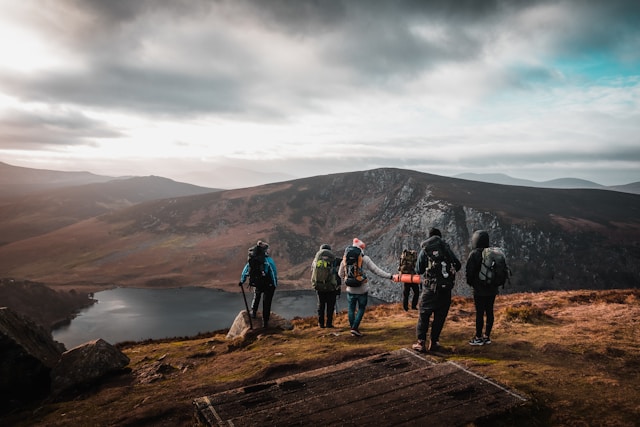
Shared journeys look, from a budget line, like an expensive version of the customer event, and that is usually why they get cut. A campaign or a conference puts new content into an existing environment, while a journey replaces the environment and leaves the content to form on its own. Relationships are products of environments, which is the whole of the argument, and it is why the two are not comparable line items.
This article did not begin in a boardroom. It began on the road, in the gap between what organisations spend on relationships and what they get back, and it is written for the people holding that budget.
Because they have become far better at communicating than at connecting, and the two are not the same discipline.
Almost every organisation is trying to solve a version of the same problem. Marketing teams want customer engagement and loyalty in markets where attention can be bought and loyalty cannot. HR leaders are investing in employee experience and culture as work becomes distributed and less personal. Sales organisations want dealer relationships that outlast the incentive scheme. Founders want customers who become advocates and communities that outlive campaigns.
These look like different problems and they are one problem. They are all attempts to strengthen human relationships.
The response is usually predictable. Campaigns, conferences, annual customer meets, leadership retreats, dealer conferences, recognition events. Every one of these has real value and none of them should be abandoned.
But they are designed around programmes rather than relationships, and they are measured accordingly. Attendance. Participation. Event ratings. Social engagement. Immediate feedback. These metrics are useful and they answer a different question from the one that matters.
Did people leave relating to one another differently from how they arrived?
That question is surprisingly hard to answer, and the difficulty is instructive. Organisations have become exceptionally good at designing events. Relationships are not built by events. They are built by experiences that keep working on people after the event has ended.
Which is also why this belongs on a strategic line rather than a marketing one, an argument set out separately in why journeys are becoming a strategic brand initiative.
The observation that gave it a name came from years of running journeys across the Himalayas, the Northeast and rural India, and from noticing what guests said afterwards.
They almost never started with the itinerary. Not the hotel rooms and rarely the meeting schedule. They started with a conversation during a six-hour drive. A village elder whose story quietly moved everyone's position. A weather delay that put strangers around the same tea. A shared meal where customers, founders and employees stopped talking through their roles.
None of those moments could have been manufactured. They happened because the journey had created conditions in which they could.
Which raises a question worth stating precisely. What if journeys do not strengthen relationships because people travel together, but because they change the environment in which people relate to one another?
That is the Journey Environment Principle, and it can be put in one line.
Journeys do not create relationships. Journeys create environments in which relationships become more likely to develop.
The distinction sounds small and it changes almost everything. Many organisations expect a customer event or a dealer conference to strengthen relationships simply because people have been assembled. Experience suggests otherwise. People can spend three days in one hotel and barely know each other. They can spend a single afternoon navigating an unfamiliar village, eating unfamiliar food and solving unplanned problems, and come back relating differently.
The difference is not the time. It is the environment.
The principle sits inside a wider way of working, set out separately in the case for care-based travel. Its personal origin is in an account of how travel stopped working and what replaced it. This article takes the same thinking into a commercial context.
Several things, repeatedly, across groups that have nothing else in common.
The longest conversations do not happen in the sessions. They happen in the transfers, where there is no agenda item to reach and no reason to conclude anything. A four-hour drive produces exchanges that no workshop can schedule.
People stop introducing themselves through designations. By the second or third day the conversation has moved to families, aspirations, failures and childhood, and job titles have quietly dropped out of it.
The interruptions outlast the itinerary. Unexpected weather. A roadside tea stall. Waiting for a bridge to reopen. Watching local children play. None of it planned, all of it what people recount months later.
The destination is rarely the only thing remembered. People remember who they became while travelling through it.
This is an observation about behaviour rather than about travel. Behavioural science has understood for a long time that context shapes conduct. What a journey adds is a working demonstration at organisational scale: change the environment and the conversations change, and when the conversations change the relationships tend to follow.
Programmes designed around content rarely touch the environment at all. Presentations, activities, recognition, entertainment. All valuable and none of it environmental. A journey alters pace, changes context, removes routine and introduces uncertainty and shared participation. Those are environmental changes and they act on how people listen, respond and remember.
The difference is in the questions asked before anything is booked.
When an organisation plans a customer programme or a leadership retreat, what is usually being designed is an event. Agenda, venue, schedule, speaker, entertainment, meals, accommodation. All necessary. All components of an event rather than components of an environment.
Designing an environment asks different questions, and they are not on any planning checklist:
These questions probably have more bearing on the relationship outcome than another keynote or another networking dinner.
The same distinction runs through our work on brand road trips, where the argument is that the road trip is the tool and the cause is the campaign. A route without a reason produces footage. A route built around something worth doing produces coverage that keeps arriving long after the vehicles have gone home.
The same principle decides whether a campaign leaves anything behind once the spend stops, which is the subject of how to turn marketing campaigns into long-term brand assets.
Campaigns communicate. Events organise. Environments shape how people experience one another, and only the third of those is being neglected.
Because they let a customer participate rather than attend, and participation and observation produce different relationships.
The problem facing most marketing leaders is not acquisition. Acquisition costs keep rising, digital competition keeps intensifying and loyalty programmes are now universal. Attention can be purchased. Loyalty rarely can.
Most attempts to strengthen customer relationships work through communication. More email, better campaigns, improved loyalty tiers, appreciation events. All useful, all limited by one thing: they communicate to customers. Very few create an opportunity for a customer to experience something with the organisation.
A customer at a product launch remains an audience. A customer travelling alongside founders, employees, local communities and other customers becomes a participant, and participants evaluate differently. They start watching how an organisation behaves rather than how it presents itself. Whether people stay patient when plans change. Whether conversations continue after the formal session ends. Whether curiosity is encouraged. Whether local communities are treated with respect. Whether what was promised in the deck shows up in ordinary conduct.
The customer stops assessing the brand through its communication and starts assessing it through lived experience, which is a considerably harder test and a far better foundation for trust.
Trust grows through consistency rather than performance. Organisations tend to assume a memorable experience has to be an extraordinary one. What we see is different. People rarely remember a journey because everything went to plan. They remember it because of how people responded when it did not. A road closure that forced a rethink. Weather that killed an activity. A spontaneous invitation from somebody local. None of it scriptable, all of it revealing.
Calmness, transparency, care and adaptability are almost impossible to communicate through advertising and remarkably easy to demonstrate over four days. A journey lets an organisation be experienced rather than described.
By running long enough for a relationship to have a middle.
Customer experience programmes usually aim at satisfaction, which is a legitimate objective and not the same thing as advocacy. People recommend organisations when they feel they belong to something larger than a transaction, and belonging is not produced in an afternoon.
It develops when customers start recognising faces, telling each other stories, returning to something annual, and contributing to a community rather than consuming what it offers. That requires duration. A journey unfolds over days rather than hours, so relationships have time to develop, conversations have time to change, unfamiliar situations get encountered together and shared memories accumulate.
What comes out at the end is not a satisfied customer. It is the beginning of a community.
This is the honest explanation for why premium brands keep moving budget towards experiences, destination programmes and customer communities. The usual account is changing consumer expectations. The more useful account is that experiences generate shared memory, and memory acts on future behaviour in a way that impressions do not. People go back to places where they felt understood, reconnect with people who made them welcome, and speak well of experiences that became part of their own story.
That reframes the measurement problem. Open rates, attendance and social interactions record activity. Relationships need different questions. Did customers spend meaningful time with one another? Did they discover something unexpected together? Did the conversations continue after everyone went home? Did they tell the story without being asked to? Did the organisation come out of it more human?
Harder to quantify, and much closer to the thing you actually wanted to know.
Because most offsites change the venue without changing the environment.
There is nothing wrong with a traditional offsite. It creates time away from the desk, space for planning and some informal interaction. But it usually remains an extension of the workplace. Participants move between sessions, presentations and structured activity, and the conversation stays close to work because the environment keeps reinforcing organisational roles.
A journey creates different conditions. Movement replaces routine. Shared discovery replaces scheduled networking. People meet unfamiliar places together rather than familiar formats in unfamiliar hotels. The emphasis moves from completing an agenda to experiencing something collectively.
That matters because relationships rarely deepen through information. They deepen through shared experience.
It also gives organisational culture somewhere to become visible. Culture is usually described through values on a wall and repeated at induction, but it is not what an organisation declares. It is how people consistently behave, and a journey shows that in an environment where routine no longer dictates the interaction. How colleagues solve problems together. How they handle uncertainty. How they include the quiet ones. How they treat unfamiliar communities. How they support each other when it gets demanding. Culture is experienced before it is articulated.
The practical detail matters more than the philosophy here, which is why we set the mechanics out separately in how to plan a corporate retreat people actually remember.
Conduct with no audience.
Leadership immersions are usually built around workshops, keynotes and strategy discussion. All useful. But leadership is rarely understood through what leaders say. It is understood through what people watch them do.
A journey makes that watchable. How does a leader respond when plans change without warning? Are they approachable outside the formal session? How do they treat local communities, service teams and colleagues when nobody is assessing them? Do they listen with curiosity or supply answers?
None of that appears in a leadership framework and all of it moves trust further than a presentation does.
The most consistent thing we see is that hierarchy softens when people face unfamiliar environments together. The Managing Director waiting beside everybody else for a delayed vehicle. The department head helping carry luggage across a narrow suspension bridge. The founder sitting next to a new employee for a long drive.
None of that removes hierarchy and it is not supposed to. It humanises it, and that changes how people relate to leadership long after the journey has ended.
By building relationships sideways between partners rather than only upwards to the organisation.
Dealers are among the most important ambassadors most organisations have. They carry the brand in markets where the corporate team has almost no daily presence, so trust with them is a strategic priority rather than a sales one.
Dealer engagement has traditionally run on incentives, conferences, recognition ceremonies and reward trips. These remain important and they mostly reward performance rather than strengthen relationships. A well-designed journey can do both.
When dealer partners travel together, the conversation extends past quarterly targets and commercial negotiation. People compare conditions across different markets. They discuss problems openly because there is no presentation to defend. They learn from each other without a session being arranged for the purpose.
What forms is a network rather than a collection of separate bilateral relationships, and the difference is significant. Networks share knowledge. Communities support one another. Transactions do neither.
The underlying principle is the same whether the participants are employees, leaders or channel partners. Relationships strengthen when people go through meaningful situations together. That does not mean replacing every conference with an expedition. It means being deliberate about designing environments that make trust and openness more likely, so that people come back to work relating differently from when they left.
The recognition that a destination decision is a strategic decision rather than a logistical one.
Most destinations are chosen against familiar criteria. Air connectivity, accommodation, meeting infrastructure, weather, accessibility, budget. All essential, because they determine whether a journey can be delivered. None of them determines whether it will mean anything.
Places are not neutral. Every environment encourages some behaviours and discourages others. Dense cities reward speed and efficiency. Mountains slow movement and invite reflection. Long road journeys create uninterrupted time in which conversation develops without interruption. Small villages encourage curiosity because people arrive as visitors rather than consumers. Forests reduce distraction. Rivers invite pause. Old settlements encourage storytelling.
None of that appears on an itinerary and all of it acts on how people experience each other.
Timing is the part that gets ignored most, and it is more concrete than it sounds. Our festival work is full of examples that no conventional planning process could hold. Ali-Ai-Ligang in Assam is fixed to a weekday rather than a date, so it moves by more than a fortnight between years. Behdeinkhlam in the Jaintia Hills is held deliberately in the middle of the monsoon, in the month the industry has agreed is unsellable. Mopin in Arunachal requires you to know there are two versions before you can choose which one you are attending.
An itinerary has fields for nights, destinations, transfers and inclusions. It has no field for any of that, and what the land is doing in a given month decides more about how a week feels than the hotel does.
So the useful question is not whether a destination is impressive. It is what kinds of experience that destination naturally encourages, given who is going and when. That question is worked through in detail in how to choose a destination for a corporate offsite.
A beautiful landscape cannot rescue a badly designed journey, and a modest one can carry an extraordinary experience. People rarely remember destinations in isolation. They remember them through what those places made possible. A mountain because of a conversation that happened on it. A village because its residents let people into an ordinary day. A winding road because it gave six uninterrupted hours with nobody checking the time.
The destination supplied the environment. The relationships supplied the memory.
If Destination Thinking decides where relationships might develop, Journey Architecture decides how.
It is the deliberate design of an experience so that movement, people, place and time work together rather than merely coexist. Most itineraries answer operational questions: where people stay, when they travel, what they do. Journey Architecture asks a different set.
These rarely appear on a planning checklist and they usually decide whether a journey is memorable or merely well organised.
Most experiences are built around highlights. The keynote, the gala dinner, the award ceremony, the famous sight. Those matter. But a journey is continuous, and the movement between the highlights is where relationships quietly strengthen. A long drive does what no workshop can schedule. A walk through a local market produces interaction that a conference venue makes impossible. Breakfast before sunrise sets a rhythm that runs through the rest of the day.
A well-designed journey has emotional rhythm rather than constant intensity. Exploration is followed by reflection. Group experience alternates with individual discovery. Conversation deepens as familiarity accumulates. Pace changes with the landscape and the environment changes with the purpose.
That rhythm mirrors how human relationships actually develop. Trust is rarely created in one dramatic moment. It grows through repeated interaction that gradually reduces the distance between people. So Journey Architecture is better understood as the design of emotional progression than of logistical progression. Participants should not only move geographically. They should move relationally.
The same logic works at the scale of a single day's driving, which is the argument in why country roads beat highways.
Against five questions, asked before any itinerary is written.
1. What relationship is this journey intended to strengthen? Customer, employee, dealer, partner, leadership, community. Without clarity of purpose, even an impressive itinerary is impossible to evaluate.
2. Does the destination support that purpose? Not whether it is attractive. Whether it encourages the kind of interaction you are trying to create.
3. Does the journey create genuine participation? Participants should contribute to the experience rather than consume it. Shared experience outperforms passive observation every time.
4. Is there enough space for unscripted interaction? The most useful conversations cannot be scheduled. A journey with no room for spontaneity leaves little room for discovery.
5. What will people remember when everything else has gone? Not the agenda, the accommodation or the presentation. The stories, the conversations, the people and the perspective they came back with.
Those five move the discussion from logistics to relationship design, and that is the actual shift being proposed here.
The wider argument is not that every organisation should run more journeys, or that travel beats conferences and campaigns. Each has a role. The argument is narrower and more useful than that. Organisations have spent decades getting better at designing communication and comparatively little effort on designing the environments in which relationships are expected to form. Campaigns will keep creating awareness. Products will keep creating value. Services will keep solving problems. But the relationships customers return for, employees contribute to and partners invest in are built through experience that people carry with them.
For a marketing leader that may mean designing customer communities instead of customer events. For an HR leader, employee journeys instead of annual offsites. For a sales leader, dealer networks built through shared experience rather than transactional incentive. For a founder, recognising that belonging comes from experiences people choose to remember together.
Journeys do not guarantee any of it. They make it considerably more likely, which is all any environment can do, and it is more than a campaign can offer. The journeys we run are where this stops being a framework and becomes a route.
The idea that journeys do not create relationships but create environments in which relationships become more likely to develop. It follows from the observation that the same people relate differently in different settings, so an organisation trying to strengthen relationships should be designing the environment rather than only the communication.
The deliberate design of an experience so that movement, people, place and time work together. A conventional itinerary answers where people stay and what they do. Journey Architecture decides where unstructured time sits, where the pace slows, and how the journey opens and closes so the effect continues afterwards.
The recognition that choosing a destination is a strategic decision rather than a logistical one. Places are not neutral: each environment encourages some behaviours and discourages others. The question is not whether a destination is impressive but what kinds of interaction it naturally encourages, given who is travelling and when.
Loyalty programmes encourage repeat purchase without creating emotional connection. Stronger relationships form when customers share meaningful experience with a brand over time, which lets them engage with the organisation and with each other. The objective moves from rewarding transactions to creating relationships customers value on their own account.
A campaign communicates a promise. A shared experience lets a customer find out whether the promise holds. Travelling together, solving problems together and participating in something real produce memories that advertising cannot, and those memories rest on lived evidence rather than on communication.
A shared journey that combines purposeful travel, local culture, real conversation and collaborative experience. The advantage over a conventional offsite is not the location but the environment. Routine is removed, roles are less reinforced, and interaction and reflection become possible in ways a conference room makes difficult.
Engagement improves when colleagues go through situations that require trust and collaboration. Journeys create cross-functional interaction, informal conversation, shared problem-solving and collective discovery. Where workshops transfer information, journeys let organisational culture become visible in an environment where routine no longer dictates behaviour.
Workshops deal in concepts and frameworks. Immersions let people watch leadership behaviour in situations that cannot be fully scripted. Adaptability, empathy and decision-making get demonstrated rather than discussed, and hierarchy tends to soften when everybody is facing an unfamiliar environment together.
By creating trust beyond the commercial transaction. When partners travel together, conversation extends past quarterly targets and problems get discussed openly. Relationships form horizontally between dealers rather than only vertically with the organisation, which produces a network that keeps sharing knowledge after the programme ends.
On the interactions a place encourages rather than on accessibility, infrastructure and accommodation alone. Different environments shape conversation, reflection and collaboration differently. The destination should be chosen for the relationships the organisation wants to strengthen and the experiences it wants participants to carry home.
Rarely luxury, entertainment or flawless execution. Experiences are remembered for the human moments in them: conversations, discoveries, shared difficulty and unforced interaction. Lasting memory tends to require that customers participated in something rather than watched it.
An event brings people together for a fixed period around a structured programme. A journey creates an environment in which relationships can develop over time. Movement, local interaction and unstructured conversation build trust and understanding in ways an agenda cannot, because the journey is the environment rather than the activity.
Begin with the relationship rather than the itinerary. Identify what is meant to be strengthened, then choose the destination, the pace and the experiences that support it. Balance structured time against unstructured time, build in genuine participation rather than attendance, and measure success by the conversations that continue after everyone has gone home.