
Let’s help you
plan your journey
Explore responsibly, discover offbeat places, guided by locals, rooted in culture.
Let’s help you
plan your journey
Explore responsibly, discover offbeat places, guided by locals, rooted in culture.
Soumen Bhowmick
Soumen Bhowmick founded Pollen Dots in 2024 to plan journeys across India and Bhutan. He works in the Commercial Department of Indian Railways, where he has been since 2000. From 2016 to 2020 he was Head of Business Development and Partnerships at ScoutMyTrip, a community-driven road trip planning platform. There he built a nationwide network of local Scouts who helped travellers on the road, and grew the Road Trippers Club to 16 Indian cities. As a core member of Devil On Wheels, he helped travellers plan Himalayan trips and started Spreading Smiles. He has driven solo from Arunachal to Goa and from Himachal to Karnataka, and has run his own caravan for more than ten years. His photographs have won national and international salon awards, and his writing has appeared in Outlook Traveller.
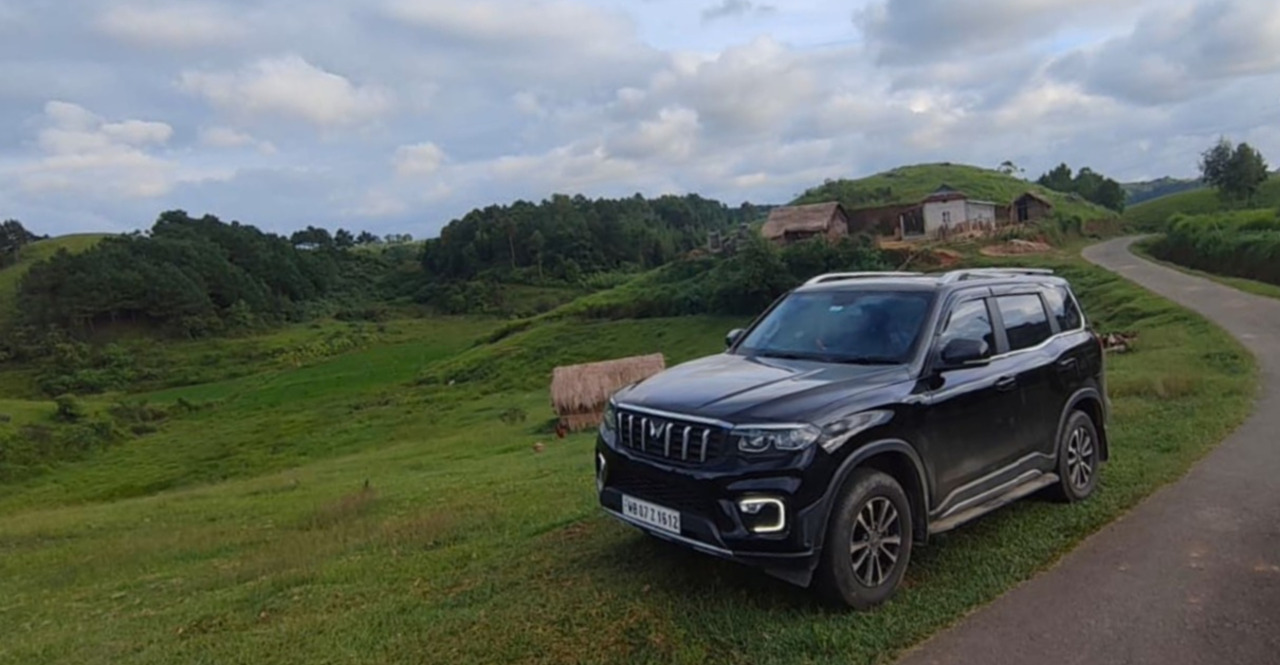
Most advice on a Meghalaya road trip says book everything first and skip July. We booked both nights from the car, in July, and slept beside eighty hectares of forest that the villagers of Selbagre gave up in 2007 to protect the hoolock gibbon. A trip like that is not unplanned; it is planned late, and somebody has to be holding it.
The man in the passenger seat is my langotiya friend. The English for that is best friend, and it does not carry the same weight. It means we were friends before either of us was old enough to choose our friends, and that neither of us has since had to. He plans. He books months ahead, he reads the reviews, he likes knowing which room he is walking into and what it costs. I do not, at least not in places I already know. In July 2026 we drove into Meghalaya with nothing booked and nothing written down. It was his car. It was my plan, and I had not told him what it was.
We left Chengrabandha, near Jalpaiguri in North-Bengal, at five in the morning with a direction and no reservations. That is not the same as leaving without a plan. I knew the roads, and I knew roughly how far we could get before the light went. I also knew what a July weekday does to room availability in Meghalaya. That is the part most people never find out.
What we did not have was a schedule. No check in time to make, no deposit to protect, no booking that would punish us for stopping somewhere interesting. I have written before about why I take country roads over highways, and the argument is the same one. The cost of a fixed itinerary is not money. It is that you drive past things.
He spent the first two hours asking where we were staying. I said I would sort it out before we needed it. He has known me long enough to know that was the whole answer, and he asked anyway, and I gave him the same answer again. That exchange is most of our friendship in miniature. We took turns at the wheel and he drove some of the worst of it, which he has mentioned since.
We reached Selbagre at about one in the afternoon, eight hours after leaving. Thirty minutes before that, from the passenger seat, I booked the place we were about to sleep in.
It is called Huro-A-Song. A narrow stream runs hard along the edge of it. The forest behind is dense enough to close over the light. The built part is a few traditional huts, some basic tents and a green garden between them. There was one caretaker on the property. There were no other guests, and there had not been any for months.
He got out, looked at the tents, and said very little. My friend says very little when he is being polite about something. He had been picturing a building with a reception. What he had was a stream, a garden, a man with a set of keys, and no menu.
The property is named after the animal in the trees behind it. Huro is the Garo word for the hoolock gibbon, and Selbagre is where the villagers decided to keep some.
This is the part worth checking for yourself, because it is better than the brochures make it sound. The forest is not a national park and it is not a state sanctuary. The Garo Hills Autonomous District Council registered it as a village wildlife reserve by office order in April 2007, covering roughly eighty hectares, on land the villagers gave up themselves. When the reserve was set up, the villagers said they were willing to give more.
Most wildlife protection in India arrives from above, as a notification telling a village what it may no longer do. This one went the other way. It sits about twenty kilometres from Tura, and if you have read what I wrote about who actually pays for conservation in India, this is what that looks like when it works.
Nothing was said. Lunch came, we ate it outside, and the afternoon did the rest.
He sat by the stream. There were swans on the water. The forest kept making noise and the noise was not traffic. By the middle of the afternoon the man who had been counting the missing facilities was talking about how quiet it was, in the tone people use when they have stopped keeping score.
I did not point any of it out. There is no version of that conversation that does not sound like winning an argument, and he had not lost one. He had simply stopped needing the things he usually books for. Being his friend this long has taught me when to say nothing. I said nothing, and I enjoyed it enormously.
The gibbons called at night and again very early, before the light. If you have not heard them, the sound carries a long way and it does not sound like anything else in an Indian forest.
He was frightened. That is the honest word for it. There was one small LED inside the tent and nothing at all outside it, and in that dark the calls arrive from a direction you cannot place. A forest at night is not silent. It is full of things announcing themselves, and the announcements come from every side at once.
We were sleeping at a property named after the animal doing most of the calling. I decided it was not the moment to mention that. He got through the night, and he has since told the story to people who were not there, which is how you know it landed.
The second morning we got up with an idea instead of an itinerary. I wanted to work towards Mawlyngbna and decide on the way. I told him we were driving towards Cherrapunjee, which was true enough as a direction and not true at all as a plan.
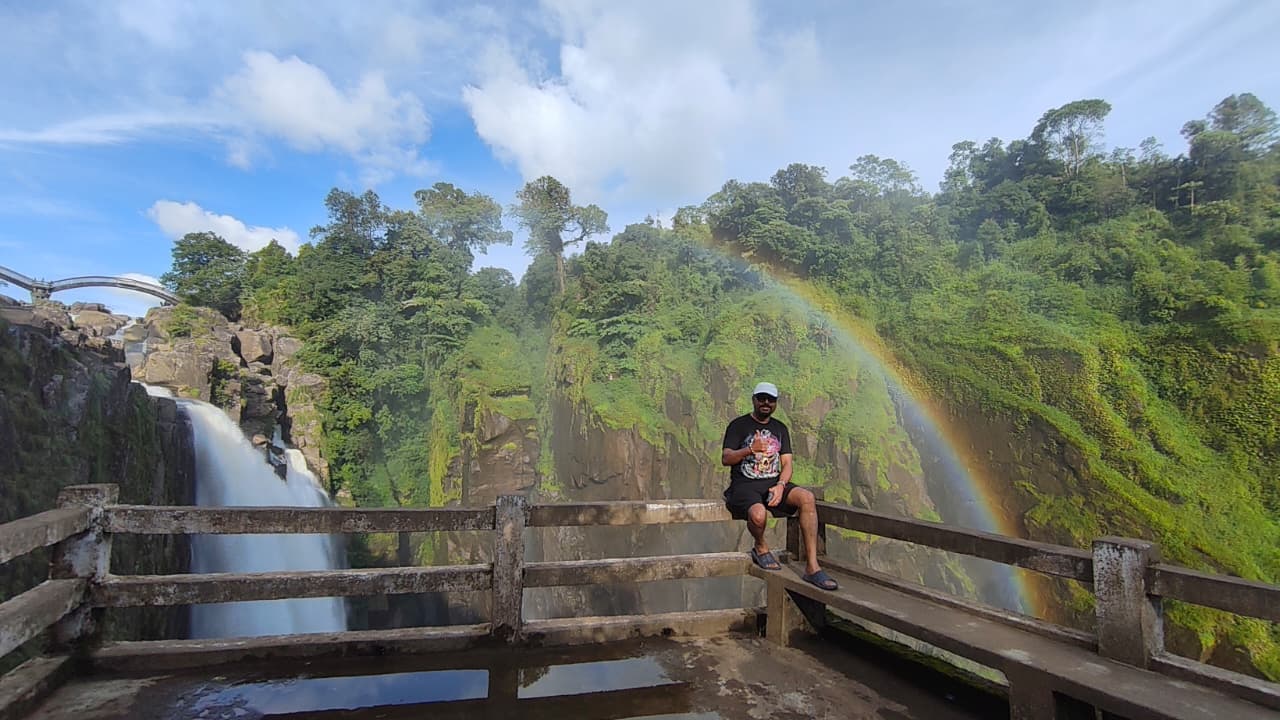
Getting from the Garo Hills across to the Khasi Hills takes the day. We stopped a lot. Village markets, roadside places, a few stops for no reason except that stopping was free. He asked repeatedly when I was going to book something, and by late morning he was arguing about it properly. We argued the way we have argued since we were boys, which is loudly, in two languages, with neither of us taking it home.
I kept driving. There was a decision coming and it was not due yet.
Around two in the afternoon I picked the overnight stop. I found a homestay about an hour's drive from where we were at that point, and booked it from the road. The woman who owns it told me on the call that there was a kitchen but no food. That is normal across a lot of Meghalaya and it catches people out constantly, because a kitchen on a listing reads like a restaurant and it is not one.
So our last stop of the day was a village shop, to buy what we were going to cook.
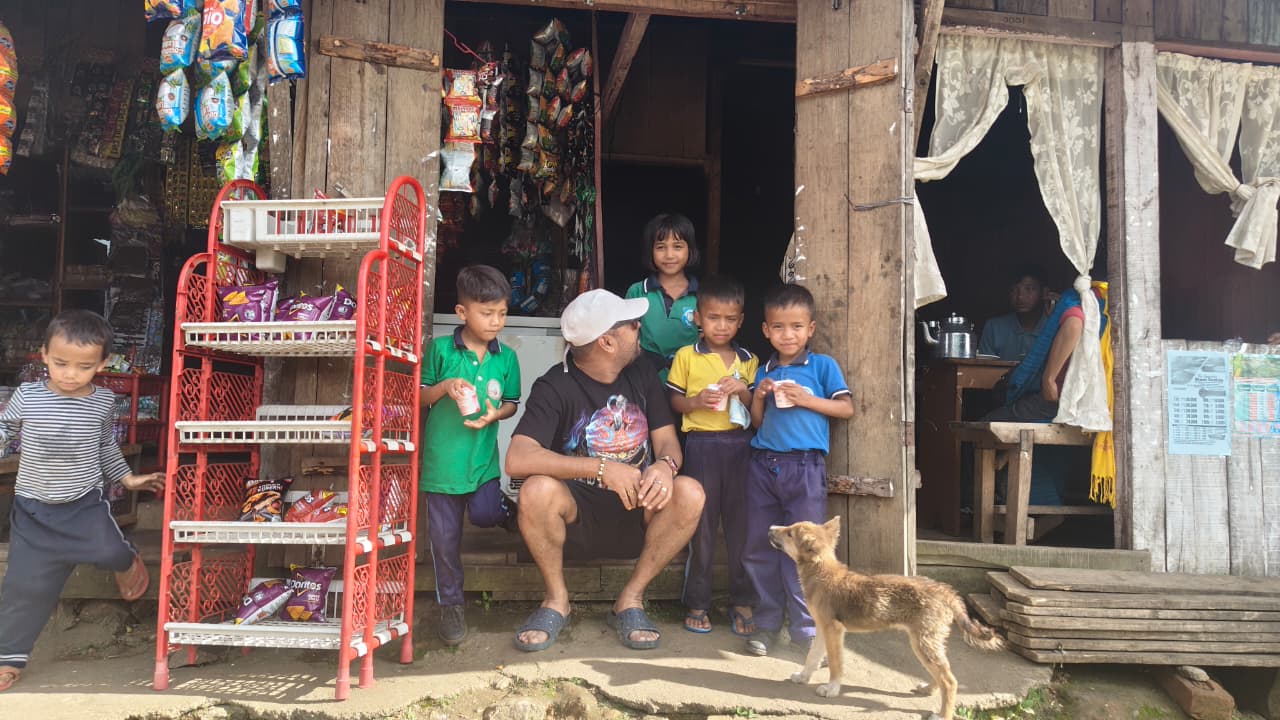
There were children playing outside it. My friend went over to them. This is the same man who had spent the morning arguing that we should have booked something in Cherrapunjee.
He talked to them. Then he bought them chocolates and ice cream. Then he stayed, and we were still outside that shop forty minutes later, with a homestay waiting an hour up the road and nothing in the day that we were late for.
None of it was on any plan. I stood there and watched my oldest friend turn into a perfect Ambassador of Smiles, which is one of three initiatives Pollen Dots runs. I build journeys for a living, and a stop like that one is the hardest thing to build into them. Nobody can plan a man buying ice cream for children outside a village shop. What you can plan is the empty forty minutes it needs to happen in. That space is the part of our Journey Architecture that never appears as a line on the plan.
I arranged none of it. He did it himself, because the day had nothing in it that we were late for. Most itineraries leave no space for something that buys nothing and produces nothing you can photograph for a list. Ours had space only because we had not filled the day in advance.
Months later, there are three things from those two days that my friend still brings up. The forest at Selbagre is one, the homestay we reached that night is another, and the third is this forty minutes outside a village shop.
The homestay was called Nohthlong. It sits at Nongspung, on the Nongstoin side, looking out over Markham Valley. The valley is wide, green and almost treeless, and people have started calling it Meghalaya's answer to Dzukou. The district administration's own page places it between the South West Khasi Hills and Eastern West Khasi Hills districts, at the villages of Markham and Mawkyllei.
We cooked, we ate late, and the argument about booking ahead did not come up once.
That view has a cost that visitors mostly do not see. In November 2025, the local MLA Shakliar Warjri and the Green Tech Foundation raised the alarm about hill cutting and mining in the valley, after visuals of the damage circulated. Residents there had begun earning from the people coming to look at it. The same landform is being sold twice, once to visitors and once to whoever is taking the hill away.
It is worth setting that next to Selbagre. Both places are community land. One community gave its forest up to keep something alive. The other is watching its hill go out by the truckload.
July in Meghalaya is written about as a month to avoid. The rainfall figures make it sound like standing under a tap for four weeks.
It does not behave that way. Clouds build, a shower comes through, and then the sky opens and it is a bright sunny day. An hour later the clouds come back and do it again. The rain arrives in bursts through the day rather than as one long downpour, and between the bursts the light is better than anything you will get in the dry months.
The roads were fine. The waterfalls, which are the reason most people come, were running at full strength, which they are not in November. The state's own calendar is built around the monsoon in ways visitors rarely look at, and the Khasi Hills hold a festival whose whole purpose is monsoon disease. The rain is not an interruption to the place. It is the place.
This is the part that made everything else possible, and it was the one thing I did decide in advance.
Meghalaya on a weekend needs booking. Shillong fills, Sohra fills, and the homestays along the popular routes fill. Arrive on a Saturday without a reservation and you can end up driving in the dark looking for a bed, or stuck on roads that were not built for that volume. On a July weekday, none of that is true. The rooms are there. The stops are empty. The caretaker has time to talk to you.
So the freedom my friend enjoyed was not the absence of planning. It was a decision made weeks earlier about when to travel, which bought us the right to decide everything else late. It is the one piece of planning I did on that trip, and it is the part nobody notices.
What I was doing for him in that car is what we do for travellers at Pollen Dots, except that we usually do it from a desk while they drive.
Somebody tells us where they want to go. We do not send back a locked itinerary. We send a route with the decisions still open. It marks the fuel stops, the places with a clean and usable toilet, and the food stops worth pulling over for. Where there is nothing famous, it says what is simply available. Then they drive, and they share their live location with us as they go. We watch the route in real time and keep sending the next thing: stop here, this is worth twenty minutes, skip that, the light will be better if you leave now.
Around lunch we take the practical decision with them. Given where they have actually reached, how the weather is behaving and how much road is left, this is where the night should be. Then we arrange it and they arrive at something that exists.
None of it is spontaneity. It is planning moved from before the trip to during it, and it only works because somebody who is not making the drive is holding the pieces. That is the same argument as care-based travel, reached from the other end. The responsibility sits with whoever designs the journey, because the season, the roads, the rooms and the pace are all decided by somebody before a traveller ever feels them.
My friend never worked out that he was being run as a journey. He thought he was on a drive with a man who would not book a hotel. He is still nagging me about the valley at Nongspung, and he wants to do it again.
On weekdays in the off season, no. We booked both nights from the road, one of them thirty minutes before arriving and the other about an hour out. On weekends and through the October to April season it is a different state, and arriving without a reservation is how people end up driving after dark.
Yes, if you accept that it will rain. The rain in July falls in bursts through the day rather than continuously, with bright spells between them. The waterfalls are at full strength, the roads are usable, and there are very few other travellers on them.
We left Chengrabandha at five in the morning and reached Selbagre at about one in the afternoon, so roughly eight hours. That is with ordinary stops and no hurry. Garo Hills roads do not reward trying to make time.
Selbagre is a village in the West Garo Hills, about twenty kilometres from Tura. It holds a village wildlife reserve of roughly eighty hectares, set up to protect the hoolock gibbon. It is also spelled Selbalgre in some records, including the Wildlife Trust of India's.
The villagers. The Garo Hills Autonomous District Council registered it by office order in April 2007 on land the community gave up voluntarily, and the villagers indicated they were willing to give more. It is not a national park or a state sanctuary.
We heard them at night and again very early in the morning, before first light. The calls carry a long distance through the forest, and they are unlike anything else you will hear in an Indian forest. Hearing them is far more likely than seeing them.
Huro is the Garo word for the hoolock gibbon. The property at Selbagre is named after the animal in the forest behind it.
Markham Valley lies between the South West Khasi Hills and Eastern West Khasi Hills districts, at the villages of Markham and Mawkyllei, and is reached from the Nongstoin side. It is a wide, largely treeless valley of rolling grazing land. It has been compared to Dzukou Valley in Nagaland and became popular fairly recently.
Yes, and it has been raised publicly. In November 2025 the local MLA Shakliar Warjri and the Green Tech Foundation warned about hill cutting and mining in the valley after images of the damage circulated. Residents who have started earning from visitors are the people most exposed to it.
Often not. The owner of the one we booked told us on the call that there was a kitchen but no food, which is common and is rarely clear from a listing. Ask when you book, and buy your ingredients at a village shop on the way, because there may be nothing open near the homestay.
Indian citizens do not need an Inner Line Permit for Meghalaya, unlike Arunachal Pradesh, Nagaland, Mizoram and Manipur. In July 2026 the state government moved to bring in compulsory registration for all tourists and visitors, described as a virtual ILP, and it was still being debated rather than enforced. Foreign nationals have separate registration requirements. Check the position before you travel.
The crossing takes a full day of driving with stops. It is continuous hill the whole way, so average speeds stay low and the map's estimate will be optimistic. Plan the day around how far you can reasonably get rather than around an arrival time.
Yes, and that is how we run road trips at Pollen Dots. Travellers get a route with the decisions left open, then share their live location while they drive, and we send suggestions for the next stops as they go. The night's stay is arranged around where they have actually reached by lunchtime.