
Let’s help you
plan your journey
Explore responsibly, discover offbeat places, guided by locals, rooted in culture.
Let’s help you
plan your journey
Explore responsibly, discover offbeat places, guided by locals, rooted in culture.
Soumen Bhowmick
Soumen Bhowmick founded Pollen Dots in 2024 to plan journeys across India and Bhutan. He works in the Commercial Department of Indian Railways, where he has been since 2000. From 2016 to 2020 he was Head of Business Development and Partnerships at ScoutMyTrip, a community-driven road trip planning platform. There he built a nationwide network of local Scouts who helped travellers on the road, and grew the Road Trippers Club to 16 Indian cities. As a core member of Devil On Wheels, he helped travellers plan Himalayan trips and started Spreading Smiles. He has driven solo from Arunachal to Goa and from Himachal to Karnataka, and has run his own caravan for more than ten years. His photographs have won national and international salon awards, and his writing has appeared in Outlook Traveller.
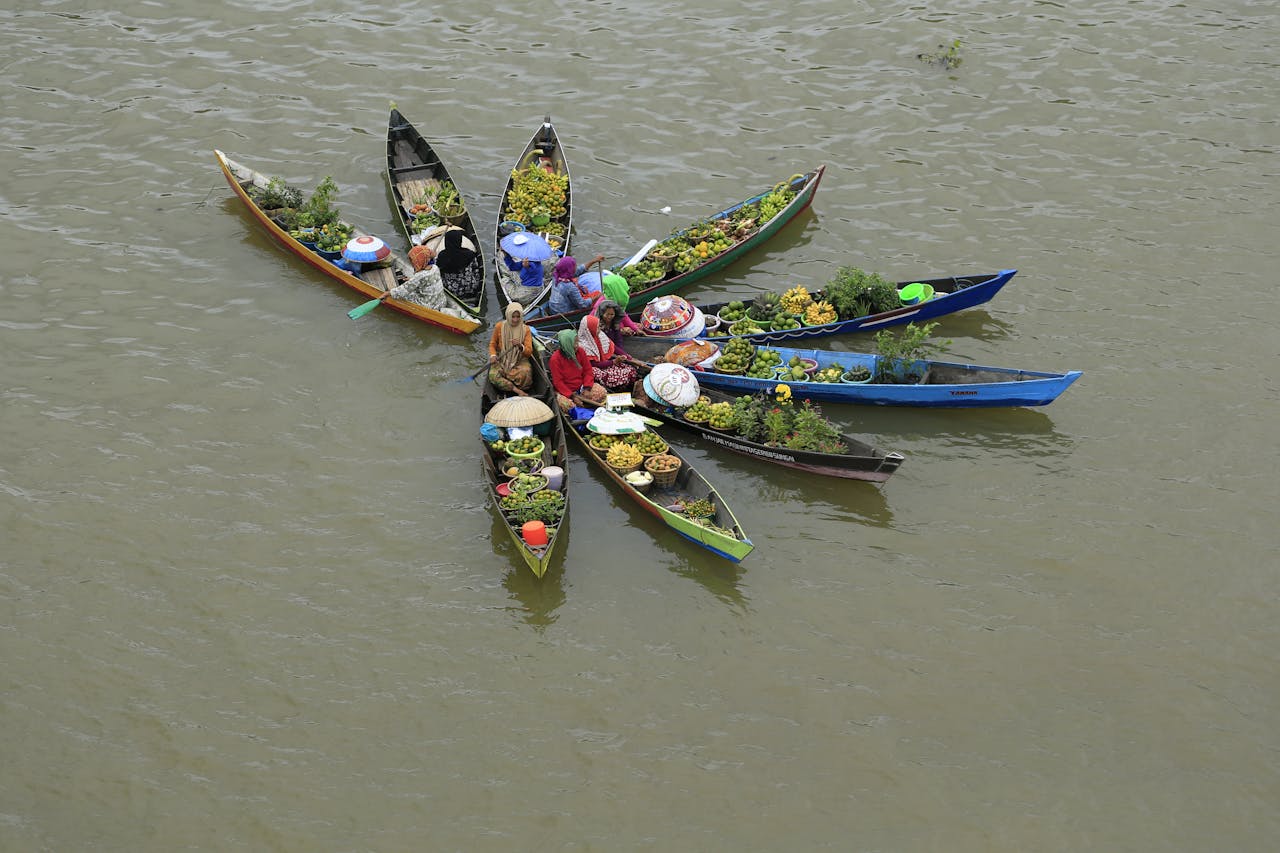
Regional food culture in India is usually explained as variety, which makes it sound like a matter of taste. It is nothing of the sort, because what people eat daily was settled by altitude, rainfall, storage and how far the fields sit from the house. Read a region's daily plate and you can work out its climate, its working hours and its seasons before anybody tells you.
India's destinations usually get introduced through landscape, architecture or history. The more reliable way in is what people eat on an ordinary day. Not the famous dish, and not the festival dish. The thing that gets cooked on a Tuesday because it is what the season, the soil and the household budget allow. That plate carries more about how a place works than any of the usual introductions do.
Because India is not one food culture. It is a few dozen, and each one was solving a different problem.
Four things do almost all of the deciding. What the land will grow. How much water there is and when it arrives. How long food has to keep before the next harvest. And what the working day looks like, since people eat around work rather than the other way round.
Nothing on that list is about preference. A region that cannot grow rice does not eat rice. A region with four months of nothing coming in learns to dry, smoke and ferment. A region where the work happens before ten in the morning eats accordingly.
That is why two districts three hours apart can eat completely differently while sharing a language and a history. They are not expressing different tastes. They are answering different questions.
This is the land setting the terms, and food is the first thing to show it. It is also why food is the fastest way to understand any destination in India.
Barley, dairy and whatever was dried before winter, and it changes as you come down.
In Ladakh and Spiti the growing season is short and the winter is long, so the whole cuisine is built around calories that store. Roasted barley flour, thick noodle soups, butter and salt in the tea rather than sugar and milk, and vegetables dried on a roof in September to be eaten in January.
Meals are fewer and more deliberate. There is no snacking culture, because there was never a surplus to snack on. The fat is not indulgence either. At that height and that cold, fat is the point.
Come down a few thousand feet into Uttarakhand and Himachal Pradesh and the grain changes. Finger millet, barnyard millet and black soybean replace barley, because the slopes are lower, wetter and steeper. The logic underneath is identical. Grow what the terrace will hold, and store what the winter will need. The answer is just different.
This is why the Himalayan belt feels unhurried to a visitor. Life is not slow by temperament. The growing season is short, the road shuts for months, and everything has to be planned around both.
Because Kashmir is a valley with good soil, and because a lot of people passed through it.
The altitude is lower, the land is fertile, and rice grows. That alone separates it from Ladakh, three hundred kilometres away. Add centuries of Persian and Central Asian influence arriving over the passes and you get a cuisine of rice and rich gravies that has no equivalent anywhere else in the mountains.
The winter logic still applies underneath it. Dried vegetables put away in autumn carry the valley through the cold months, and every Kashmiri household knows what to do with them.
So Kashmir gives you two things at once. The layering of a trading region, and the storage discipline of a place that gets cut off. That combination is unusual and it explains a lot about how the valley operates.
Because the water is there every year, and where water is dependable, rice wins.
Across Assam, West Bengal and Odisha the daily base is rice, with seasonal vegetables, freshwater fish and a good deal of fermenting. Odisha soaks leftover rice overnight in water and eats it the next morning. It is both a cooling food and an efficient one. Assam builds around river fish and alkaline preparations that exist nowhere else. Bengal eats a sequence of courses that follows the season closely.
North Bengal sits between the hills and the plains and eats from both, which is why the food there changes noticeably within a two-hour drive.
Kerala runs the same logic in a tropical version, with coconut doing what mustard oil does further north, and the monsoon setting the timetable.
What follows from rice is a working day tied to the fields and a year split by harvest. These regions feel deeply seasonal to a visitor because they are. What is on the plate in June is not on it in November.
By starting it very early and finishing it early too.
Along the Konkan coast, in Goa and through coastal Karnataka, fish is everyday food rather than special food. It is cooked simply and eaten fresh, because refrigeration was never part of the system and freshness had to be managed by timing instead.
In places like Kundapur, meals follow the fishing schedule rather than restaurant hours. The catch lands early, the market moves fast, and lunch is built around what came in that morning.
That is why coastal towns are busy at six and quiet by nine at night. What visitors read as a lack of nightlife is a working day that started before dawn.
Behind all of it stand the Western Ghats, which grow the pepper, cardamom and coffee that made this coast worth trading with in the first place. Coastal food is what happens where a spice hill meets a fishing sea.
The souring agents tell the same story. Tamarind and kokum are not there for flavour alone. In that humidity they keep food edible, which is what a plate is really recording.
By choosing ingredients that survive heat, need little water, and last.
Rajasthan and Gujarat run the driest food logic in the country, and it shows in every part of the meal.
Millet rather than rice. Lentils and dried beans. Dairy, because animals turn scrub into food where crops cannot grow. And dried vegetables and preserved forms of almost everything, because the fresh window is short and unreliable.
Cooking methods follow the same rule. Less water in the process, more fat to preserve, and dishes designed to be edible the next day.
The result is a cuisine that is predictable in the best sense. It works every year, in good years and bad ones, which is exactly what a dry region needs.
That predictability shows up in the pace of life too. Routine matters more where the margin is thin, and it shows in the food before it shows in anything else.
What the forest gives that week.
Across Chhattisgarh, Madhya Pradesh, Jharkhand and much of the northeast, the daily diet leans on foraged greens, bamboo shoot, forest produce, freshwater fish and a strong tradition of fermenting. Variety within a week is high. Variety across the year follows what is available, not what is wanted.
The variation inside that is large. Meghalaya eats around the heaviest rainfall in the country. Arunachal Pradesh runs from subtropical valley to high Himalaya inside one state, and the food changes with every thousand feet.
This is knowledge rather than simplicity. Knowing which greens are edible at which stage, which need boiling twice, and which month a shoot is worth collecting is a body of knowledge that took generations to build. None of it is written down.
Meals are also more communal here, and a guest gets fed as a matter of course. That makes knowing how to accept food properly more useful in these regions than almost anywhere else.
Everything, and it is the most practical thing on this list.
Meal timings are working timings. Where people eat at eleven, the day started at five. Where lunch is at two, it started at eight. Where the main meal is at nine at night, the heat pushed everything late.
Market days tell you the same thing at the scale of a week. A town that empties on Thursday has its market somewhere else that day.
And the gaps matter as much as the meals. An afternoon when nothing is open is not laziness, it is the middle of a split shift in a hot place.
Getting this wrong is the single most common way visitors end up frustrated, arriving somewhere at one in the afternoon and finding it shut. Watching the hours a place keeps sorts it out on the first morning.
By matching your day to the region's rather than to your own.
Four things worth settling before you go.
What the main meal times are, because everything else arranges itself around them.
Whether the region has a market day, and whether you can be there for it.
What is in season, since half the interesting food in India is available for six weeks a year.
Whether food will be available at all in smaller places. In mountains, forests and thinly populated districts that usually means telling your hosts in advance rather than turning up hungry.
None of this is about chasing famous dishes. It is about arriving in step with a place instead of against it, which is most of what care-based travel comes down to.
None of this stops at the border either. Bhutan answers the same altitude problem India's high Himalaya does, with red rice, chillies and cheese instead of barley and butter, which is a different solution to an identical set of constraints.
And how you travel between these regions matters too, because the smaller road passes the roadside kitchens the highway was built to avoid.
What a region eats on an ordinary day, and why. It is decided by what the land will grow, how much water there is and when, how long food has to keep before the next harvest, and what the working day looks like. Very little of it is about preference.
Because each region was solving a different problem. A place that cannot grow rice does not eat rice. A place with four months of nothing arriving learns to dry, smoke and ferment. Two districts three hours apart can eat completely differently while sharing a language and a history.
Barley, dairy and food that was dried before winter. Roasted barley flour, thick noodle soups, and butter and salt in the tea rather than sugar and milk. The growing season is short and the winter is long, so the whole diet is built around calories that store well.
Because Kashmir is a lower, fertile valley where rice grows, and because centuries of Persian and Central Asian influence arrived over the passes. The result is rice and rich gravies rather than barley. The winter storage logic still runs underneath, in the dried vegetables put away each autumn.
Because it arrives daily and refrigeration was never part of the system. Freshness is managed by timing instead, so the catch lands early, the market moves fast, and lunch is built around what came in that morning. Tamarind and kokum are there to slow spoiling in the humidity.
Because water is scarce and the fresh window is short. Millet rather than rice, lentils, dried beans, dairy and preserved vegetables all survive heat and last. Cooking methods use less water and more fat, and dishes are designed to still be edible the next day.
Considerably, and they track the working day. Mountain and rural areas eat earlier. Coastal regions follow the fishing schedule. Hot regions split the day and push the main meal late. Knowing the local timing is the difference between finding a place open and finding it shut.
Often yes. Options are usually whatever is produced and cooked locally that day, and places may open only at specific hours. In mountains, forests and thinly populated districts, telling your hosts in advance is normal practice rather than a special request.
A great deal. Ingredients, cooking styles and even how often people eat all shift with the season. Half the interesting food in India is available for about six weeks a year. During monsoon or harvest, certain foods dominate every meal and others disappear entirely.
Eat where local people eat, at the hours they eat. Choose busy places over empty ones, since turnover means fresh stock. Look for small family-run kitchens rather than anywhere set up for visitors, and on the road, stop where the trucks and local buses stop.
It tells you when a place works and when it rests, which decides when things are open, when transport runs and when markets happen. Matching your day to the region's rather than your own removes most of the friction from a trip before it starts.