
Let’s help you
plan your journey
Explore responsibly, discover offbeat places, guided by locals, rooted in culture.
Let’s help you
plan your journey
Explore responsibly, discover offbeat places, guided by locals, rooted in culture.
Soumen Bhowmick
Soumen Bhowmick founded Pollen Dots in 2024 to plan journeys across India and Bhutan. He works in the Commercial Department of Indian Railways, where he has been since 2000. From 2016 to 2020 he was Head of Business Development and Partnerships at ScoutMyTrip, a community-driven road trip planning platform. There he built a nationwide network of local Scouts who helped travellers on the road, and grew the Road Trippers Club to 16 Indian cities. As a core member of Devil On Wheels, he helped travellers plan Himalayan trips and started Spreading Smiles. He has driven solo from Arunachal to Goa and from Himachal to Karnataka, and has run his own caravan for more than ten years. His photographs have won national and international salon awards, and his writing has appeared in Outlook Traveller.

Most travellers treat local food as something to try, which is why they remember the taste and nothing else. A regional cuisine is a record of what the land gives, what has to be preserved to survive a season, and what a household can afford on a working day. Read the plate that way and you can work out the rainfall, the harvest and the household budget of a district you arrived in yesterday.
The most useful meal on any journey is the one nobody made an effort over. Not the festival dish, and not the thing the guesthouse is proud of. The plate somebody eats on a Tuesday, because that is what there is. It tells you what grows nearby, what the season has been, and how much time a household has in the morning. All of that is on it before anybody has thought about flavour.
Four things, and none of them are about taste.
What grows there. What survives storage. What a household can spend. And what the calendar looks like.
Take a plate anywhere in India and work backwards. The grain tells you the rainfall, because rice needs water and millet does not. The sourness tells you the humidity, because hot wet places need something acidic to keep food edible. The amount of fat tells you about the cold. The amount of preserved food tells you how long the difficult months last.
None of this needs any expertise. It only needs you to stop thinking of a meal as a menu choice.
It is also why a food recommendation from somebody who has never been there is close to useless. They can tell you what tastes good. They cannot tell you why it exists.
This is the same habit as everything else in care-based travel. Look at the thing in front of you and ask what problem it was solving.
Because the land changes, and food is the first thing to follow it.
Coastal food runs on rice, coconut and fish, with tamarind or kokum keeping things edible in the humidity. Move inland and the coconut disappears.
Mountain food runs on what stores. Millets, buckwheat, potatoes, and a lot of drying, smoking and fermenting, because for months of the year nothing new arrives.
The river plains have the widest range, because the soil is renewed every year and the water is close. That is why the plains eat more different vegetables than anywhere else in the country.
Dry country runs on lentils, low-water grains and dairy. Animals turn scrub into food where crops will not grow at all.
The northeast is its own case, with more fermentation and more foraged greens than anywhere else, and far less oil and spice than most visitors expect.
None of this was a decision about flavour. The land decided what was possible and the cooking worked around it. What you are tasting is a few centuries of somebody solving a supply problem.
More than from anything that gets served to a guest.
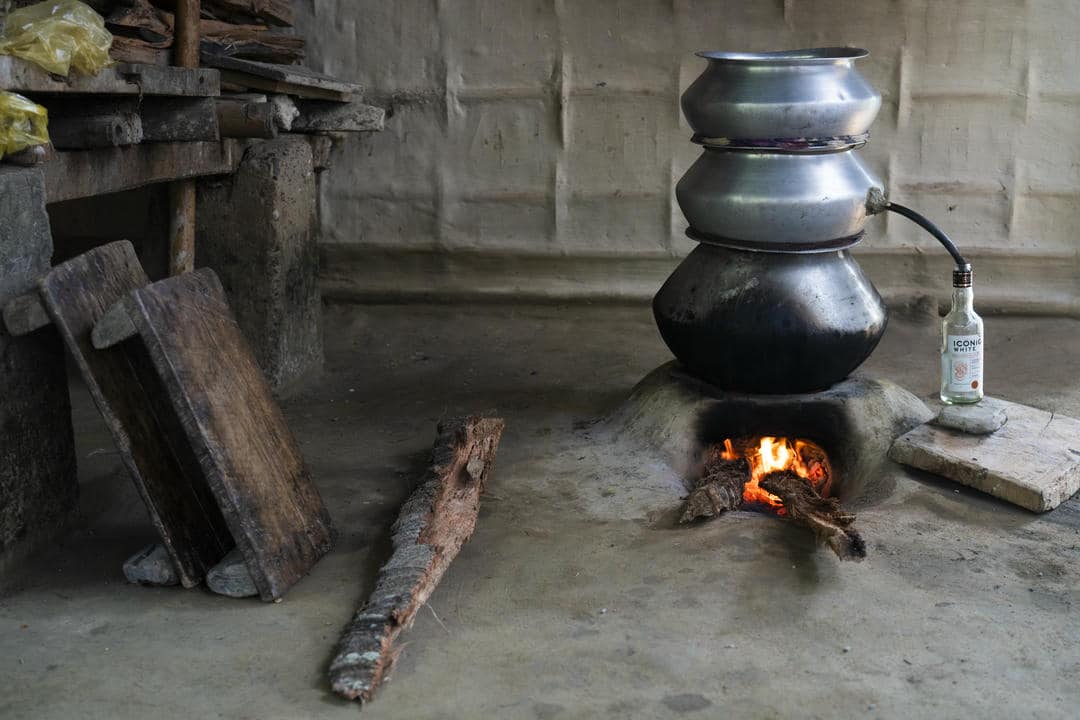
Watch the morning. What people eat before work tells you how far they are going and how hard the work is. A heavy breakfast means physical labour. Tea and a biscuit means a short walk to a desk.
Watch the tiffin. Food carried out to a field has to survive four hours without refrigeration, which explains a great deal about why it is what it is.
Watch what gets cooked twice a day and what gets cooked once. Once usually means fuel is expensive, or time is.
Watch who eats first and who eats last. It is one of the quickest ways to understand a household.
And watch the tea stall, which in most of India is where the day actually gets organised.
None of this requires you to eat anything at all. It is the same skill as noticing what time the shops open, pointed at the kitchen.
Because a festival sits at a fixed point in the farming year, and the dish is made of whatever had just come in.
Pitha at Bihu in Assam is made of rice, because Bihu follows the rice harvest. Pongal in Tamil Nadu shares its name with the dish, and both are about the harvest itself. Thekua at Chhath in Bihar is wheat and jaggery, which both keep well, and that matters for a festival with long fasting. Siddu in Himachal is steamed and heavy, because it is a winter food in a cold place. Patoleo in Goa is steamed in turmeric leaves, which are available during the monsoon and at no other time.
Once you know the crop calendar, none of these look arbitrary. The dish is a receipt for what the season delivered.
It is also why festival food is often the least representative food in a region. It is what people eat when there is a surplus, which happens a few days a year. Festivals rearrange a place completely, and the plate is part of that.
That you have stopped being a visitor and become a guest.
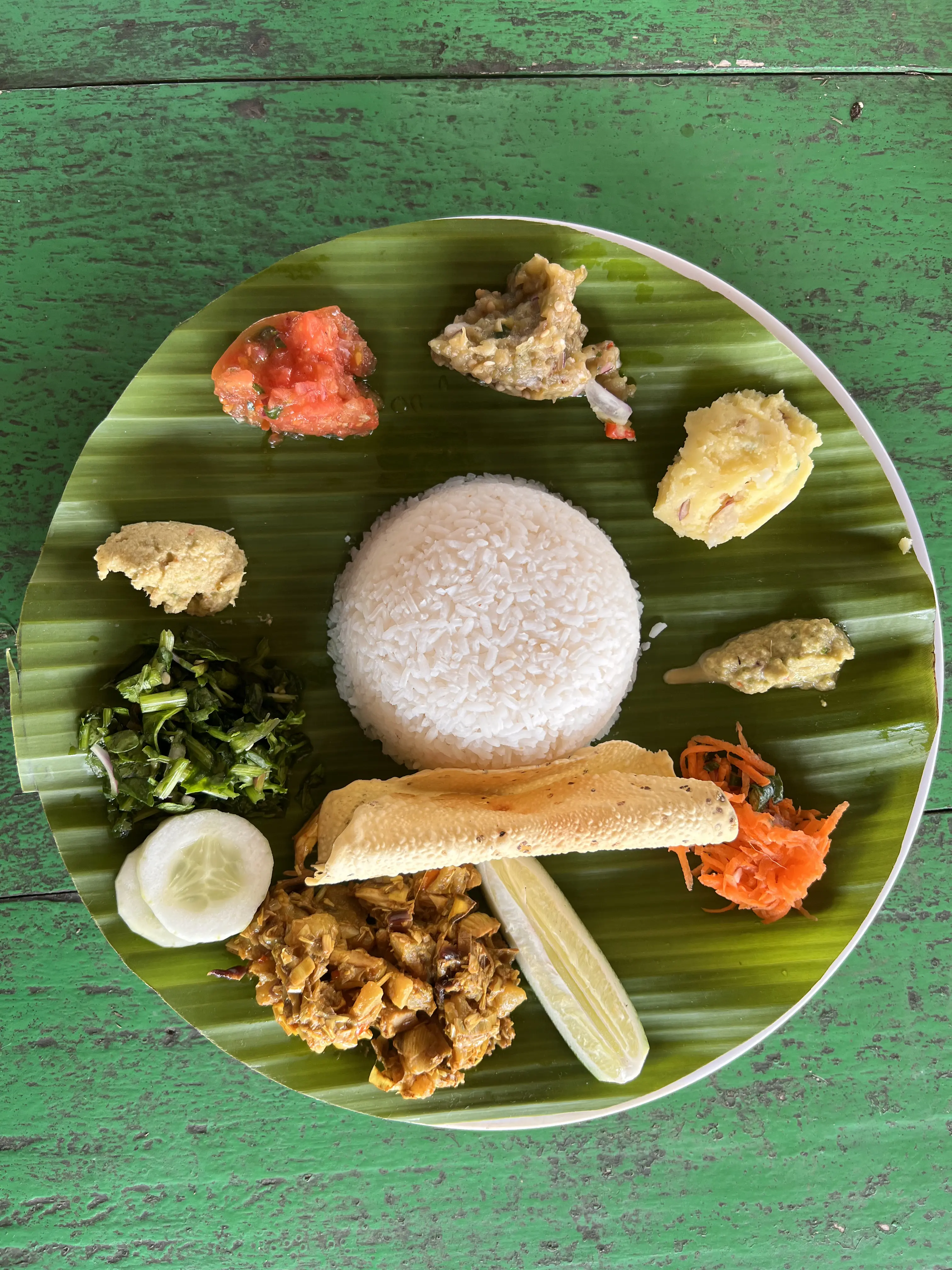
In most of India the offer comes early, and it is not a formality. Water first, then tea, then food you did not ask for. Somebody has usually started cooking before anybody consulted you.
Refusing outright is the one thing that lands badly, because what is being offered is not really food. If you cannot eat it, take a little and leave some. That is understood everywhere and offends nobody.
Eat with your right hand. Do not ask what is in something before you have tried it. Do not photograph the meal before anybody has started eating.
And notice how much has been made. In a house without much, a guest meal is a real cost, and treating it casually is the thing people remember afterwards. This belongs with the rest of everyday etiquette, and it is the part that matters most.
Eat where local people are eating, and street food is safe when it is busy.
The busy rule does most of the work. High turnover means fresh stock and a cook who cannot afford a bad name in a small area. An empty stall at a busy hour is telling you something.
Look for food cooked in front of you and served hot. Be more careful with anything raw, anything that has been sitting out, and cut fruit. Water is usually the problem rather than the food.
Choose small family places over anywhere set up for visitors. The money stays closer to the people who grew the food, and the cooking has not been adjusted for somebody else's palate.
Do not order more than you will eat. Waste registers in a way that is hard to explain if you have never watched a kitchen work on a tight margin.
And on the road, stop where the trucks stop. The smaller road has better food than the highway, for the same reason it has better everything else. Nobody arranged it for people passing through.
What grows there, what has to be preserved to survive a season, what a household can afford, and what the farming calendar looks like. The grain points to rainfall, the sourness points to humidity, the fat points to cold, and the amount of preserved food points to how long the difficult months last.
Because the land changes and food follows it. Coastal cooking runs on rice, coconut and fish with something sour to slow spoiling. Mountain cooking runs on what stores through winter. The river plains have the widest range because the soil is renewed each year. Dry country leans on lentils, low-water grains and dairy.
Usually, if the stall is busy. High turnover means fresh stock and a cook who cannot afford a bad name locally. Choose food cooked in front of you and served hot. Be more careful with anything raw, anything left sitting out, and cut fruit. Water is more often the problem than the food.
No. Nobody expects a visitor to eat everything, and nobody is testing you. Taking a small amount of something you are unsure about is enough, and leaving a little on the plate is normal. Forcing food down is not respect, it is just uncomfortable for everybody.
Refusing outright is the one thing that lands badly, because the offer is about the relationship rather than the food. If you cannot eat something, take a little rather than declining. If you are genuinely unable to, say so warmly and accept tea instead, which is almost always available.
You can, and in many places it is normal. Use your right hand only, since the left is traditionally considered unclean. Nobody expects a visitor to be good at it. Cutlery is available almost everywhere and asking for it causes no offence.
Because festivals sit at fixed points in the farming year, so the dish is made from whatever had just been harvested. Pitha at Bihu is rice because Bihu follows the rice harvest. Patoleo in Goa is steamed in turmeric leaves because they are only available in the monsoon.
Eat where local people eat, at the hours they eat. Look for small family-run places rather than anywhere set up for visitors. On the road, stop where the trucks stop. Ask somebody where they had lunch rather than asking where you should eat, since the answers are different.
Very easy in most of the country, and in many regions it is the default. Ask for food without onion or garlic if you need it stricter, since that is a recognised category. Vegan is harder, because dairy is used widely and often without being mentioned.
Stick to sealed bottled water, boiled water, or water you have filtered yourself. Tea is safe everywhere because it has been boiled. Be careful with ice and with fresh juice that may have been diluted. Most stomach trouble travellers get comes from water rather than from food.
It varies enormously and heat is not the same as spice. Much of the northeast and the hills is mild. Coastal and southern cooking can be hot. You can ask for less chilli almost anywhere and it is a normal request. Curd, rice or plain bread will settle it faster than water will.