
Let’s help you
plan your journey
Explore responsibly, discover offbeat places, guided by locals, rooted in culture.
Let’s help you
plan your journey
Explore responsibly, discover offbeat places, guided by locals, rooted in culture.
Soumen Bhowmick
Soumen Bhowmick founded Pollen Dots in 2024 to plan journeys across India and Bhutan. He works in the Commercial Department of Indian Railways, where he has been since 2000. From 2016 to 2020 he was Head of Business Development and Partnerships at ScoutMyTrip, a community-driven road trip planning platform. There he built a nationwide network of local Scouts who helped travellers on the road, and grew the Road Trippers Club to 16 Indian cities. As a core member of Devil On Wheels, he helped travellers plan Himalayan trips and started Spreading Smiles. He has driven solo from Arunachal to Goa and from Himachal to Karnataka, and has run his own caravan for more than ten years. His photographs have won national and international salon awards, and his writing has appeared in Outlook Traveller.
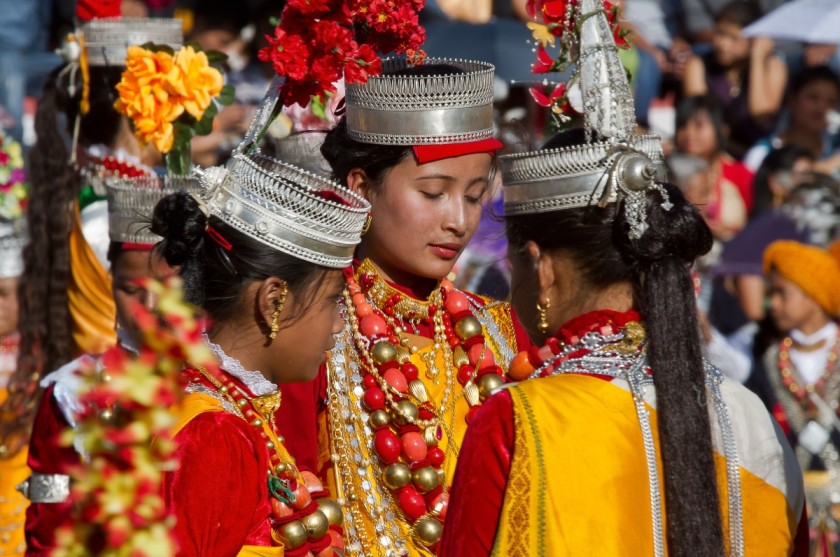
Shad Suk Mynsiem is described everywhere as an ancient Khasi spring dance, which is true of the dancing and not of the festival. The Weiking Ground version in Shillong was first held on 14 April 1911, organised by Seng Khasi, and villages across the hills still wait for it to finish before holding their own. The dance itself is Khasi matriliny drawn as a diagram, unmarried women in the inner circle and men facing outward around them with swords.
Neither of those facts is a debunking. A festival with a founding date is not a lesser festival, and a dance that encodes how a society is organised is doing more work than one that simply looks beautiful. But both change what you are looking at, and neither appears in the usual account.
Three words. Shad is dance. Suk is peace or contentment. Mynsiem is the soul or spirit. Together it reads as the dance of the peaceful soul, usually rendered in English as the dance of peaceful hearts or of happy hearts.
It was not always called that. The older name is Ka Shad Phur, and the change of name belongs to the same period as the change of venue.
It is a thanksgiving dance, held between the end of one agricultural cycle and the start of the next. It thanks the creator for the harvest that has come in and asks for the sowing that is about to begin, which is why it lands where it does in the year.
In April, over three days, with the main dancing at Weiking Ground in Shillong. It is also called Shad Weiking after the ground.
The three days do not all look the same. It opens with a thanksgiving prayer at Seng Khasi Hall in Mawkhar, where the male dancers stand in full regalia holding their swords and whisks while an elder leads the invocation. The dancing at Weiking is the third day and the one everybody photographs.
Then the rest of the hills follow. The various raids and himas, the traditional Khasi territorial divisions, hold their own Shad Suk Mynsiem in their own villages, but only once Weiking has finished. That ordering is worth holding on to, because it means a traveller who arrives for the Shillong event and leaves has seen the first of many rather than the only one.
Because that is when it was first held there. 14 April 1911, at Weiking, organised by Seng Khasi. For a few years afterwards it was also held at Mawkhar.
The dancing is far older. What was created in 1911 was the festival as a single annual public event with a fixed ground, a name and an organising body behind it. Before that it was Shad Phur, held by communities separately.
This should sound familiar if you have read about Mopin in Arunachal Pradesh. A committee there fixed the date to 5 April in 1966, so that a scattered community could hold one festival instead of many. The pattern across the Northeast is consistent and it is not a sign of decline. Communities under pressure build institutions, and a festival with an address and a date is an institution.
Knowing when a festival was organised tells you what you are going to see. It is the single most useful question to ask of any of them and almost nobody asks it.
The organisation that holds the Khasi indigenous religion together, formed at the end of the nineteenth century as Christian conversion spread rapidly through the hills.
Niam Khasi, the indigenous faith, went from being the religion of the Khasi to being the religion of a minority of them within a couple of generations. Seng Khasi was the response: a body that would keep the rites, the calendar and the practices in organised existence rather than let them dissolve household by household.
Shad Suk Mynsiem at Weiking is the most visible thing it does. The festival is therefore not a survival that happened to persist. It is something that was deliberately assembled to make sure the practice persisted, which is a different and in some ways more impressive thing.
Because that is the shape of Khasi society and the dance is a drawing of it.
Khasi society is matrilineal. Descent, clan name and property run through women, and the youngest daughter holds the ancestral house. The women in the inner circle are the lineage itself, the point from which everything continues.
The men circle them on the outside, armed, facing outward. The Khasi framing of a man's obligations is to advise, to lead and to defend, and the outer ring is that obligation performed. He is not at the centre of the picture and he is not supposed to be.
The two circles also move completely differently. The women dance with their eyes downcast and with minimal movement, small and controlled and slow. The men move fast, galloping and swerving, clockwise then anticlockwise, speeding and slowing with the drums.
Watch it for ten minutes and the social structure is legible without anybody explaining it. That is a rarer thing than it sounds. Most festivals tell you what a community believes. This one shows you how it is built.
Because the inner circle represents the lineage before it has begun, and the crown says so explicitly.
Female dancers are unmarried maidens. The pansngiat they wear carries the tiew lasubon, a wild orchid, and that flower is the marker of the dancer's chastity. The costume is not decorating the rule. It is the rule, stated in silver and flowers.
Girls dance too, in the same circle. This matters for how the end of the day works, which is covered further down.
Men are not restricted the same way, which is itself part of the structure rather than an oversight in it.
It is the crown, and this is worth being precise about because the term gets misapplied constantly.
The pansngiat is the crown, made of silver or gold, worn on the head. It signifies dignity, purity of heart and modesty, and it carries the tiew lasubon orchid. It is not the necklace. The coral and gold necklaces worn in three rows are a separate thing, as are the gold Shanryndang and the silver armlets. So are the silver wristlets and the strand of silver worn down the back of the hair.
The dress underneath is the jainsem or dhara, silk, worn with a velvet blouse.
Nearly every list of Khasi festival dress you will find online swaps the crown and the necklace, or invents a name for one of them. If a source calls the coral necklace a pansngiat, it has not looked at a photograph.
Three things, and the third is the interesting one.
The waitlam is the sword, carried in one hand. The symphiah is a whisk of hair, carried in the other. Both are raised and moved in synchronised rhythm at the opening prayer, and both are used in the dancing.
The third is the ryngkap, a silver quiver holding three arrows. Each arrow is dedicated: one to God, one to the first mother of the clan, one to the first father. A man dances with the whole lineage on his back, named and counted, which is a considerable thing to carry around a field for an afternoon.
The men's dress is the jainboh, a silk dhoti, with the sleeveless jymphong over it, a silk waistband and a silk turban carrying feathers.
By speeding up and shrinking.
Through the afternoon the tempo rises. As it does, the youngest dancers withdraw from the inner circle, so the ring of women contracts as the pace becomes harder to hold. The men break into mock duels and sword play on the outside.
It runs until the sun goes down and then it stops.
That ending is not choreography for an audience. A circle that tightens as the day goes on, shedding its children first, is what endurance looks like when you make it visible. An ordinary day tells you a great deal about a place, and so does the way a community chooses to end one.
April, and it is the best month in Meghalaya by a distance. Winter has cleared the roads, the monsoon has not started, and the plateau is green without being waterlogged. Everything that closes in July is open. Compare that with Behdeinkhlam in the Jaintia Hills, which falls in the middle of the rain and asks a great deal more of a traveller.
The dates move and are set by community councils rather than fixed, so confirm them for the year rather than assuming from the last one. Five to seven days is the right length, which lets you take the Weiking day without rushing and then get out into the villages afterwards, where the smaller versions are still to come.
On watching. There is no ticket, no commentary, no viewing area and nothing arranged for visitors. Stay outside the circles, which is not a courtesy but a structural requirement, since the whole meaning of the thing depends on who is inside which ring. Do not direct anybody for a photograph. The ordinary rules of being a guest apply, and they apply particularly at a festival whose organising body exists because the practice was once under threat.
Our seven-day Assam and Meghalaya journey runs through Shillong, Mawphlang, Cherrapunjee and Mawlynnong at a pace that suits the plateau. If you want to build around Meghalaya or the wider Northeast, April is the window. Understanding what the two circles are for before you stand at the edge of them is most of what care-based travel means here.
Shad is dance, suk is peace or contentment, and mynsiem is the soul or spirit. Together it means the dance of the peaceful soul, usually rendered as the dance of peaceful hearts. The festival was formerly known as Ka Shad Phur.
In April, over three days, with the main dancing at Weiking Ground in Shillong. The dates are set by community councils rather than fixed to a calendar date, so they need confirming for the year you plan to travel rather than assumed from a previous year.
The principal celebration is at Weiking Ground in Shillong, which is why the festival is also called Shad Weiking. It opens with a prayer at Seng Khasi Hall in Mawkhar. Villages across the Khasi Hills hold their own versions afterwards, but only once the Weiking dancing has finished.
The dancing is old. The festival in its present form is not. It was first held at Weiking Ground on 14 April 1911, organised by Seng Khasi, and was also held at Mawkhar for some years after that. Before 1911 it existed as Ka Shad Phur, held separately by communities.
The organisation that holds the Khasi indigenous religion, Niam Khasi, together. It was formed at the end of the nineteenth century as Christian conversion spread through the hills and the indigenous faith became a minority religion. Shad Suk Mynsiem at Weiking is the most visible thing it organises.
Because Khasi society is matrilineal and the women are the lineage. Descent, clan name and property run through them. The men circle on the outside, armed and facing outward, performing the Khasi obligation to advise, lead and defend. The dance is the social structure made visible.
The female dancers are unmarried maidens, and girls dance in the same circle. The tiew lasubon orchid carried on the crown is the marker of the dancer's chastity, so the restriction is stated in the costume itself rather than only in the rules.
The crown, made of silver or gold, worn on the head by the female dancers. It signifies dignity, purity of heart and modesty, and it carries the tiew lasubon orchid. It is not the necklace. The coral and gold necklaces worn in three rows are separate, as are the silver armlets and wristlets.
A waitlam, the sword, and a symphiah, a whisk of hair, one in each hand. They also carry the ryngkap, a silver quiver of three arrows, dedicated one each to God, to the first mother of the clan and to the first father of the clan.
Women wear the jainsem or dhara in silk with a velvet blouse, the pansngiat crown, and coral and gold necklaces in three rows. Silver armlets, wristlets and a strand of silver down the back of the hair complete it. Men wear the jainboh silk dhoti, the sleeveless jymphong, a silk waistband and a plumed silk turban.
The tempo rises through the afternoon, the youngest dancers leave the inner circle so the ring of women contracts, and the men break into mock duels and sword play on the outside. It continues until the sun sets and then stops.
It is the best month there. The roads have cleared after winter, the monsoon has not begun, and the plateau is green without being waterlogged. Everything that becomes difficult in July is straightforward in April.
Yes. There is no ticket, no commentary and no viewing area, and there is also nothing arranged for visitors. Stay outside both circles, which is a structural requirement rather than a courtesy, since the meaning of the dance depends entirely on who stands in which ring.