
Let’s help you
plan your journey
Explore responsibly, discover offbeat places, guided by locals, rooted in culture.
Let’s help you
plan your journey
Explore responsibly, discover offbeat places, guided by locals, rooted in culture.
Soumen Bhowmick
Soumen Bhowmick founded Pollen Dots in 2024 to plan journeys across India and Bhutan. He works in the Commercial Department of Indian Railways, where he has been since 2000. From 2016 to 2020 he was Head of Business Development and Partnerships at ScoutMyTrip, a community-driven road trip planning platform. There he built a nationwide network of local Scouts who helped travellers on the road, and grew the Road Trippers Club to 16 Indian cities. As a core member of Devil On Wheels, he helped travellers plan Himalayan trips and started Spreading Smiles. He has driven solo from Arunachal to Goa and from Himachal to Karnataka, and has run his own caravan for more than ten years. His photographs have won national and international salon awards, and his writing has appeared in Outlook Traveller.
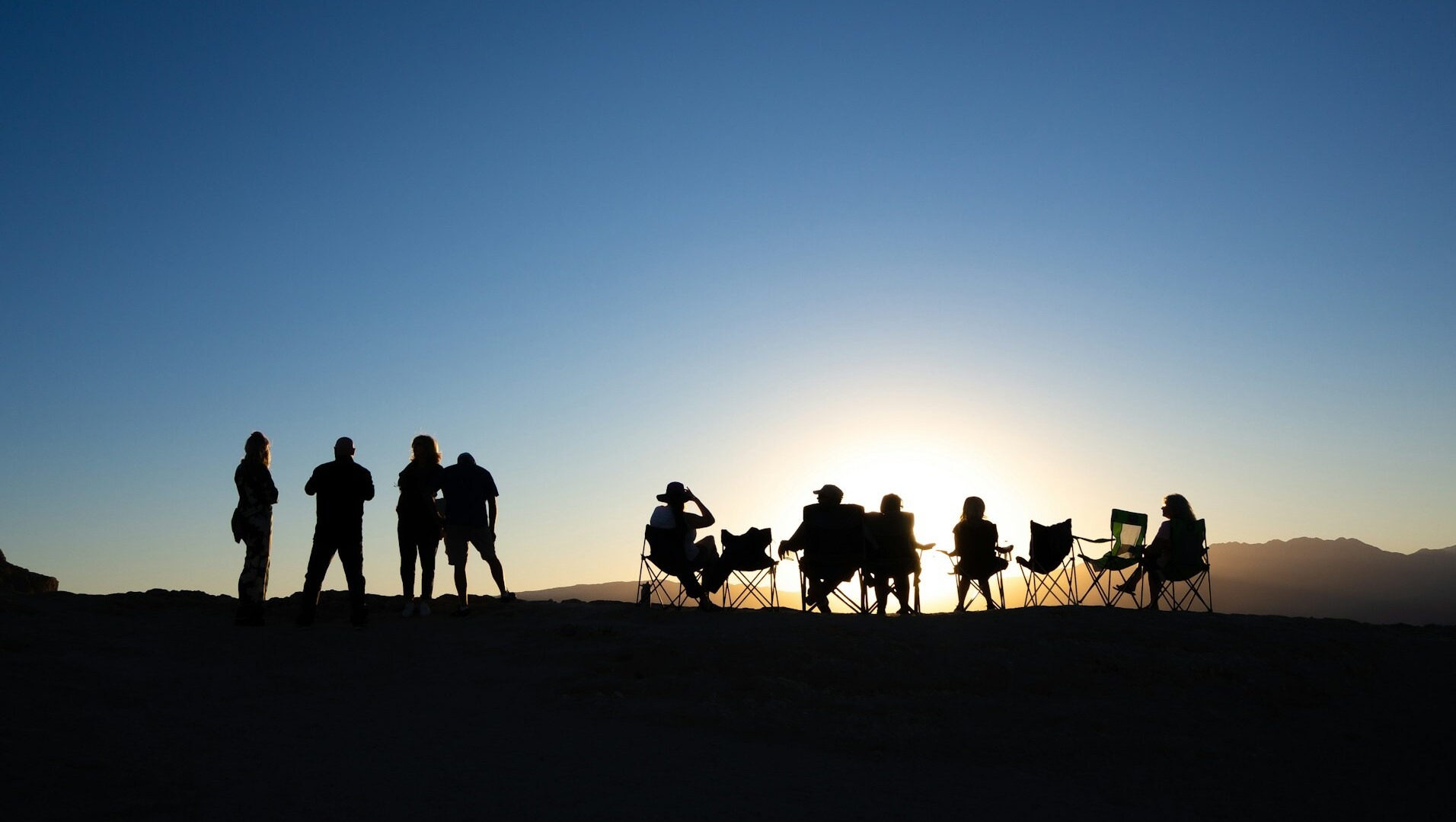
Every shortlist of corporate offsite destinations in India compares the same three columns: travel time, room quality and price per head. Those three measure how easy an offsite will be to organise, which is a real question and not the one anybody is actually asking. Destination Thinking starts from what should be different when everyone is back at work, and lets the logistics compare only the places that could produce it.
Ask three hotels, travel partners or destination management companies to propose locations for your next offsite and the three decks will look reassuringly alike. Room inventory, meeting space, airport connectivity, drive time, inclusions, cost per participant. They are professionally built and they answer almost every operational question anyone will ask before signing. What they cannot answer is whether the place will help you get what you organised the offsite for, because nobody told them what that was. The destination usually gets shortlisted before the organisation has agreed what should be different afterwards, and once it is booked the programme grows around the place instead of the purpose.
Because those three can be verified, compared and defended in a meeting. Travel time, accommodation quality and price per head are the only columns where one option is unambiguously better than another, so they end up carrying the decision by default.
Between them they measure how easy the offsite will be to organise. That matters, and it is not the same as whether it will work. Two organisations can run near identical programmes in two different places and get different results, and the difference sits entirely in what those three columns do not measure.
The distance between the rooms and the dining hall decides whether people arrive at breakfast in ones and twos or all together. Travelling to the venue as one group rather than arriving separately decides whether the first session opens with strangers or with people who have already spent three hours in the same vehicle. Neither reads as a strategic decision on a shortlist. Both decide who talks to whom and for how long, and nothing else about a journey changes a working relationship.
It is the practice of choosing the place last rather than first. You begin with what should be different when everyone is back at work. You then ask what people would have to do during the offsite for that to become true. Only then do you look for the places where those things are most likely to happen on their own. Budget, flights and capacity then compare that shortlist rather than create it.
We named it Destination Thinking because the reversal is the whole method and it needed a name people could hold onto in a planning meeting. It is not a replacement for operational planning. It decides what the operational planning is serving.
It is the destination half of Journey Architecture, which governs how a programme's pace, movement and structure get designed. Journey Architecture decides the shape of the days. Destination Thinking decides where those days can happen.
The practical effect is on the first conversation inside the organisation. Instead of opening with where should we go, it opens with what should be different when we return. That single change eliminates unsuitable options long before any budget does.
Write the outcome first, and make it specific enough to be wrong. Not stronger collaboration. Something closer to: the two regional teams have stopped escalating to each other and now escalate to me, and that should stop.
Then work forward in four steps. What would people have to do together for that to change. What kind of environment makes those things happen without being scheduled. Which places offer that environment in the month you are travelling. And only then, which of those places you can afford, staff and reach.
Most organisations run this backwards, and not out of carelessness. Comparing venues is easy and agreeing an outcome requires senior people to say out loud what is not working. The shortlist is the path of least resistance, so the destination gets chosen while the purpose is still vague, and everything downstream inherits that.
There is no single best one, and any recommendation that does not ask what you are trying to achieve is describing places rather than choosing between them. A leadership retreat, a sales conference, a dealer meet and a full-company gathering all need different environments. So the grouping below is by what each kind of place suits, not by rank.
| Kind of place | What it makes easy | Suits | Works poorly for |
|---|---|---|---|
| Hills with a long road approach. Himachal, Uttarakhand, the Northeast | Travelling together, slower days, time to think | Leadership groups, strategy work, smaller numbers | Large groups with tight calendars |
| Plantation and estate country. Coorg, Munnar, Wayanad, Kangra, Assam, Darjeeling | Walking, spreading out, unhurried meals | Mixing across departments, first-time groups | Programmes built around presentations |
| Coast and backwater. Goa, Kerala, the Konkan | Simple arrival, informality, moving large numbers | Full-company offsites, annual gatherings | Leadership work needing distance from everyday distractions |
| Fort and desert country. Rajasthan, Gujarat | Scale, evening events, a sense of occasion | Recognition programmes, customer and dealer events | Quiet leadership work |
| Remote and permit-controlled. Ladakh, Arunachal, Spiti, Nagaland | Real distance from routine, shared effort | Senior teams, milestone programmes | Anything arranged in under six weeks |
The fourth column is the useful one. Every destination has strengths and every destination has situations it handles badly. A proposal claiming a place suits every kind of offsite equally is describing the destination rather than evaluating the fit.
Which is why Rajasthan is not better than Coorg and Coorg is not better than Goa. Each produces a different environment for people to spend time in. Copying a destination because it worked for another company copies the answer without the question it was answering.
The purpose, and nothing about the property. A good offsite location is not the one with better rooms, a larger hall or more activities on the sheet. It is the one whose ordinary conditions push people towards the behaviour you need.
Some places naturally produce movement, chance encounters and shared discovery. Others produce privacy, focus or celebration. None of those is better in the abstract. A leadership team working through a difficult strategic decision needs the second. A company merging two acquired teams needs the first. Give either group the other's environment and the programme will be well run and will not work.
This is also the difference between choosing a venue and choosing a destination. The venue supplies infrastructure for the scheduled hours. The destination governs everything between them, and the conversations at breakfast, on a trail or in a vehicle are the ones people repeat months later.
None of them appear in a hotel brochure, because none of them belong to the property.
How far people will walk in an ordinary day. A group strung out along a path keeps rearranging itself, and nobody stays beside the same person for long, which is the cheapest mixing mechanism available.
How long it takes to get there together. Once small talk runs out on a long road journey, people start having real conversations, and there is no way to schedule that.
Whether phone signal serves the purpose or interrupts it. Neither answer is right by default. A strategy offsite may need connectivity gone. A sales offsite in a live quarter cannot afford it.
Whether there is any reason to leave the property. A market, a village or a trail gives people a choice to make together. A resort with nothing outside it returns the group to the bar, where it re-forms exactly as it would have at home.
The limit is the point at which people arrive too tired to talk on the first evening. For most groups that lands around four to five hours by road, and it moves with the surface, the season and the vehicle. Two hours on a broken hill road in the wrong bus feels longer than five on a good highway.
Published drive times mislead when you are planning for a group, because they assume one car in normal conditions. Corporate groups move in several vehicles, stop more often and rarely arrive together. Plan against the local answer. Somebody who moves groups on those roads every week will give you a more useful number than any mapping tool.
It does if it was designed, and it is dead time if it was not. The same five hours can be the strongest relationship-building block of the whole programme or the reason the first evening is flat.
What makes the difference is seating that mixes people who do not normally sit together, stops that are worth stopping for, and enough slack that nobody is anxious about the clock. That is most of the argument for choosing country roads over highways. It reads as a preference until you are watching a group and can see which conversations happened only because the road was slow. A journey like the eight-day slow mountain route through Himachal is built on that principle, with the driving treated as content rather than transfer.
The right distance is therefore not the shortest one. It is the one that carries the purpose without exhausting the group before the programme starts.
Choose the season before the property, because a place is not the same destination in every month. Roads, weather, daylight, what is happening locally and the rhythm of the place all change, and a venue that is right in October can be pointless in July.
The default calendar is worth questioning rather than following. October to March covers most of the country and most planning stops there, which means the months everyone avoids are quieter, cheaper and occasionally the months a place is at its most interesting. Behdeinkhlam in the Jaintia Hills is held deliberately in the middle of the monsoon, in the window the industry has agreed is unsellable. Evaluate the place for the month you will actually travel, not for its reputation.
The organisation's own calendar deserves the same scrutiny. An offsite scheduled the week before quarter close, a product launch or a major customer event will fail regardless of where it is held, because everyone in the room will be somewhere else. The best destination at the wrong time is not the right choice.
Six to eight weeks is usually enough for accessible destinations. Remote and permit-controlled regions need considerably longer, and the constraint is rarely the hotel.
Permits take time and cannot be accelerated. Vehicles capable of carrying a corporate group are limited in number in places like Ladakh and Spiti, and the operators who have them are booked early. Accommodation that can comfortably absorb thirty people at once is scarce outside the main circuits, and where it exists it goes first.
The real constraint, though, is internal. Getting leadership to agree what the offsite is for routinely takes longer than booking anything, and every downstream decision waits on it. A compressed timeline does not produce a rushed offsite so much as a venue-first one.
Ask four questions that no proposal answers on its own.
What is within walking distance that costs nothing and needs no booking. What does a group of thirty do here between four and seven in the evening. What happens to this plan if it rains for two days. And what does the road in actually feel like in the month we are travelling, from somebody who has driven it in that month.
Then send somebody. A recce by one person who understands the objective is worth more than any amount of comparison, because the things that decide an offsite are all things you notice by standing there. How far the rooms are from the dining room. Whether the walk to the viewpoint is fifteen minutes or fifty. Whether the property faces outward or turns its back on the place around it.
If a recce is not possible, the substitute is a conversation with somebody who has run a group there, not somebody who sells it. Those are different people and they give different answers. The value of an experienced partner sits in that difference, which is also what separates a designed programme from a booked one.
Every destination is somebody's home before it is somebody's venue. Local businesses, drivers, cooks, guides and communities make the experience possible, and thirty visiting professionals arrive with more effect on a small place than the group usually realises.
That has practical consequences for selection, not just ethical ones. Whether spending stays local or leaves with the operator. Whether the group's presence at a festival or a village is welcome or intrusive, which is a question about how a visiting group is expected to behave as much as about permission. Whether the place can absorb a group of this size in this month without strain.
Groups notice this, which is the part organisations underestimate. People come back from a programme where the relationship with the place was handled well and talk about it differently. That difference shows up in whether they want to go again. It is the argument for treating travel as something the organisation owes attention to rather than something it buys. It applies to a scale programme in fort and desert country as much as to a small group in the hills.
Most corporate offsite shortlists end up looking alike because they compare the same operational criteria and arrive at the same places. Organisations that get more out of the exercise are rarely spending more. They have made the destination the result of a decision rather than the start of one. It is the same shift that turns a campaign into something that keeps working, as with what a marketing investment leaves behind once it ends. The full argument for why the environment does this work at all sits in why a brand needs a journey rather than a campaign, and the journeys built on it are here.
Outside the main hotel circuits, thirty to fifty is where most Indian destinations start to strain, and the limit is usually vehicles and dining capacity rather than beds. Above roughly eighty, the choice narrows to established conference destinations and the qualities that make a place useful for relationship building tend to disappear.
It buys novelty and costs time, budget and flexibility. Visas and flights consume days that could have gone into the programme, and the cost per head usually forces a shorter trip, which is the opposite of what relationship objectives need. For recognition and reward programmes it often makes sense. For work on how people function together, a longer domestic programme usually delivers more.
Ladakh, Arunachal Pradesh, Spiti, parts of Sikkim and several areas near international borders all operate permit systems, and requirements change. Foreign nationals in a group frequently face different rules from Indian citizens, which is the detail most often missed until late. Confirm current requirements with an operator working in that region rather than relying on published summaries.
It depends entirely on where. Parts of the Western Ghats and the Northeast are at their most striking in the monsoon and considerably cheaper, while high-altitude regions become genuinely difficult and coastal programmes lose the outdoors. The real question is what the specific place is like in that specific month, which is a different question from whether the season is good.
Larger properties handle logistics better and tend to keep the group inside them. Smaller properties and homestays push people outward and produce more contact with the place, at the cost of split accommodation and more coordination. For groups under about twenty-five, splitting across two smaller properties often works better than one large one, provided the walk between them is short.
Which networks actually work, not whether there is signal, since coverage in hill and remote regions varies sharply by operator. Check whether the property has a working backup for internet and how often power fails. Then decide deliberately whether you want connectivity present or absent, because both are valid and only one of them should be an accident.
Ask what they would not recommend this destination for, and how many groups of your size they have run there in this month. A partner who answers both specifically is describing experience. A partner who says every destination suits every purpose is describing a catalogue. Ask who on their team will actually be on the ground, and whether you can speak to them.
Where budget allows, yes, and it should be somebody who understands the objective rather than somebody checking rooms. The things that decide an offsite are noticed by standing in the place: distances between buildings, what the evenings feel like, whether there is anywhere to walk. Where a recce is not possible, speak to somebody who has run a group there rather than somebody who sells it.
Collect requirements early and treat them as constraints on destination choice rather than as catering notes. Remote regions with limited kitchens, altitude, long road transfers and properties without lifts all rule themselves out for some groups, and finding that out after booking is expensive. Altitude in particular needs medical screening rather than a form.
Rarely, and attempting it usually compromises both. Leadership work needs distance, quiet and small numbers. A full-company gathering needs capacity, easy arrival and energy. A few places can do both in different seasons or different parts of the property. Treating them as one requirement is how organisations end up with a venue suiting neither purpose particularly well.