
Let’s help you
plan your journey
Explore responsibly, discover offbeat places, guided by locals, rooted in culture.
Let’s help you
plan your journey
Explore responsibly, discover offbeat places, guided by locals, rooted in culture.
Soumen Bhowmick
Soumen Bhowmick founded Pollen Dots in 2024 to plan journeys across India and Bhutan. He works in the Commercial Department of Indian Railways, where he has been since 2000. From 2016 to 2020 he was Head of Business Development and Partnerships at ScoutMyTrip, a community-driven road trip planning platform. There he built a nationwide network of local Scouts who helped travellers on the road, and grew the Road Trippers Club to 16 Indian cities. As a core member of Devil On Wheels, he helped travellers plan Himalayan trips and started Spreading Smiles. He has driven solo from Arunachal to Goa and from Himachal to Karnataka, and has run his own caravan for more than ten years. His photographs have won national and international salon awards, and his writing has appeared in Outlook Traveller.
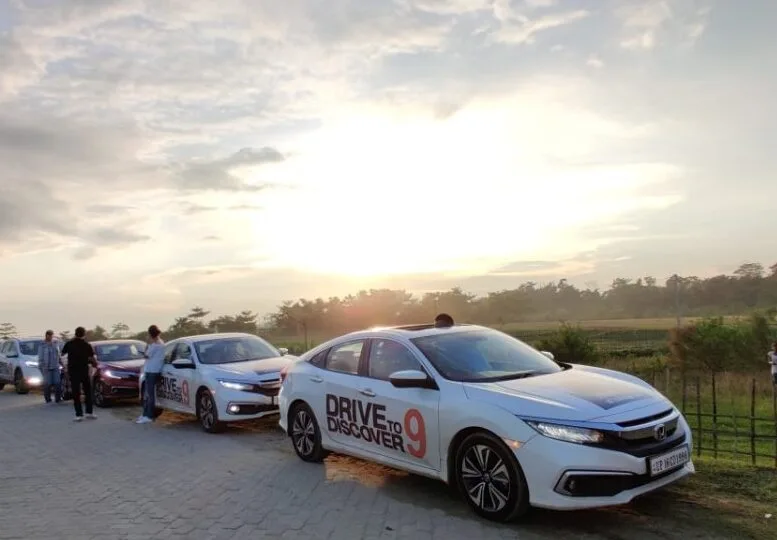
Marketing teams are told to turn campaigns into long-term brand assets without being told what an asset actually is. The most useful test is old work: articles and videos produced during Honda's Drive to Discover were still answering buyer questions in search years after that campaign closed. An asset is whatever a campaign leaves behind that still answers a question once the budget, the media spend and the microsite have all gone.
Think about the last significant thing you bought. A car, a holiday, a hotel, a financial product, a software platform your team now runs on. Advertising was probably involved somewhere. It introduced the name, or reminded you the thing existed, or put it on a shortlist. Then you went looking. Reviews from people who had actually used it. Comparisons across three or four sites. A video shot by an owner rather than an agency. A forum thread from someone with your exact problem. At some point in that process you stopped consuming marketing and started collecting evidence, and the decision was made on the second pile rather than the first. Most marketing budgets are built entirely around the first pile.
A campaign has an end date. It has a launch, a budget, a set of performance metrics and a day on which the dashboard is archived. A brand asset has none of those and keeps working without supervision.
The distinction is easy to test. Take anything your brand produced eighteen months ago and ask whether a stranger could find it today, and whether finding it would help them decide. Most campaign output fails that test immediately. The microsite is gone, the paid placements stopped the day the budget did, and the social posts sit at the bottom of a feed nobody scrolls back through.
What survives tends to be the material the brand did not fully control. A review, an owner's video, a journalist's write-up, a photograph somebody else took, a forum answer. Advertising makes a promise. Evidence is what a buyer finds when they go to check whether the promise held.
Because advertising is understood to be paid for, and the buyer discounts it automatically. That discount is not cynicism. It is a reasonable reading of who wrote the sentence and why.
Evidence carries weight for the opposite reason. A review has usually survived some form of outside scrutiny before a buyer reaches it. That might be a comment thread arguing with it, a publication's editorial process, or simply the fact that the person writing had nothing to gain. It also contains the things marketing removes. The mileage figure that did not match the brochure. The seat that was uncomfortable on the fourth hour. The thing that broke.
Those imperfections are why it works. A buyer reading an account with no flaws in it concludes they are reading marketing, and goes looking for something else.
Because almost all of it is rented. Paid impressions stop when payment stops. Social conversation moves to whatever is next. Search interest tied to a launch decays with the launch.
This is the part that rarely makes it onto a review deck. A campaign can hit every number it was set, be praised internally, and leave the brand in exactly the position it occupied before the campaign started. Nothing failed. The mechanism simply had no persistence built into it.
The consequence is a cycle most marketing leaders will recognise. Each quarter opens with a fresh conversation about budget and acquisition cost, because attention has to be bought again from the beginning. The cost is not only the money. It is that yesterday's spend contributes nothing to tomorrow's discovery.
This is the question worth putting into the campaign review, and it usually produces an uncomfortable silence. Run through the list honestly. Is there anything a prospective buyer can find, that was not paid for, that helps them decide?
For most campaigns the answer is a press release, some agency case study material and a handful of posts. None of it is written for a buyer and none of it survives a search. For a smaller number the answer is substantial: a body of independent articles, video reviews, photographs in circulation, and conversations the brand did not start.
The difference between those two outcomes is almost never budget. It is whether anyone designed for the second outcome at the briefing stage, or assumed it would happen as a by-product.
Because a studio removes exactly the variables a buyer is trying to resolve. Controlled light, a clean surface, a scripted line and a vehicle or product that has not been asked to do anything difficult produce material that looks expensive and answers nothing.
Experience produces the opposite. Put a product into the conditions a customer will actually use it in and it either holds up or it does not, in front of people whose job is to say which. What comes back is uneven, sometimes unflattering and considerably more useful, because the questions it answers are the ones buyers were already asking.
This is the argument behind what a brand's road trip should actually be about. The journey is a tool. The cause is the campaign. A route with nothing to prove produces footage. A route built around something worth testing produces evidence.
Several years ago, while planning Honda's Drive to Discover under ScoutMyTrip, a previous venture led by members of what is now the Pollen Dots leadership team, our attention was almost entirely operational. Routes to plan, accommodation to coordinate across several destinations, logistics to hold together and the whole thing to be filmed and documented as it ran.
The journalists and creators on the drive had a different job. They were there to spend days with the vehicle rather than an hour with it. The conversations that produced the coverage were not prompted by a brief. They were prompted by the road. Mountain sections raised stability and power delivery. Broken surfaces raised suspension behaviour. Long highway stretches raised comfort, noise and driver fatigue over a full day. The car was not being demonstrated inside a controlled environment. It was being used where the buyer would use it.
The part that took years to become visible is the part that mattered. The campaign ended on schedule. The material did not. Articles kept appearing in search results. Videos kept answering questions from people who had never heard of the drive. Photographs and accounts kept helping buyers evaluate a car long after the invoices were settled and the team had moved on to other work.
That is the whole argument in one project. The campaign finished. The evidence kept working.
This project is presented here solely as a portfolio of our team's experience and execution capabilities. Honda and Drive to Discover are trademarks of their respective owners.
Because it answers a question somebody typed. Branded content is organised around what the brand wants said. Independent material is organised around what the writer found interesting, which is usually closer to what a buyer wants to know.
Search rewards that difference over time. A page that resolves a specific question keeps earning its position because people keep arriving with the question and keep staying. A page built around a message tends to lose ground as soon as the promotion behind it stops, because nothing about it was ever pulling traffic on merit.
There is a second effect that is easy to miss. Independent material accumulates. Twenty writers covering the same drive produce twenty different entry points, in different words, ranking for different queries. A brand cannot produce that from inside its own newsroom no matter how much it publishes, and this is what makes coverage generated on the road behave differently from coverage that was pitched.
They favour material that reads as though somebody knew something first-hand. Assistants assembling an answer about a product pull from pages that demonstrate direct experience, specific detail and some form of independent standing, and they discount pages that only restate positioning.
This has a practical consequence for anyone briefing a campaign now. Promotional copy is the least citable material a brand can produce, because it contains nothing a model can use that is not already obvious. A detailed account of how something behaved over four days on a particular kind of road contains facts, numbers and observations that can be lifted into an answer.
The material that gets cited is the material that took work to produce. That is inconvenient for a content calendar and it is the honest position.
Long-form written accounts survive best, because they are indexable, quotable and easy for a model to parse. A twelve-hundred-word review published on a publication with its own audience will still be findable in five years.
Video sits close behind and outperforms text on some categories, particularly anything a buyer wants to see working. Photography survives when it circulates rather than sitting in a brand asset library. Forum and community answers are undervalued and last a long time.
What dies fastest is anything tied to a date or a platform. Stories, live posts, event microsites, hashtags and anything requiring a campaign landing page to still exist. If the format has an expiry built into it, treat whatever it produces as attention rather than an asset.
One line, added near the top: what should still be findable about this eighteen months from now, and who is it for. Everything else follows from having answered that.
It changes who gets invited, because people who publish are worth more than people who attend. It changes the length, because a day produces impressions and four days produce observations. It changes the itinerary, because a schedule with no gaps produces nothing unscripted. It changes what the brand does with the material afterwards, since evidence nobody can find is not evidence.
This is the discipline the term Journey Architecture describes: designing the conditions, the pacing and the situations so that genuine material emerges, rather than commissioning content and hoping the experience supports it. It rests on the same observation as the Journey Environment Principle. What people do is shaped by the environment they are placed in, not only by the brief they were given. The planning discipline for a media drive specifically is set out in how a car launch media drive is planned in India. It also changes who you commission. A brief written around what remains afterwards is a brief for an on-ground brand movement rather than for an event, and the two are priced, staffed and measured differently.
Wait six months and then search for it, which is the only measurement that cannot be gamed. Use the queries a buyer would use, not the brand name.
Count what comes back that the brand did not pay for. Independent articles still indexed. Videos still accumulating views. Whether any of it appears when an AI assistant is asked about the category rather than about the brand. Whether anything from the campaign is being cited by people who were not part of it. Whether the material answers questions the brand never addressed directly.
Then compare that against the same search done for the campaign before it. If the picture is identical, the spend bought attention and nothing else, which is a legitimate outcome as long as nobody was told it was an investment.
Three kinds, and recognising them early saves the budget for something else.
Campaigns for products with nothing to demonstrate. If the thing cannot be observed doing anything under conditions worth recording, an experience will not manufacture material about it.
Campaigns where the brand needs approval over every sentence. Independent material is credible precisely because it was not approved, and a brand unwilling to accept an unflattering paragraph will end up with coverage that reads as advertising and performs as advertising.
Campaigns with a deadline shorter than the evidence cycle. Material takes weeks to publish and months to accumulate position. A launch that needs its result inside the quarter should buy media, not build assets, and be clear internally that this is what it is doing.
Everything else is a candidate. The question at the briefing table is not what the campaign will achieve while it runs. It is what a stranger will find when they go looking, long after everyone involved has stopped thinking about it. That is also the question behind the journeys we design, and the reason journeys have moved from an events line into a strategic brand initiative in the first place.
A brand asset is anything that keeps creating value after it was made, without further spending to keep it alive. Logos and identity systems are the traditional meaning. The more useful modern meaning covers knowledge assets: reviews, independent articles, case studies, photographs, videos and customer accounts that continue helping people discover and evaluate a brand years later.
Campaign-led marketing measures success inside a defined window, on how many people saw, clicked or engaged while it was running. Asset-led marketing asks what a buyer will still be able to find years from now. Neither replaces the other and most brands need both, but they optimise for different things and confusing them is expensive.
Not necessarily more expensive, but weighted differently. Campaign-led spending is continuous, because rented attention has to be re-rented. Asset-led spending is heavier at the start, on an experience or a piece of work durable enough to keep returning value. The comparison that matters is cost per year of usefulness rather than cost per campaign.
Longer than most marketing teams expect, provided it answers a real question. Articles and videos from well-documented drives commonly remain discoverable for several years, because the questions buyers ask about a product category change slowly. Material tied to a launch moment or a campaign microsite disappears far faster.
No. Scale changes how much evidence gets produced, not whether the mechanism works. A dealer engagement programme, a smaller customer drive or a single well-documented journey can produce a smaller body of material that behaves in exactly the same way. What matters is whether anything was designed to outlast the activity.
No, and attempting to is what destroys the value. The material carries weight because it was not approved by the brand, and a buyer can tell the difference within a paragraph. What a brand can control is the conditions: which roads, how many days, how much unscheduled time, and whether the product is put in situations worth writing about.
It depends entirely on what was agreed before anyone travelled, and it is worth settling in writing. Material the brand commissioned and paid to produce is usually the brand's to use. A journalist's article and a creator's video generally are not, and that independence is the reason they are worth more than anything the brand owns outright.
Yes, as long as it is treated as one source among many rather than the definitive version. A brand's own account is useful for detail nobody else recorded, and it can rank on specific queries. It will never do the job independent coverage does, because a reader applies the same discount to it that they apply to advertising.
Earned coverage is a subset. Coverage that appears, gets read for a week and drops out of search was earned but is not an asset. Coverage that keeps surfacing on category queries years later is both. The test is not how the material was obtained but whether it is still doing work without anyone maintaining it.
Six months is the earliest useful check and a year is more reliable. The early signal is whether independent material is still being published after the activity ended, without prompting. The durable signal is whether that material holds search position once the launch interest has decayed, which cannot be assessed while the campaign is still generating attention.
Whoever writes the brief, because the decision is made there and nowhere else. Agencies deliver against what they are asked for, and a brief written around reach produces work optimised for reach. Adding one question about what should remain afterwards changes the output more than any amount of review at the other end.