
Let’s help you
plan your journey
Explore responsibly, discover offbeat places, guided by locals, rooted in culture.
Let’s help you
plan your journey
Explore responsibly, discover offbeat places, guided by locals, rooted in culture.
Soumen Bhowmick
Soumen Bhowmick founded Pollen Dots in 2024 to plan journeys across India and Bhutan. He works in the Commercial Department of Indian Railways, where he has been since 2000. From 2016 to 2020 he was Head of Business Development and Partnerships at ScoutMyTrip, a community-driven road trip planning platform. There he built a nationwide network of local Scouts who helped travellers on the road, and grew the Road Trippers Club to 16 Indian cities. As a core member of Devil On Wheels, he helped travellers plan Himalayan trips and started Spreading Smiles. He has driven solo from Arunachal to Goa and from Himachal to Karnataka, and has run his own caravan for more than ten years. His photographs have won national and international salon awards, and his writing has appeared in Outlook Traveller.
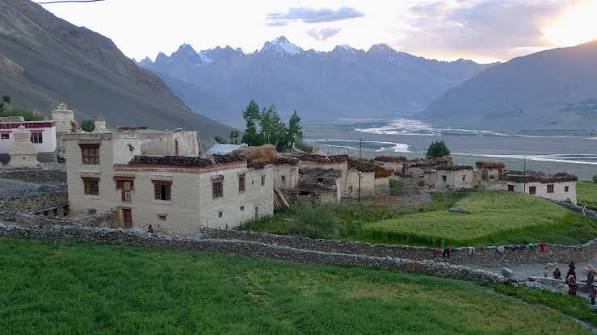
Responsible tourism in Ladakh is usually written as a list for the visitor, and the hardest problems in the region are not on it. A village in Zanskar was named Ladakh's first Heritage Village this month, years after water shortages had already pushed families out of their ancestral homes. The recognition names what the place holds and pays for none of what it needs.
Kumik sits high up in the Zanskar valley. On 15 September 2026 it became Ladakh's first designated Heritage Village. Lieutenant Governor Vinai Kumar Saxena made the announcement at the opening of the Ladakh Zanskar Festival. It was the eleventh festival, and the first since Zanskar became a district in April.
The whole village is the heritage, not one building in it.
The citation names the old houses, the sacred spaces, the farming and the customs. It also names the Kanjur manuscripts and other Tibetan Buddhist materials the village has kept. The administration called it a living cultural landscape rather than a monument. The decision sits under Vikas Bhi, Virasat Bhi, the government's phrase for development alongside conservation.
That is a real distinction and it matters later. You can fence a monument, repair it and visit it. A living cultural landscape needs the people who live in it to still be living in it.
A house can stand for a century with nobody in it.
What makes Kumik interesting is not the mud walls. It is knowing how to build them, mend them and keep a house warm that high up. It is the fields and the water that reaches them. The work families share at harvest. The texts somebody has looked after for generations.
Field notes from the Cambridge Zanskar Expedition in December 2014 describe neighbours bringing in the harvest together. They carried stones for a prayer house. During breaks they shared bread and chang, the local barley brew, along with conversation and news.
That is living heritage on an ordinary day. Not a show and not an attraction. People doing work that has to be done, and knowing things they learned from somebody older. It does not survive in a building, because it was never in the building.
The Kanjur, also written Kangyur, is the Tibetan Buddhist collection of scriptures held to be the words of the Buddha. It holds teachings, monastic rules and tantric texts. Many were translated into Tibetan from Indian sources.
Some of that writing survives only in Tibetan. The translation group 84000 says the canon holds works whose originals are gone everywhere else. So a manuscript in a mountain village is not only a religious object. It can be the last copy there is.
The Buddhist Digital Resource Center counts thousands of Himalayan manuscripts still held by the communities that made them. The University of Vienna has run a project to photograph and study these collections across the western Himalayas, Zanskar included.
No government programme did that. Families and monks kept doing it, for a very long time, and nobody called it heritage.
Kumik's water came off a glacier, and the glacier gives less than it did.
Yale Environment 360 wrote about the village's water trouble in 2015, and about plans to move as the glacier supply shrank. The report set that against uneven warming across Zanskar. A longer growing season can help a farmer. Losing reliable irrigation does not.
That high up, water is not one problem among several. Fields need it at the right week. Animals need it daily. Houses need drinking water through a winter that freezes every source above ground.
When the water goes, everything that depends on staying goes with it. The house, the fields, the shared labour, the person who knows how the roof is built.
It rarely looks like a crisis. It looks like a family moving to where the water is.
New Lines Magazine reported in 2022 that families had moved down to Lower Kumik. A canal there gave them water for their fields. The move worked in the way that mattered. It brought new trouble too. In winter they depend on water deliveries, because the natural sources freeze.
Moving meant building again. New houses, new fields, a living started over where nothing is easy.
By July 2025, Le Monde reported that most of the old village stood empty. Some stayed because they could not afford to leave. Others stayed hoping the old settlement could be preserved as a heritage destination.
A name, and then a set of open questions.
The announcement sets out no budget. No repair timetable. No water plan. It gives recognition and says why the village matters.
So the practical questions all remain. Who runs the conservation work. Whether families get help keeping their houses up. What the manuscript keepers are asked and what they agree to. And whether anything is done about water.
The Mountain Climate Fund has put out a plan, worked out with the village, to catch meltwater from a glacier nearby. It describes a canal about 300 yards long at around 18,000 feet, sending the runoff towards the streambed above the village. Its staff and the villagers surveyed the route together and found it workable. That is a plan and not a finished project. It is not part of the heritage designation.
Fourteen months after residents told a reporter they hoped the old village might be saved as a heritage destination, it was named one. The water plan did not arrive with it.
Not with the traveller, and not with a list of things to remember on arrival.
By the time anybody reaches Zanskar, somebody else has made the decisions that matter. Which village is on the trip. Who gets paid and how much. Where the group sleeps and what that place runs on. How many people turn up at once, and on which days.
A visitor can carry a refillable bottle and still arrive with a group that uses more water in three days than a house uses in a month. The behaviour is not where the responsibility sits. Where something actually happens and who is handed the money is a better question, and it gets answered long before anybody packs.
For Kumik the question is sharper than usual. The village's constraint is water. Any tourism that adds demand to a village short of water has to say where that water comes from, and nobody should take the answer on trust.
Whatever the village says, and it is a smaller number than most operators want.
Carrying capacity sounds technical. It is not. A village has so much water, so many rooms, and so many people who can host without dropping their own work. Above that line, something gives.
The places that handle this well have set the number themselves. Communities that set their own limits and then lived with them do it with permits, closed seasons, capped group sizes or simply a day of the week when nobody comes.
Kumik has no such framework yet. The designation brings attention before anything is in place to handle it. That is the usual order and nobody's fault.
The phrase means very little on its own. What changes it is who signs the contracts.
A homestay owned by the family living in it is one thing. A guesthouse owned by somebody in Leh is another. A guide from the village is different from a guide brought from outside for the season. A craft bought from the person who made it is one thing. One bought from a shop that buys in bulk is another.
The difference is not size or good intentions. It is whether the money stays after the season ends.
Income is what makes keeping a place going possible. A family with a reason to keep its house up will keep it up. A family earning nothing there will leave, and the house falls down whatever the designation says.
Every bed added is water added.
Guests need washing water, drinking water, kitchen water, and somewhere for the waste to go. In a village that already depends on water deliveries through winter, that sum is not abstract.
There are ways to do it. Dry toilets are normal across Ladakh and they work. Waste can be carried out rather than buried. Groups can be small enough that the village absorbs them. Visits can fall in the months when there is water rather than when there is not.
None of that happens by accident and all of it costs somebody something. It gets decided by whoever plans the trip, months before anybody arrives.
You do not arrive in Zanskar. You cross into it.
The drive shows you why the villages sit where they do. Why the fields are that size. How far apart help is. Watch the land change for a few hours and Kumik's water problem needs no explaining.
Fly to Leh, drive fast to a photogenic village, and you have seen the village but not the reason for it. The road is not the gap between the interesting parts. In Zanskar it is most of the explanation.
Most trip planning asks what a place can give the group. This one is worth reversing.
We have called the first question Destination Thinking, and choosing a place for what it holds rather than for how it looks is the whole of it. Kumik pushes that further. The honest answer to what Kumik needs is not visitors.
It needs water. It needs families able to stay. It needs the manuscripts kept by people who know what they are.
Tourism can help with some of that. It cannot touch the rest. A group that understands which is which will design a different trip from one that arrived to see a heritage village.
Hard, because none of it flatters the people who came.
The usual offsite here is a drive, a good-looking village, lunch, photographs, hotel by evening. Everybody agrees it was meaningful.
The other version takes longer and asks more of everyone. Understand the valley. Understand where the water comes from and why there is less of it. Meet people who have already moved and people who have not. Ask what heritage means to somebody whose house is up in the old village and whose fields are down in the new one.
Then sit with the question that follows. It is about the group, not the village. What does this organisation choose to preserve, and what has it already let go of without deciding to?
No trainer could have built that exercise. It comes from the place and it could not happen anywhere else.
Not a visitor count. Not a line in a tourism report.
The measure is whether people are still there. Whether households can maintain their houses. Whether the manuscripts are kept, and copied where their keepers agree, so the knowing outlives the paper. Whether water reaches the old fields again. Whether a young person there has a reason to stay that is not performing their own culture for visitors.
Tourism can contribute to some of that. Stays owned locally, guiding, crafts and visits agreed in advance can put money where it is needed. The test is whether it helps people keep their homes, not whether it fills them.
This is what we mean by care-based travel. Find out what a place is already carrying before deciding what to do there. Kumik has carried its own heritage for a very long time, mostly without help. The designation acknowledges what people kept alive. Whether they can stay is a separate question, and it has not been answered.
A village recognised for its buildings, its living traditions and its local knowledge together, not for one monument. Kumik became Ladakh's first designated Heritage Village on 15 September 2026. The recognition covers the whole village as a cultural landscape.
In the Zanskar valley in Ladakh, at high altitude. Zanskar became a separate district in April 2026. The declaration was made at the eleventh Ladakh Zanskar Festival, held at Sani on 15 and 16 September 2026.
Its water came off a glacier that gives less than it did. Yale Environment 360 documented the shortage and relocation plans in 2015. Without steady irrigation, the fields, the animals and the winter drinking water all suffer.
Yes. New Lines Magazine reported in 2022 that families had moved to Lower Kumik, where a canal gave access to irrigation. Le Monde reported in July 2025 that much of the historic village had been abandoned. Both reports came before the designation. Neither is a current head count.
The announcement sets out no budget, no repair timetable and no water plan. It gives recognition and says why the village matters. What follows depends on what gets assessed, who takes part and what money is committed.
Families and practitioners, usually for generations, and long before any archive existed. The Buddhist Digital Resource Center describes thousands of such manuscripts still held by the communities that made them. Access depends on the custodians agreeing to it.
No visitor programme comes with the designation yet. Anything arranged should go through people in the village. Access to sacred spaces and manuscripts depends entirely on what their custodians agree to.
Mostly decisions taken before anybody travels. Which villages are visited, who is paid, where a group sleeps, how much water that accommodation uses, and how many people arrive at once. How a visitor behaves matters less than any of those.
Yes, and the ones that manage it well have done exactly that. They use permits, closed seasons, capped group sizes, or a day each week when nobody comes. A limit set elsewhere tends to be set too high.
It depends on who owns the rooms, who guides, where the crafts come from, and how much water the visitors add. Income can make keeping the place going possible. A useful test is whether tourism helps people keep their homes rather than whether it fills them.
The buildings can. What made them worth preserving is harder, because the knowledge of how to build, farm and repair goes with the people. That is the difference between a restored village and a living one.