
Let’s help you
plan your journey
Explore responsibly, discover offbeat places, guided by locals, rooted in culture.
Let’s help you
plan your journey
Explore responsibly, discover offbeat places, guided by locals, rooted in culture.
Soumen Bhowmick
Soumen Bhowmick founded Pollen Dots in 2024 to plan journeys across India and Bhutan. He works in the Commercial Department of Indian Railways, where he has been since 2000. From 2016 to 2020 he was Head of Business Development and Partnerships at ScoutMyTrip, a community-driven road trip planning platform. There he built a nationwide network of local Scouts who helped travellers on the road, and grew the Road Trippers Club to 16 Indian cities. As a core member of Devil On Wheels, he helped travellers plan Himalayan trips and started Spreading Smiles. He has driven solo from Arunachal to Goa and from Himachal to Karnataka, and has run his own caravan for more than ten years. His photographs have won national and international salon awards, and his writing has appeared in Outlook Traveller.
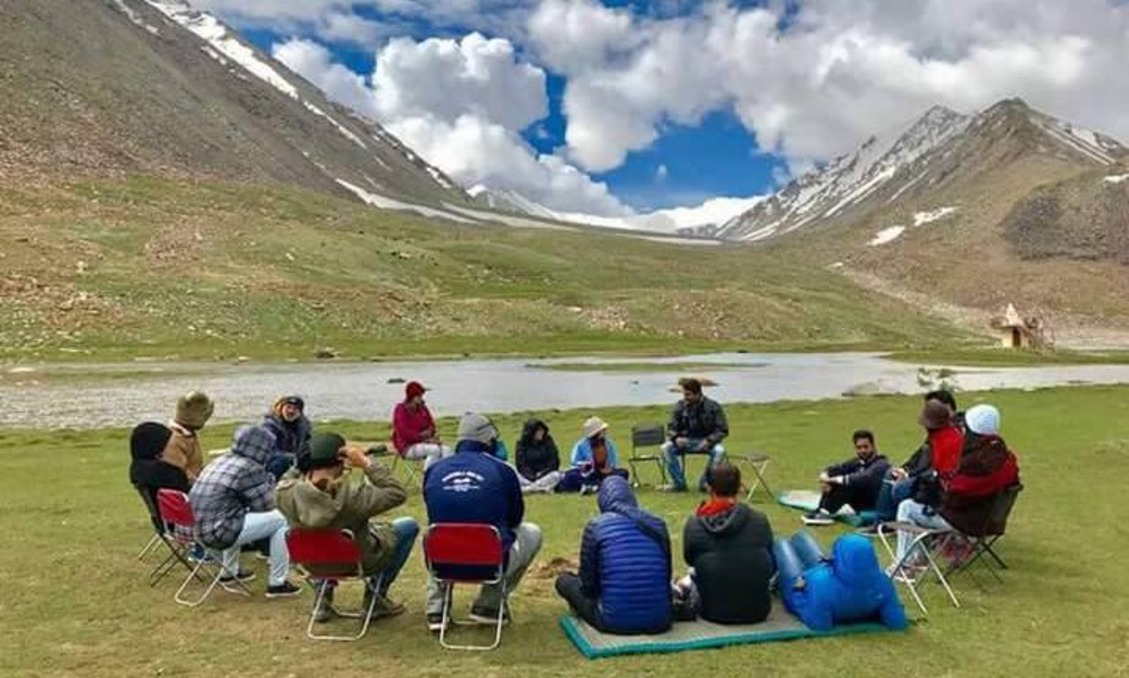
Most brands buy media coverage in a single city on a single day, and it stops the moment the spending does. What is missing is a cause worth covering, because journalists and creators publish for their own reasons and nobody keeps writing about a company that simply wanted to be seen. A road trip built around a real cause carries it across cities, gives each one its own story, and leaves that story on platforms the brand does not control, which is why it survives for years.
The order in which these decisions get made is usually the problem. A brand decides it wants visibility, sets a budget, and then looks for something to attach itself to. What comes back is a convoy with a logo on the doors, photographed in five cities, producing a press release and a handful of obliging mentions that nobody revisits. The expensive part was arranged first, and the interesting part was never found at all.
Something has to be true about it that would still hold interest if the company's name were removed.
That sounds like a high bar, and it is, but it is also the only reliable test. A journalist has to file something an editor will run, and a brand moving its own product around the country does not qualify. Neither does a well-produced event with good food. The desk has seen both this month.
What passes is narrower and more interesting. Somebody set out to settle a question nobody had answered. Somebody reached a place that is genuinely difficult to reach. Somebody went looking for something that had not been catalogued, or met people whose work deserved attention and had not received it. Once one of those is true, the brand's involvement becomes a fact inside the story rather than the reason for it, and that is precisely the position a brand wants to occupy.
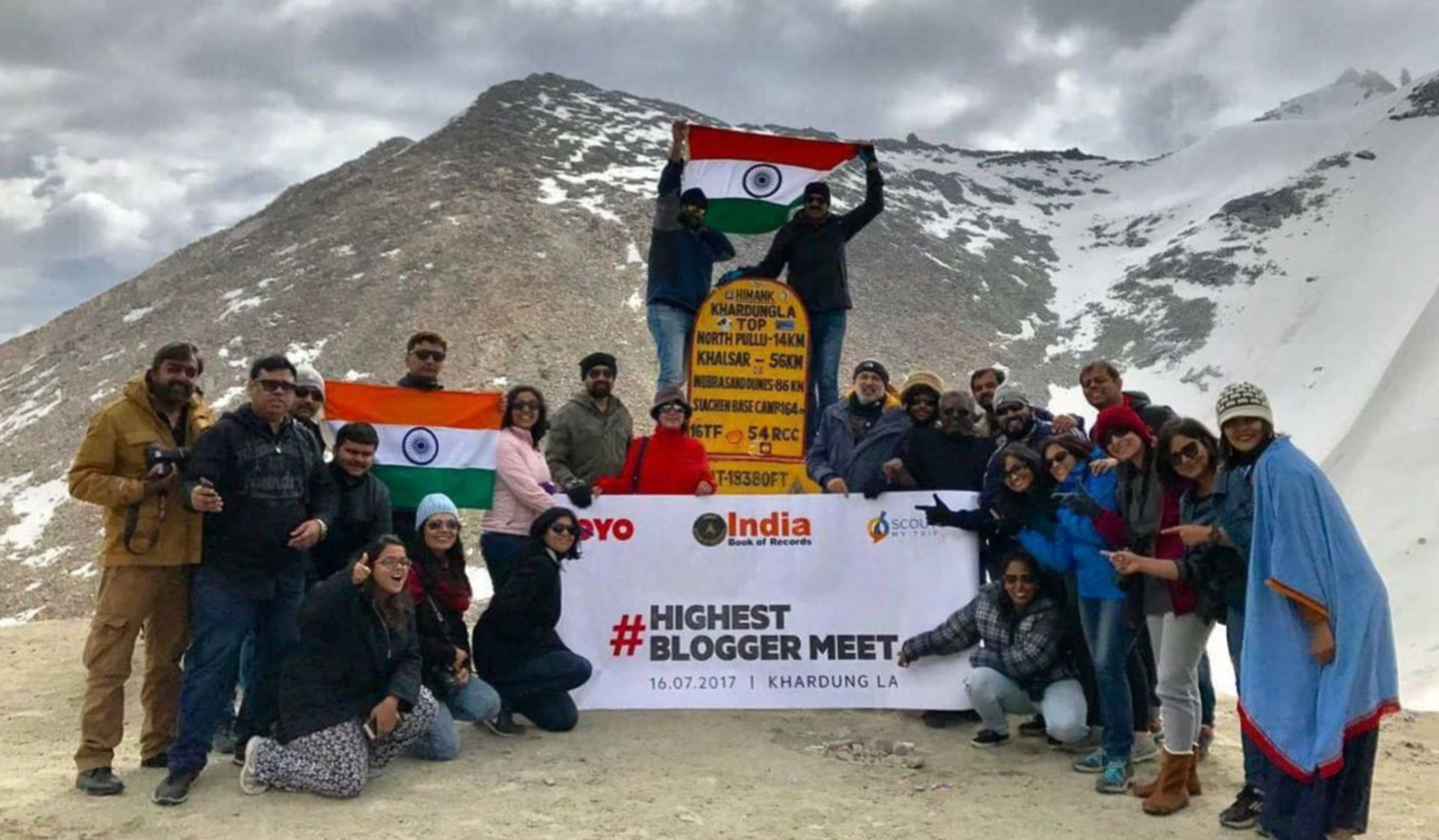
We once took a group of bloggers to one of the highest motorable passes in the country and held a meet at the top, in air thin enough that holding a conversation was work. It went into a book of records. Nobody needed persuading to write about it. It was hard, it had not been done, and everyone who was there wanted their name attached to the account.
The difference between a reason a brand invented and a reason that would survive without the brand is visible in the first paragraph of an email. Journalists see it immediately. So do the creators being invited, which is why a manufactured journey produces polite coverage and a real one produces enthusiastic coverage.
This is the same reasoning that sits underneath Care-Based Travel, which treats a journey as a relationship with the places and people it passes through rather than as a route between two points. A cause that stands up to scrutiny usually stands up because it takes those places seriously.
By arriving in each of them with something that city can claim a share of.
This is the thing an event cannot do, and the limitation is structural rather than a matter of budget. A launch in Mumbai buys Mumbai. National desks may pick it up, and the trade press will run the announcement, but that is the ceiling, because nothing happened anywhere else. There is no local angle in Coimbatore for an event held in a Mumbai hotel, and a regional editor has no reason to invent one.
A journey works the other way round. When it arrives in a city, that city has an event of its own, with its own participants and outcome, different from the one that happened two days earlier, three hundred kilometres away. The regional press are not running a national announcement out of politeness. They are covering something local. Repeat that across five or six stops and the same money has produced coverage in markets an event would never have entered, in publications a national campaign does not speak to, and often in languages the brand is not advertising in.
The stops have to earn this. A route that pauses only to sleep produces one story at the start and one at the finish, and the days in between are travel. What matters is whether something genuinely happens in each place, involving people who live there.
Choosing where those stops fall is not a logistics decision. It is the same question Destination Thinking asks of any journey, which is what a place makes possible that another place does not, answered here in terms of who lives there and what they can contribute to the story.
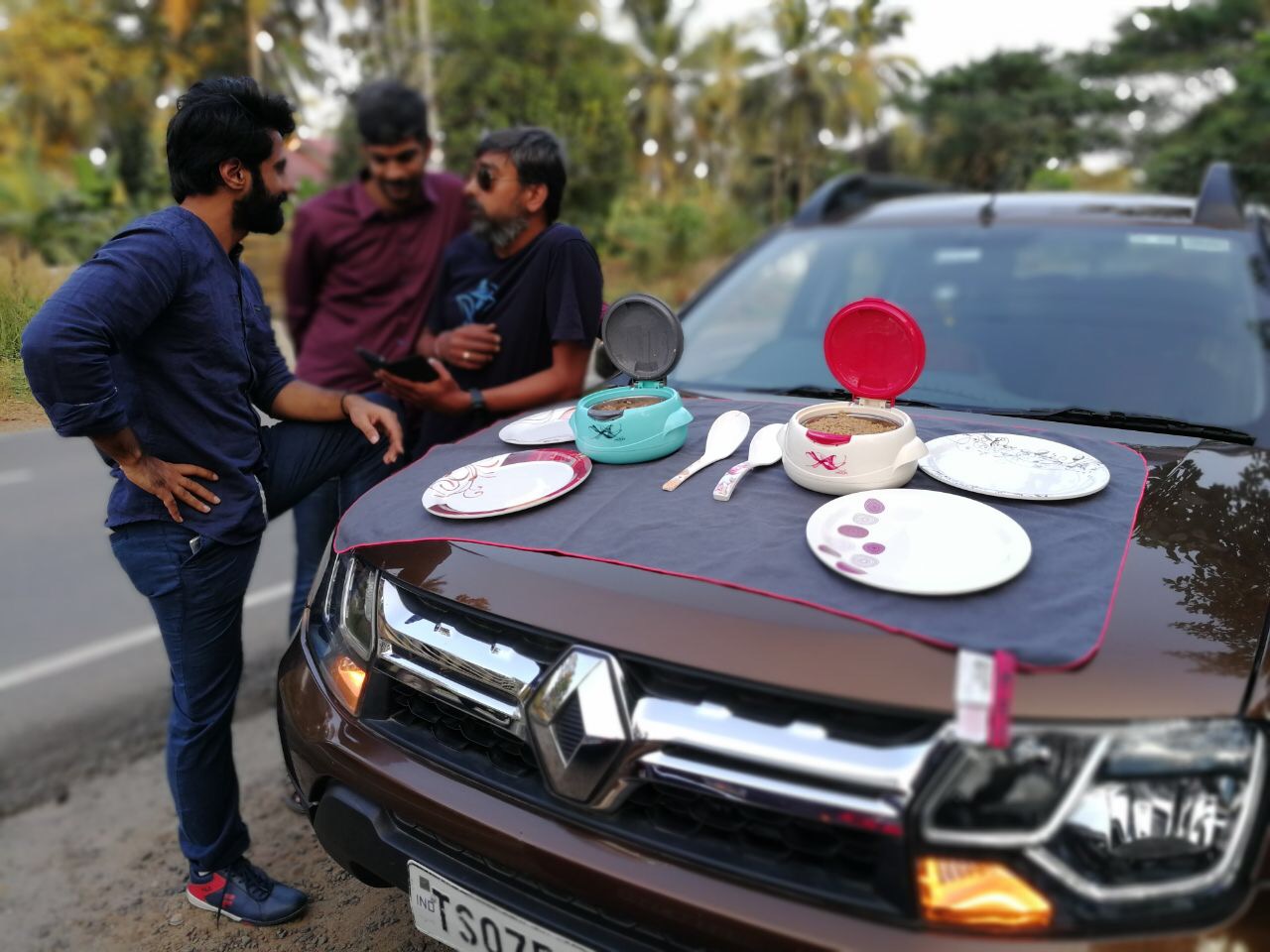
We ran a food trail across several states for a casserole brand, carrying hot food from one city to the next for people waiting there. Every stop had its own gathering and local participants, and the product spent the entire journey doing exactly what it was built to do in front of everybody watching. Nobody had to be asked to mention the casserole. The casserole was the reason the idea worked at all.
Because it does not live where the brand can reach it.
An event archive belongs to the company that commissioned it. It sits on a website, survives one redesign, and is quietly removed when the campaign is no longer current. Nobody outside the organisation has any stake in keeping it there.
The material from a journey ends up scattered across the personal sites, channels and profiles of everyone who travelled. Those posts are not campaign assets. They are somebody's own work, about something they were glad to have done, and there is no reason for any of it to come down. A record entry stays in the record book. A regional article stays in the publication's archive. A post written in a hotel room after a long day of driving is still there years later, still naming the brand, still being found by people searching for the place rather than the product.
That is the difference between spending a budget and leaving something behind. It is also completely outside the brand's control, which is exactly why it lasts.
Because everyone travelling has a reason of their own for wanting it to work, and none of those reasons is a contract.
The brand needs something real to be written about, since a product announcement gives a writer nothing to build on. The publication needs a story rather than an announcement, and regional desks, in particular, are short on material with a local hook. Both of those are obvious enough.
The third one is rarely said out loud. Anyone publishing regularly is under constant pressure to produce, and their own subject wears thin. A journey hands them material they could not have generated alone, frequently outside their usual territory, which is what keeps their work from becoming repetitive. It is a chance to create something genuine rather than another sponsored post. And when the coverage appears, they are named in it alongside the brand and the idea, which is worth considerably more to a working creator than a fee.
So nobody is doing anybody a favour, and that is the healthiest possible basis for a campaign. Four different problems get solved by the same journey. It only holds when the reason underneath is real, which is why a manufactured cause produces one round of coverage and then nothing.
The useful comparison is not the total. It is what the money turns into.
An event puts most of its budget into a venue, staging, lighting, audio, production and a set that is built in a day and removed the following morning. Those things are necessary, and they are also gone. What survives is a photo gallery and whatever coverage the day produced.
A journey spends on movement and time. Vehicles, fuel, road support, accommodation along a route, the people running it. At the end of it the brand does not own a room. What it has instead is material, distributed across dozens of accounts and publications, still accumulating for as long as anyone keeps finding it.
That is the whole argument, and it does not require a number to make. One format converts spending into an occasion. The other converts it into a record. A marketing head choosing between them is not comparing two prices. They are choosing what they want to be holding in six months.
The longer version of that argument, and what it means for how a campaign is planned in the first place, is in how marketing campaigns become long-term brand assets.
A reason that is genuinely its own, and the honesty to admit when it does not have one yet.
The strategic work happens well before any route is drawn. What does this brand actually have a right to care about, given what it makes and who buys it. What question could it credibly go and answer. Where is there something worth finding, and who is worth meeting along the way. A brand that starts from the coverage it wants will end up with a convoy and a logo. A brand that starts from something true ends up with a story that other people take over and keep telling.
The route comes afterwards, and it is not decoration. This is Journey Architecture applied to a campaign rather than to a group of colleagues, which means designing the sequence, the pace and who travels together so that the idea gets stronger as the journey goes on rather than being repeated at each stop. A good cause routed badly produces a pleasant trip and modest coverage. The same cause routed properly produces the version people are still writing about years later. What that looks like once the vehicles are actually moving, from route selection and recce through to support vehicles and medical cover, is set out in how a car launch media drive is planned in India.
A brand road trip campaign is a multi city journey built around a genuine cause, question or purpose, with journalists and creators travelling on it. The brand's role sits inside the story rather than being the story. Coverage comes from what happens at each stop, and from the participants publishing their own accounts on their own platforms.
It depends on how many cities the journey stops in and whether something genuinely happens in each of them. A route that pauses only to sleep produces coverage at the start and the finish. A route where each stop has its own event, with local participants, gives every regional publication along the way a story of its own to run.
The totals are not always different, but the money turns into different things. An event spends on a venue, staging, production and a set that is removed the next morning. A journey spends on movement and time, and what remains afterwards is material spread across publications and personal accounts rather than a photo gallery the brand has to host.
Count coverage across regions during the campaign, then count again at twelve and twenty four months. The second measurement is where the difference shows, because material published by participants on their own platforms stays online and keeps being found. An event archive cannot survive the same comparison.
Yes, and most of them are not automotive. The vehicles are only how a cause gets carried across the country. The campaign belongs to whatever the journey is about, which can be food, craft, a river, a record, a set of people worth meeting, or a question somebody wanted answered.
The brand owns whatever its own team produces. Everything created by the journalists and creators travelling belongs to them. That is uncomfortable for some marketing teams, and it is also the reason the coverage lasts, because material somebody owns is material somebody keeps.
Usually four to six, rather than a dozen. Adding stops to raise the count creates days where nothing happens, and a city where nothing happened generates no local coverage. Depth at each stop produces more than speed across many.
A cause nobody outside the brand cares about. Weather, a broken vehicle or a stop that does not work are all recoverable. A journey built on a manufactured reason can be executed perfectly and still produce a single round of coverage that stops the week it ends.