
Let’s help you
plan your journey
Explore responsibly, discover offbeat places, guided by locals, rooted in culture.
Let’s help you
plan your journey
Explore responsibly, discover offbeat places, guided by locals, rooted in culture.
Soumen Bhowmick
Soumen Bhowmick founded Pollen Dots in 2024 to plan journeys across India and Bhutan. He works in the Commercial Department of Indian Railways, where he has been since 2000. From 2016 to 2020 he was Head of Business Development and Partnerships at ScoutMyTrip, a community-driven road trip planning platform. There he built a nationwide network of local Scouts who helped travellers on the road, and grew the Road Trippers Club to 16 Indian cities. As a core member of Devil On Wheels, he helped travellers plan Himalayan trips and started Spreading Smiles. He has driven solo from Arunachal to Goa and from Himachal to Karnataka, and has run his own caravan for more than ten years. His photographs have won national and international salon awards, and his writing has appeared in Outlook Traveller.
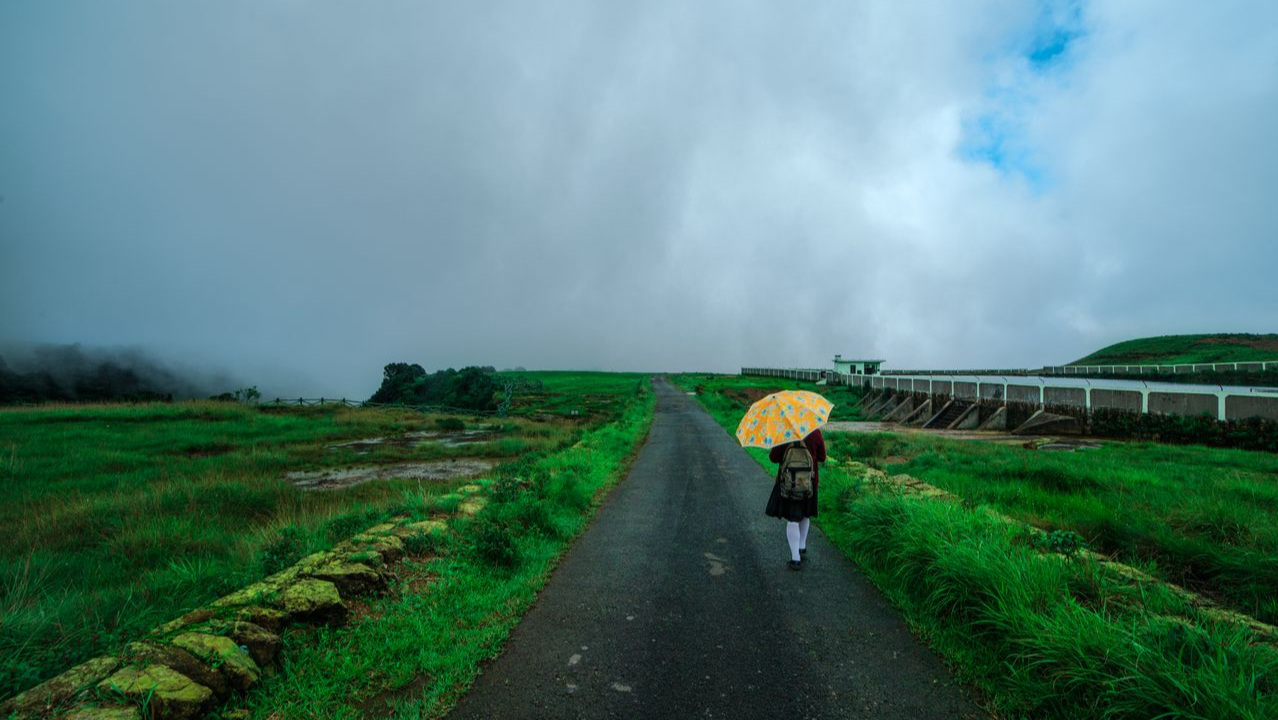
Rain and paperwork decide a trip to Meghalaya, and most people have the paperwork backwards. Meghalaya asks for no Inner Line Permit from anybody, yet a state law requires visitors from outside Meghalaya to register if they stay longer than twenty four hours. A directive of June 2025 put that registration on homestays and resorts, so your host does it and there is nothing to apply for in advance.
Three peoples share these hills, Khasi, Pnar and Garo, each with its own language and a matrilineal inheritance system. Connectivity, booking windows and the other questions that apply anywhere in India are answered by the guide to preparing for travelling in India.
October to April. The rain is what the state is known for and also what hides the thing you came to see.
The two seasons show you different states. Monsoon gives you the waterfalls at their loudest and takes the views away. Winter gives you the views and leaves some falls thin.
No permit. Meghalaya sits outside the Inner Line Permit system for Indian citizens and outside the Protected Area regime for foreign passport holders.
The registration rule is modelled on the Inner Line Permit and is not one. That distinction is the part most guides lose, and it matters because it changes who has to act. A permit is something you obtain. This is something your accommodation records.
Sohra and Mawsynram hold the rainfall records, and those are annual totals rather than a description of any given week. The rain arrives in a concentrated season and the itinerary consequences are specific.
Three peoples, not one hill culture. Khasi in the east and centre, Pnar or Jaintia around Jowai, Garo in the west, with their own languages.
Guwahati for arrival, Shillong as the base, and everything after that is a drive. Meghalaya has no internal flights worth planning around.
Four days for Shillong and Sohra, seven to add Dawki and the Nongriat descent, ten if the Garo hills are in.
Most of what goes wrong on a Meghalaya trip is a weather and daylight problem rather than a distance problem. A viewpoint in cloud, a cave shut by water, a village closed on the day you drove to it. Choosing where to go for how a place actually works is the part worth time at the planning stage. Our seven day journey through the forests, hills and root bridges is built around that, and customised tours is where fixed dates get worked out.
No. Meghalaya requires none from Indian citizens and sits outside the Protected Area regime for foreign passport holders. What it does have is a registration rule under a 2016 state law, for visitors from outside Meghalaya staying beyond twenty four hours, and since June 2025 homestays and resorts handle that through the state tourism app.
October to April. November to February gives the clearest views and the driest roads, and March and April add warmth and the spring festival season. The monsoon from late May to September gives the waterfalls at full volume and takes away the canyon views for days at a time.
No. The village stopped admitting visitors on Sundays from January 2026, a decision taken by its own village council. Shops and stalls close and arrivals are turned away at the approach road. Homestay guests already staying may remain, with limited services.
Mawsynram holds the higher long term average and Sohra, still widely called Cherrapunji, holds several record single season totals. Both are within a short drive of each other. The figures quoted for either are annual totals and say nothing about the week you happen to visit.
Four days covers Shillong, Sohra, the main falls and a cave. Seven adds Dawki, Shnongpdeng and the descent to Nongriat, which needs a full day on its own. Ten is what the Garo hills require, because they sit a long drive west of the Khasi side.
Yes, with slack built into every day. Landslips are normal on the Shillong to Sohra road and in the Garo hills, and clearance is usually a matter of hours rather than days. The risk is not the road being impassable, it is an itinerary with no spare time in it.