
Let’s help you
plan your journey
Explore responsibly, discover offbeat places, guided by locals, rooted in culture.
Let’s help you
plan your journey
Explore responsibly, discover offbeat places, guided by locals, rooted in culture.
Soumen Bhowmick
Soumen Bhowmick founded Pollen Dots in 2024 to plan journeys across India and Bhutan. He works in the Commercial Department of Indian Railways, where he has been since 2000. From 2016 to 2020 he was Head of Business Development and Partnerships at ScoutMyTrip, a community-driven road trip planning platform. There he built a nationwide network of local Scouts who helped travellers on the road, and grew the Road Trippers Club to 16 Indian cities. As a core member of Devil On Wheels, he helped travellers plan Himalayan trips and started Spreading Smiles. He has driven solo from Arunachal to Goa and from Himachal to Karnataka, and has run his own caravan for more than ten years. His photographs have won national and international salon awards, and his writing has appeared in Outlook Traveller.
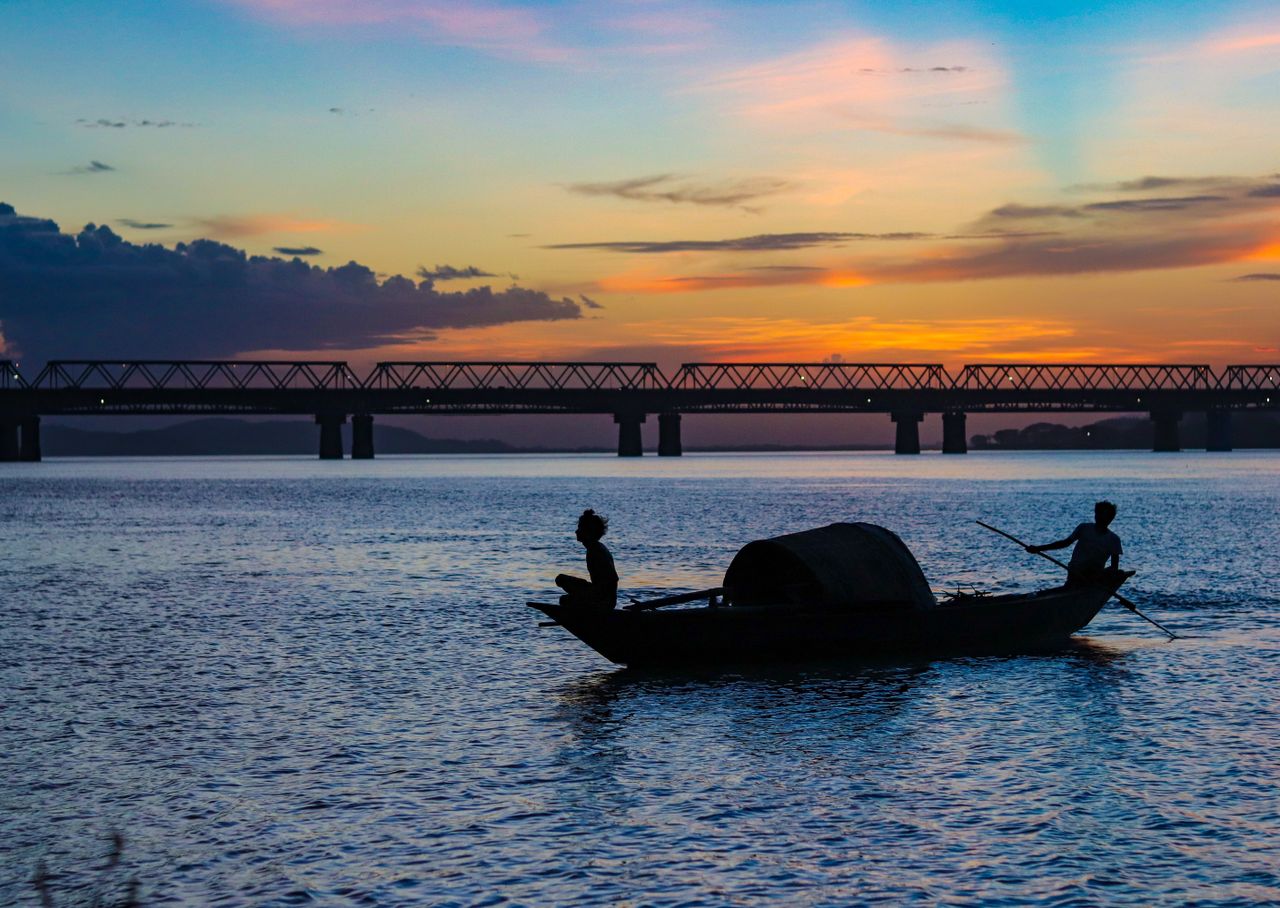
Planning a trip to Assam is mostly a question of season, because the state runs on the Brahmaputra and the river sets what is open. Assam itself needs no permit from anyone, Indian or foreign, while four of the seven states it borders require an Inner Line Permit from Indian citizens alone. Work out the month first, check it against the festival calendar, and the rest of the trip follows from those two answers.
This is the short version, written to travel with an itinerary. For permits elsewhere, connectivity and booking windows, the general guide on how to prepare for travelling in India covers it.
November to April. The rain runs from late May to September and the road season closes with it, which is why Kaziranga shuts for four months.
Kaziranga reopened on 3 October 2026, with jeep safaris from 7.30 to 10.00 and 1.30 to 3.00. Elephant safaris were set to restart only in the second half of October. The two openings are not the same date, which is the part most itineraries get wrong.
No. Assam requires no Inner Line Permit from Indian citizens and it sits outside the Protected Area regime that applies to foreign passport holders in parts of the Northeast.
Most trips to the region are sold as Northeast itineraries, which is why the permit question gets attached to Assam by association. It is the neighbours that need checking.
Five months carry something, and one of them shuts the state's most visited temple. Ambubachi Mela brings lakhs of people to Kamakhya at the one time of year its doors are closed.
Shoes come off more often here than in most of India, and a namghar is the one place where getting it wrong gets noticed. Everyday etiquette for travellers covers the general version.
Guwahati for arrival, Jorhat or Dibrugarh for Upper Assam, and a ferry for Majuli. That crossing is the only leg on an Assam itinerary that depends on the river rather than the road.
Five days for a first trip, nine or ten to take in Upper Assam.
Most of what goes wrong on an Assam trip is a timing problem rather than a packing problem. A ferry that moved, a safari that opened later than the park, a temple shut for the one week you were there. Our fourteen-day journey through the Northeast runs Assam, Arunachal Pradesh and Meghalaya, and customised tours is where the dates get settled.
Arunachal Pradesh, Nagaland, Manipur and Mizoram, all four from Indian citizens. Assam, Meghalaya and Tripura require none. For foreign passport holders the Protected Area regime was reimposed on Manipur, Mizoram and Nagaland in December 2024, and an Overseas Citizen of India card counts as foreign for this purpose.
November to April. The rain runs from late May to September, Kaziranga is shut for most of it, and the river disrupts roads and ferries. November to February is the steadiest period for driving and for wildlife.
It reopens in October after the monsoon closure and shuts in late May, with the closing date announced each year rather than fixed. It reopened on 3 October 2026. Jeep safaris start with the reopening and elephant safaris restart two to three weeks later.
No. Worship stops and the doors close for four days, which is when the largest crowd of the year gathers outside. Darshan resumes on the morning after the fourth day. Anyone whose June dates touch Kamakhya should check them against it.
Assamese is the main language of the Brahmaputra valley. Bodo is widely spoken in the west and Bengali across the Barak valley in the south, alongside many community languages along the river. Hindi and English work in the cities and at most places a visitor stays.
For a first trip, yes. It covers Guwahati, Kaziranga and one more stop at a reasonable pace. Majuli is what does not fit, because the ferry fills part of the day at each end and the crossing can move.