
Let’s help you
plan your journey
Explore responsibly, discover offbeat places, guided by locals, rooted in culture.
Let’s help you
plan your journey
Explore responsibly, discover offbeat places, guided by locals, rooted in culture.
Soumen Bhowmick
Soumen Bhowmick founded Pollen Dots in 2024 to plan journeys across India and Bhutan. He works in the Commercial Department of Indian Railways, where he has been since 2000. From 2016 to 2020 he was Head of Business Development and Partnerships at ScoutMyTrip, a community-driven road trip planning platform. There he built a nationwide network of local Scouts who helped travellers on the road, and grew the Road Trippers Club to 16 Indian cities. As a core member of Devil On Wheels, he helped travellers plan Himalayan trips and started Spreading Smiles. He has driven solo from Arunachal to Goa and from Himachal to Karnataka, and has run his own caravan for more than ten years. His photographs have won national and international salon awards, and his writing has appeared in Outlook Traveller.
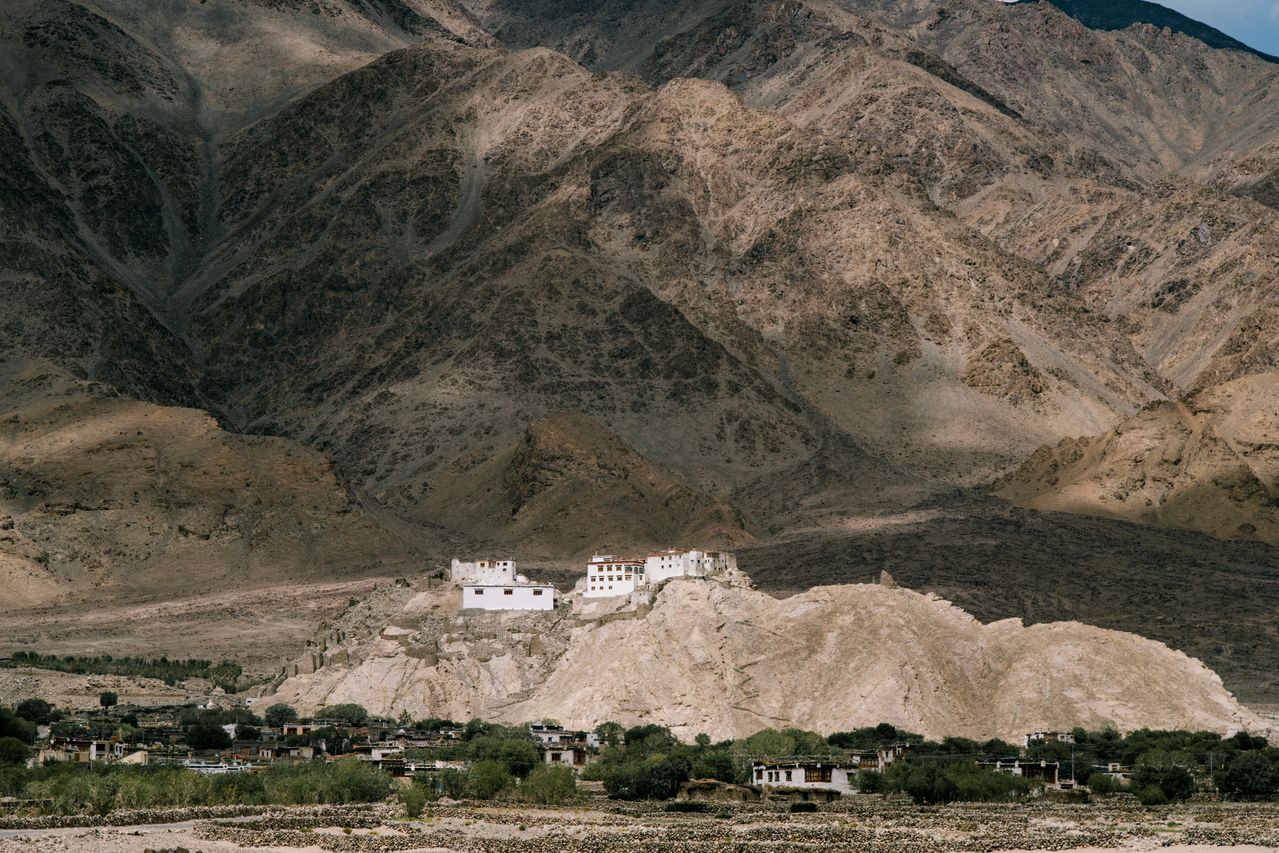
Planning a trip to Ladakh is mostly a question of how you get in, because the way you arrive decides how hard the altitude hits you. The Srinagar road gains height over two days with a halt at Kargil, while the Manali road crosses four passes above 15,000 feet in quick succession. The approach is the first decision, because flying in is the fastest way to lose two days to altitude.
This is the short version, written to travel with an itinerary. For the permit position, the acclimatisation guidance and booking windows across the country, the general guide on how to prepare for travelling in India covers all of it.
May to September for the roads, and the two roads do not open together.
One change is coming and it is not here yet. The Zojila tunnel achieved its breakthrough on 9 June 2026, is 13.153 km long, and is expected to open to the public in February 2028. It will cut the Zojila crossing from about an hour and a half to fifteen minutes and take the pass out of its usual three-month winter closure. The Sonamarg tunnel below it has been open since January 2025. Neither changes the current season.
Three ways in, and they are not equivalent for the body. Leh sits at roughly 3,500 metres and the flight from Delhi gains about 3,300 of those in ninety minutes.
The published acclimatisation guidance sets the numbers. What it means here is practical. Build the first two days into the itinerary rather than treating them as lost, and do not put Khardung La or Pangong on day two whichever way you came in.
Not from an Indian passport holder, and that includes Nubra, Pangong and Tso Moriri.
Two are worth building a trip around and one of them does not fall when you would expect.
Clockwise, shoes off, and ask before the camera comes out. Everyday etiquette for travellers covers the general version.
Seven days is the working minimum and ten is the comfortable one, because two of them go to altitude before anything else happens.
Most of what goes wrong on a Ladakh trip is an altitude problem wearing a schedule problem's clothes. A pass attempted on day two, a lake added because the days were tight, a flight home booked too close to a high night. Our eight-day cultural journey through Ladakh is built around the Indus valley at a pace the altitude allows, and customised tours is where the dates and the approach get settled together.
Usually between April and June, with the Srinagar road opening three to six weeks before the Manali road. The Border Roads Organisation clears both and the dates are announced each year rather than fixed. The Leh district administration posts the official orders, which is the thing to check rather than last year's date.
The Srinagar road. It gains height over two days with a night at Kargil at roughly 2,700 metres, so the body has time to adjust. The Manali road crosses four passes above 15,000 feet in quick succession, and flying from Delhi gains about 3,300 metres in ninety minutes.
Nubra, Pangong, Tso Moriri, Turtuk, Dha-Hanu, Batalik and Hanle. A foreign passport holder, including anyone with an Overseas Citizen of India card, needs a Protected Area Permit for all of them. It goes through a registered agent in Leh and the rules want a group of two or more.
February 2028 is the stated target. The 13.153 km tunnel achieved its excavation breakthrough on 9 June 2026 and the remaining work is surfacing, ventilation and electrical. It will cut the Zojila crossing from about ninety minutes to fifteen and remove the pass's usual three-month winter closure.
Yes, by air, and that is the point of a winter trip. The roads shut from around October to April, Leh stays reachable by flight, and the winter itineraries are built around what only happens then. Expect far colder nights and a much shorter list of open places.
Just about, and only if the first two days are treated as acclimatising rather than wasted. That leaves five working days, which covers Leh, the Indus valley monasteries and one of either Nubra or Pangong. Fitting both into seven is where itineraries start going wrong.