
Let’s help you
plan your journey
Explore responsibly, discover offbeat places, guided by locals, rooted in culture.
Let’s help you
plan your journey
Explore responsibly, discover offbeat places, guided by locals, rooted in culture.
Soumen Bhowmick
Soumen Bhowmick founded Pollen Dots in 2024 to plan journeys across India and Bhutan. He works in the Commercial Department of Indian Railways, where he has been since 2000. From 2016 to 2020 he was Head of Business Development and Partnerships at ScoutMyTrip, a community-driven road trip planning platform. There he built a nationwide network of local Scouts who helped travellers on the road, and grew the Road Trippers Club to 16 Indian cities. As a core member of Devil On Wheels, he helped travellers plan Himalayan trips and started Spreading Smiles. He has driven solo from Arunachal to Goa and from Himachal to Karnataka, and has run his own caravan for more than ten years. His photographs have won national and international salon awards, and his writing has appeared in Outlook Traveller.
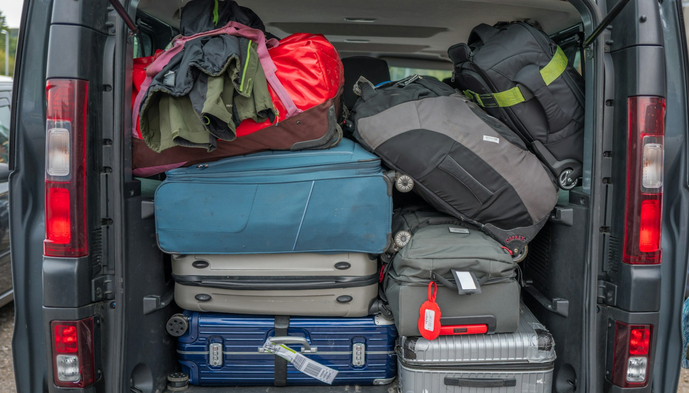
A packing list for Ladakh has to solve two problems at once, and most lists only solve the cold one. Ladakh is a high desert, so a July day can run warm enough for a shirt at noon and cold enough for a jacket by seven. The thin air also lets through more ultraviolet than the temperature suggests, so pack layers you can shed and treat sun protection as seriously in winter.
The dry air is the third problem and it is the one nobody packs for. The general guide to preparing for travelling in India covers the country-wide version of climate, dress and altitude.
Eight things go in whatever month you arrive.
Two things to leave out. A heavy single coat, which is useless when you need to shed a layer at noon, and anything that only works plugged in.
June to September. Warm days, cold nights, strong sun, and a temperature swing most people underestimate.
October to April. Serious cold, and the kit is genuinely different rather than just thicker.
Less than you would guess, and the useful items are dull.
Nothing on this list substitutes for going up slowly.
Long days, few shops, and a boot that needs to carry what the road will not provide.
Our eight-day cultural journey through Ladakh stays in the Indus valley, and the list above gets shorter for it. If the packing has to match a fixed route and a fixed month, customised tours is where that gets settled.
More than the daytime temperature suggests and less than a single heavy coat. Three thin layers work better than one thick one, because the afternoon wants a shirt and the evening wants all three. A fleece or light down plus a windproof shell covers almost every summer night.
Yes, and arguably more than on a summer day. Thin air lets more ultraviolet through, and snow reflects it back at you from below rather than absorbing it. High-factor cream, a lip balm with sun protection and proper sunglasses belong in the bag in every month.
Cold enough that a summer evening wants a fleece and a winter night wants insulated outerwear and thermals. The swing between afternoon and night is the part that catches people out, because the daytime temperature gives no warning of it.
Water, electrolytes and lip balm, plus any altitude medication you have discussed with your own doctor before travelling. None of it replaces going up slowly, and the two rest days at the start of a trip do more than anything you can pack.