
Let’s help you
plan your journey
Explore responsibly, discover offbeat places, guided by locals, rooted in culture.
Let’s help you
plan your journey
Explore responsibly, discover offbeat places, guided by locals, rooted in culture.
Soumen Bhowmick
Soumen Bhowmick founded Pollen Dots in 2024 to plan journeys across India and Bhutan. He works in the Commercial Department of Indian Railways, where he has been since 2000. From 2016 to 2020 he was Head of Business Development and Partnerships at ScoutMyTrip, a community-driven road trip planning platform. There he built a nationwide network of local Scouts who helped travellers on the road, and grew the Road Trippers Club to 16 Indian cities. As a core member of Devil On Wheels, he helped travellers plan Himalayan trips and started Spreading Smiles. He has driven solo from Arunachal to Goa and from Himachal to Karnataka, and has run his own caravan for more than ten years. His photographs have won national and international salon awards, and his writing has appeared in Outlook Traveller.
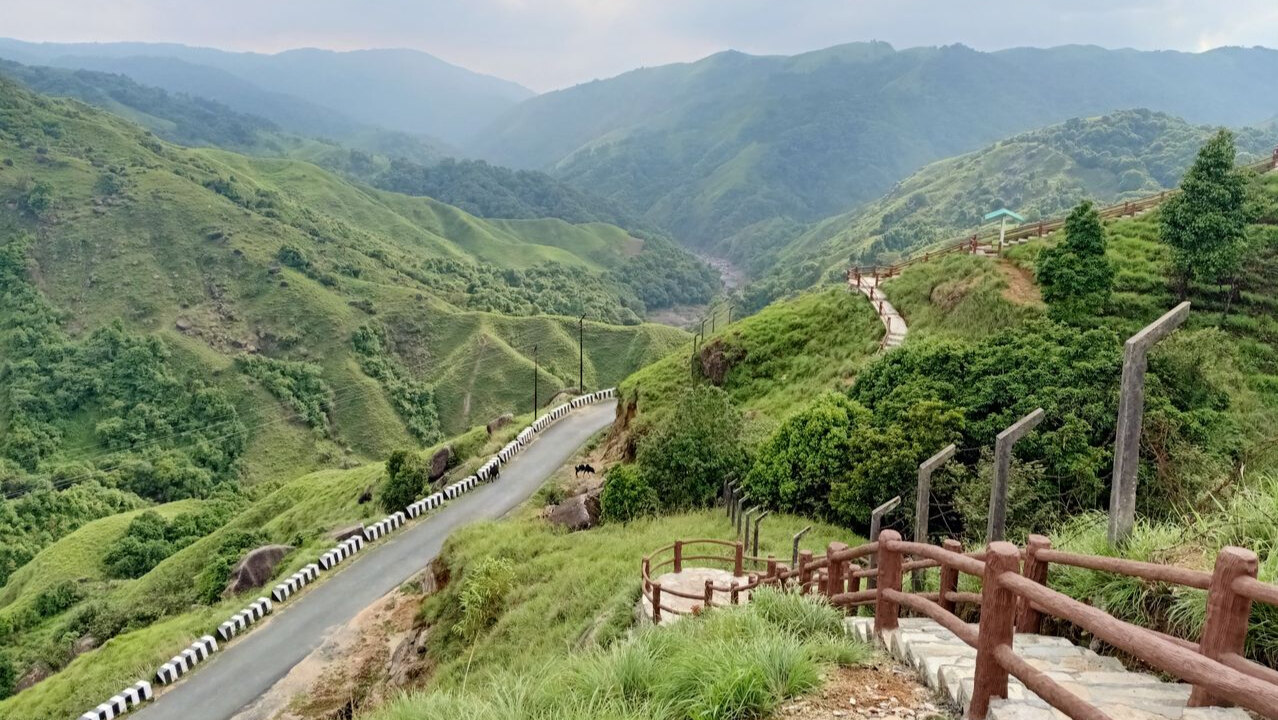
Terrain rather than distance separates the places to visit in Meghalaya, and the choice decides how much of a day goes on foot rather than in a car. Mawlynnong, sold everywhere as Asia's cleanest village, has admitted no visitors on Sundays since January 2026, by its own council's decision. That title came from a travel magazine in 2003 and was never an official award.
Almost everything here is reached from Shillong or Sohra, and the guide to preparing for travelling in India sets out how to reach the state in the first place.
Grouped by what the day asks of you.
Grown rather than built, by training the aerial roots of the rubber fig across a stream over many years. They are village property and most charge a small fee that pays for upkeep.
Sohra, still widely called Cherrapunji, has the highest concentration and the volume swings hugely between seasons.
The state sits on limestone and holds some of the longest cave systems in the subcontinent, only a few of which are set up for visitors.
The Umngot river runs clear enough in winter that boats appear to float on air, and that is a dry season picture rather than a permanent condition.
A different landscape, a different language and almost no visitors, reached from the west rather than from Shillong.
A village that has decided how it wants to be visited has given you the most useful planning information there is, which is why Mawlynnong's Sunday closure matters more than its reputation. How places handle being visited is a longer subject. Our seven day journey through the forests, hills and root bridges is paced for the descents rather than around them. Customised tours is where a fixed set of dates gets matched to the season.
It is a short and pleasant stop rather than a destination in itself, and it pairs naturally with the Riwai root bridge next door. Be aware that it admits no visitors on Sundays since January 2026, and that the cleanest village title came from a travel magazine in 2003 rather than from any official body.
It is a long stepped descent from Tyrna to Nongriat and the same climb back, and the return is the harder half. Allow a full day, start early, and carry water. Anyone who cannot manage a sustained descent and climb should take the Riwai bridge near Mawlynnong instead.
June to September, during and just after the monsoon, when Nohkalikai and Seven Sisters run hardest. The trade is visibility, because cloud fills the canyons for days at a time in those months. November to February gives clear views, safer footing and thinner falls.
No. The transparent water in the photographs is a dry season condition, roughly November to April. From June to September the river runs high and brown. Shnongpdeng, upstream from Dawki, is quieter and is where most camping and kayaking happens.