
Let’s help you
plan your journey
Explore responsibly, discover offbeat places, guided by locals, rooted in culture.
Let’s help you
plan your journey
Explore responsibly, discover offbeat places, guided by locals, rooted in culture.
Soumen Bhowmick
Soumen Bhowmick founded Pollen Dots in 2024 to plan journeys across India and Bhutan. He works in the Commercial Department of Indian Railways, where he has been since 2000. From 2016 to 2020 he was Head of Business Development and Partnerships at ScoutMyTrip, a community-driven road trip planning platform. There he built a nationwide network of local Scouts who helped travellers on the road, and grew the Road Trippers Club to 16 Indian cities. As a core member of Devil On Wheels, he helped travellers plan Himalayan trips and started Spreading Smiles. He has driven solo from Arunachal to Goa and from Himachal to Karnataka, and has run his own caravan for more than ten years. His photographs have won national and international salon awards, and his writing has appeared in Outlook Traveller.
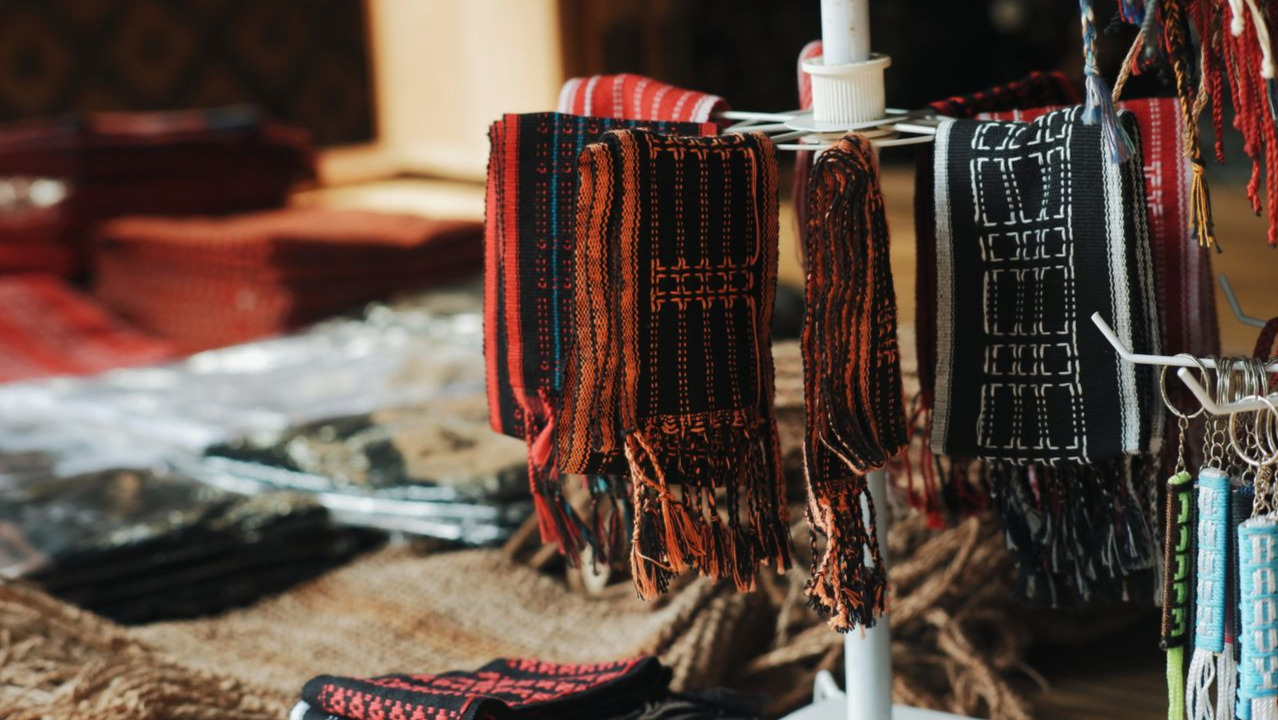
Meghalaya's best things are agricultural rather than decorative, so what to buy in Meghalaya is a shorter list than in most of India. Lakadong turmeric from the Jaintia hills carries roughly seven percent curcumin and holds a Geographical Indication granted on 30 March 2024 to a cooperative in Jowai. Buy food and fibre close to where it was grown or woven, and leave the souvenir stalls alone.
Almost nothing here is made for visitors, which is why the weekly markets matter more than the shops. Customs and baggage limits, which the guide to preparing for travelling in India covers, apply to anything you carry home.
Grouped by what it is, and whether it travels.
Grown in the Lakadong area of the Jaintia hills and nowhere else under that name, since the Geographical Indication of 30 March 2024 restricts it.
Three peoples with three traditions, and the pieces are everyday garments rather than display items.
Functional rather than ornamental, and the reason to buy it is that it is still in daily use here.
The weekly markets are the real answer and they run on an eight day cycle in many Khasi villages rather than a seven day week.
Short list, and two of these are legal rather than aesthetic.
Most of what is worth buying here is still made by the household that sells it. That is the reason a village market price and a city counter price differ so widely. Our fourteen day journey through the Northeast runs Assam, Arunachal Pradesh and Meghalaya and moves through several of these market towns, and customised tours is where market days get built into dates.
It is a turmeric variety grown in the Lakadong area of Meghalaya's Jaintia hills, carrying around seven percent curcumin, which is high. It received a Geographical Indication on 30 March 2024, held by a cooperative union in Jowai. The price reflects the curcumin content and the fact that it is grown without fertiliser on a limited area.
Iewduh, also called Bara Bazar, is the largest and the one worth the time. Police Bazar is more convenient and more expensive. Outside Shillong, the village markets rotate on an eight day cycle in many Khasi areas, so ask locally rather than assuming a weekend.
Eri is processed after the moth has left the cocoon, which is why it is sometimes called peace silk. It is warmer and more matte than mulberry silk and it is woven across the Northeast rather than in Meghalaya alone. Ask who wove a piece and where.
No. Orchids and other plant material are protected and both export and interstate movement are restricted. The same applies to anything made from wildlife, including shell, bone and feather, which is offered openly in some places and is illegal to buy.
Lakadong turmeric, local honey, dried bay leaf and black sesame all travel. Khasi mandarins travel badly and are a short season from about November. Fermented preparations such as tungrymbai are worth eating there and not worth packing.