
Let’s help you
plan your journey
Explore responsibly, discover offbeat places, guided by locals, rooted in culture.
Let’s help you
plan your journey
Explore responsibly, discover offbeat places, guided by locals, rooted in culture.
Soumen Bhowmick
Soumen Bhowmick founded Pollen Dots in 2024 to plan journeys across India and Bhutan. He works in the Commercial Department of Indian Railways, where he has been since 2000. From 2016 to 2020 he was Head of Business Development and Partnerships at ScoutMyTrip, a community-driven road trip planning platform. There he built a nationwide network of local Scouts who helped travellers on the road, and grew the Road Trippers Club to 16 Indian cities. As a core member of Devil On Wheels, he helped travellers plan Himalayan trips and started Spreading Smiles. He has driven solo from Arunachal to Goa and from Himachal to Karnataka, and has run his own caravan for more than ten years. His photographs have won national and international salon awards, and his writing has appeared in Outlook Traveller.
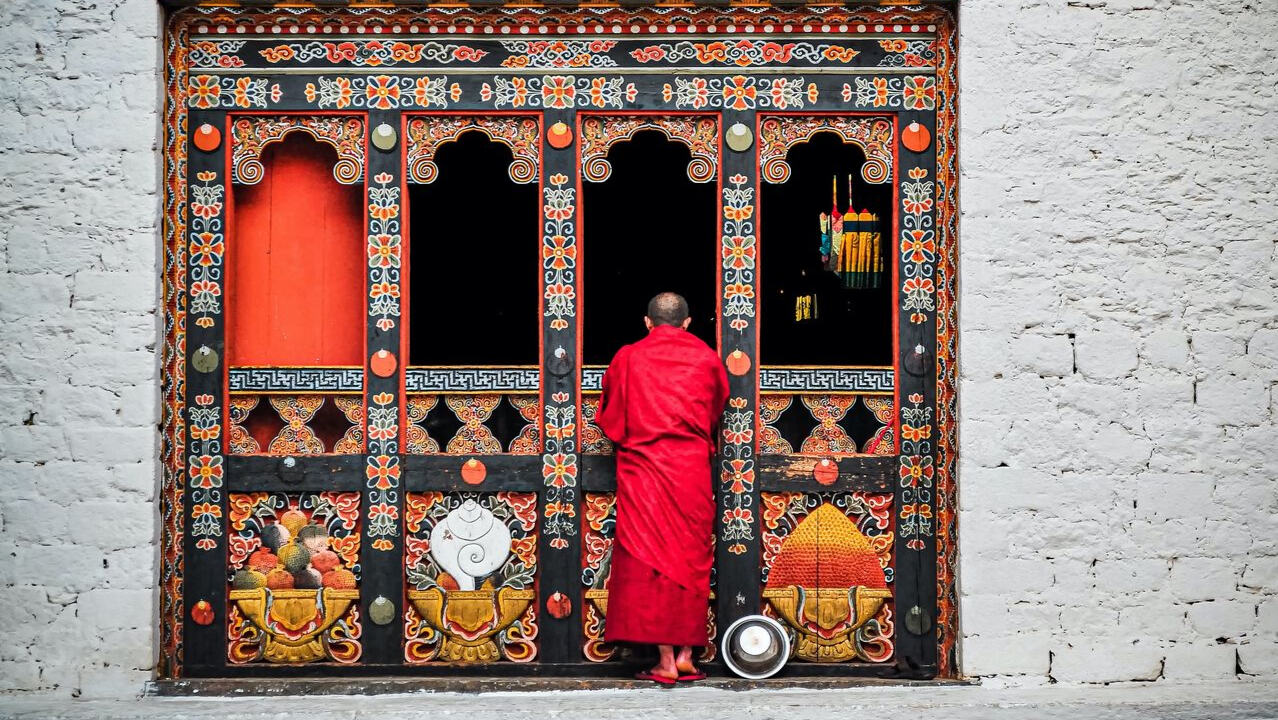
Three things decide a trip to Bhutan, the season, the permits and the Sustainable Development Fee. International visitors pay USD 100 a night and Indian nationals INR 1,200, a discounted rate that is locked only until 31 August 2027. Settle those three, and the ngultrum you carry, the dzong dress code and the number of days you need all follow from them.
Most routes in start on the Indian side, through Bagdogra and the Phuentsholing border or a connecting flight to Paro. For that leg the guide to preparing for travelling in India applies, though nothing in it covers Bhutan itself.
March to May and September to November. Spring brings rhododendron on the passes and autumn brings the clearest mountain views of the year.
The fee runs every night whatever the season, so a monsoon trip saves on rooms and flights and not on the fee itself.
Indian citizens need no visa and everybody else does. What Indians do need is an entry permit, and the identity document it is issued against is the part that catches people out.
The route permit is the one most itineraries forget. An entry permit alone covers Thimphu and Paro and nothing else, so Punakha, Phobjikha and Bumthang all sit behind a second piece of paper that can only be collected on a working day.
A nightly charge rather than a package price, and the current rate is temporary.
Bhutan's nightly fee as a model of how a country prices its own tourism is a separate argument and a longer one.
The ngultrum sits at parity with the Indian rupee and the two circulate side by side, which makes Bhutan the easiest border in the region for an Indian traveller to cross with cash.
A dzong is a working administrative building and a monastery at once, so the dress code is enforced rather than suggested.
Everyday etiquette for travellers covers the version that applies anywhere.
Five days for Paro and Thimphu, seven to add Punakha, ten to reach Phobjikha and Bumthang.
The arithmetic here is unlike anywhere else, because a slow day costs the same as a full one. That changes how a route is built rather than how fast it is driven, and our nine day journey through the valleys of Bhutan is shaped around it. Customised tours is where the dates and the permits get settled together.
No. Indian citizens need no visa, only an entry permit, and it is issued against a passport with six months validity or a Voter Identity Card from the Election Commission. Aadhaar, PAN and a driving licence are not accepted. The permit can be applied for online in advance or obtained at the port of entry.
USD 100 a night for most foreign nationals and INR 1,200 for Indian nationals, with half rate for children aged six to twelve and nothing below six. The USD 100 figure is a fifty percent concession running to 31 August 2027. It is charged per night of stay and covers none of your room, food or transport.
Yes. The ngultrum is at parity with the rupee and both circulate. The exception is the 2,000 rupee note, which India withdrew and Bhutanese shops no longer take. Carry smaller denominations, because change for large notes is hard to find outside Thimphu and Paro.
March to May and September to November. Autumn gives the clearest mountain views of the year, spring gives flowering passes and the Paro Tshechu. The monsoon from June to August is green and wet with the passes often in cloud, and winter is cold, bright and quiet.
Yes. The entry permit covers Thimphu and Paro only, and anywhere further needs a route permit. It is free, issued at the Thimphu immigration office, and takes an hour or two on a working day. Punakha, Phobjikha and Bumthang all sit behind it, so the office hours shape the itinerary.
Five days covers Paro, Thimphu and the Tiger's Nest at a reasonable pace. Seven adds Punakha over the Dochula pass, and nine or ten reach Phobjikha and the first Bumthang valley. Because the fee is charged nightly rather than by package, a short trip is not proportionally cheaper to run.