
Let’s help you
plan your journey
Explore responsibly, discover offbeat places, guided by locals, rooted in culture.
Let’s help you
plan your journey
Explore responsibly, discover offbeat places, guided by locals, rooted in culture.
Soumen Bhowmick
Soumen Bhowmick founded Pollen Dots in 2024 to plan journeys across India and Bhutan. He works in the Commercial Department of Indian Railways, where he has been since 2000. From 2016 to 2020 he was Head of Business Development and Partnerships at ScoutMyTrip, a community-driven road trip planning platform. There he built a nationwide network of local Scouts who helped travellers on the road, and grew the Road Trippers Club to 16 Indian cities. As a core member of Devil On Wheels, he helped travellers plan Himalayan trips and started Spreading Smiles. He has driven solo from Arunachal to Goa and from Himachal to Karnataka, and has run his own caravan for more than ten years. His photographs have won national and international salon awards, and his writing has appeared in Outlook Traveller.
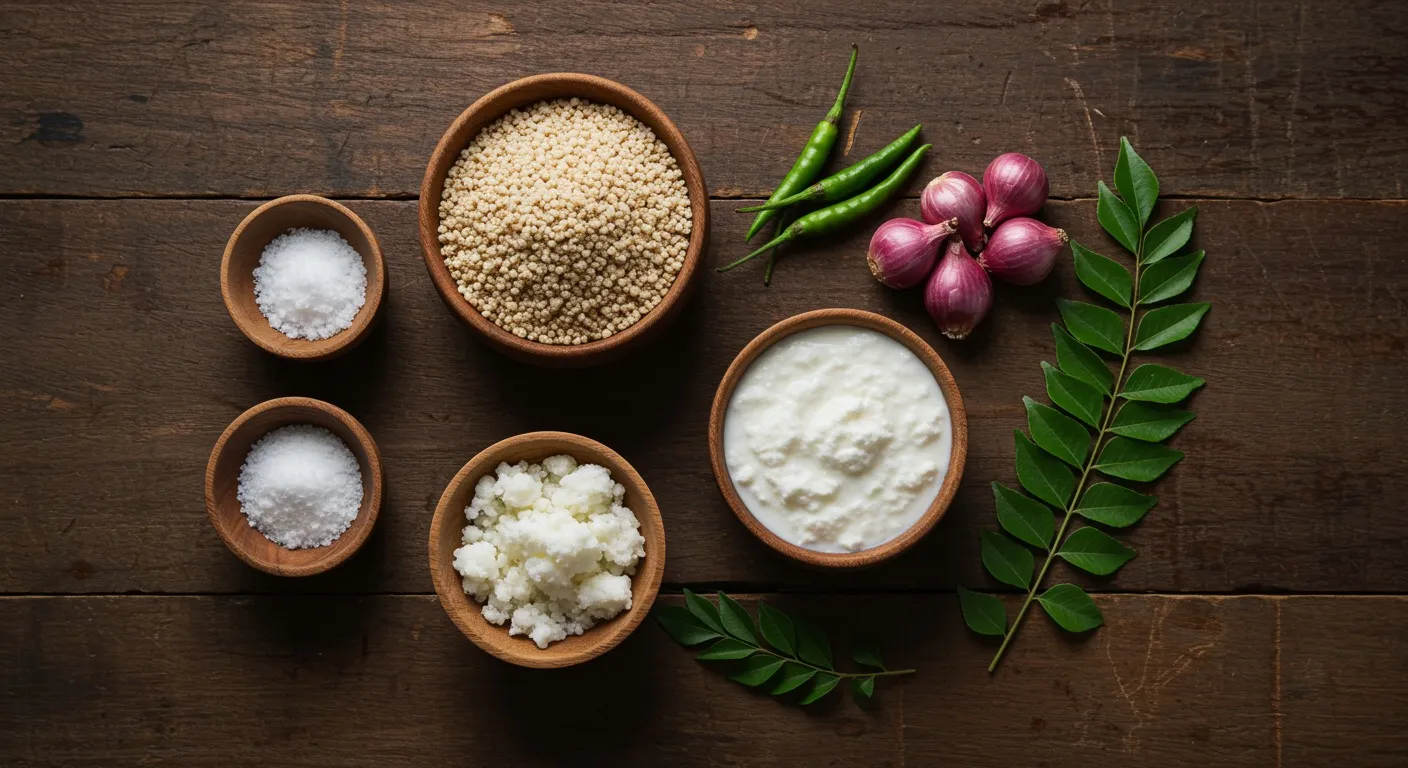
Lists of Indian vegetarian dishes name the same handful, and the reason has nothing to do with how much there is. Printed cookbooks only begin in India in the middle of the nineteenth century, and the first ones were written for British readers, which is where the word curry comes from. So the dishes you already know are the ones somebody could afford to print, and the rest stayed where they were made.
The rest was never written down. It was held in kitchens, in speech, and in the hands of people who cooked the same thing every year without needing a book. Some of it is still there. Some of it is going. This is twelve dishes from that second group, with what can be shown about each one, and what is only a story people tell.
Because a dish that was never written down never travelled. Printing is what carried food out of the place that made it, and most Indian cooking never went near a press.
Here is the problem. Recipes in India were passed on by hand and by mouth, kept inside a family or a community on purpose. Printing arrived in the middle of the nineteenth century, and the first Indian cookbooks carried food written for European tastes. Mulligatawny came out of that. So did the word curry.
Bengal came next, with a book called Pakrajeshwar in 1831. Tamil Nadu's Samaithu Paar followed in 1951. Those are real dates, and almost nothing written about Indian food bothers with dates.
But printing chooses. A survey of Indian cookbooks found that the people writing them, and the people buying them, were mostly from the upper and middle classes. Some kinds of cooking got written about again and again. Others were never written about at all.
A group of researchers at FLAME University went looking for a full record of India's community cooking and could not find one. So they started building it. Their archive holds printed books, handwritten notebooks and recipes that only exist because somebody said them out loud into a recorder.
That is the honest answer to how many traditional Indian vegetarian dishes there are. Nobody knows. Not because India is large, though it is. Because most of it never went near a printing press.
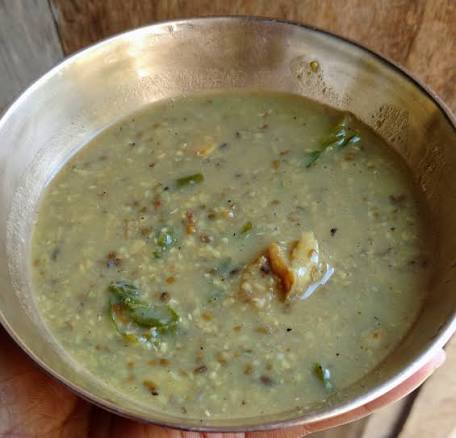
Because the ash makes an alkali, and the alkali does something to the food that nothing else in the kitchen can do. An alkali is the opposite of an acid, like the difference between soap and lemon juice.
Here is how it is made. The stem, peel and root of a banana plant are cut up and left in the sun until they are completely dry. That takes about ten days. Then they are burned. The ash is sieved, put in water, and the water is poured slowly through a cloth. What comes out the other side is a dark liquid called kolakhar. Households make enough to last months.
The banana matters. The best khar comes from Musa balbisiana, a wild seeded variety called bhim kol or athiya kol.
Somebody measured it. A study followed exactly that method, sun-drying, burning, sieving, filtering through muslin, and tested what came out. It measured pH 13. That is very strongly alkaline. It was made by a family, from a plant, using sunlight and a piece of cloth.
Kolakhar now has a Geographical Indication tag, which is the same kind of protection that Darjeeling tea has.
And now the part that matters for the rest of this article. The dish most often made with khar is raw papaya. Papaya is not from India. It came from the Americas, carried by Portuguese ships in the sixteenth century. So the method here is old and local, and the main ingredient arrived on a boat. Nobody eating it thinks of it as anything but Assamese, and they are right. The ten day Assam and Meghalaya journey goes through this food.
Rugra is a wild mushroom that grows under the ground in the sal forests of Jharkhand. It is round, brown and about the size of a small plum. People there call it putu, phutka or boda. In Odisha it is mati tara.
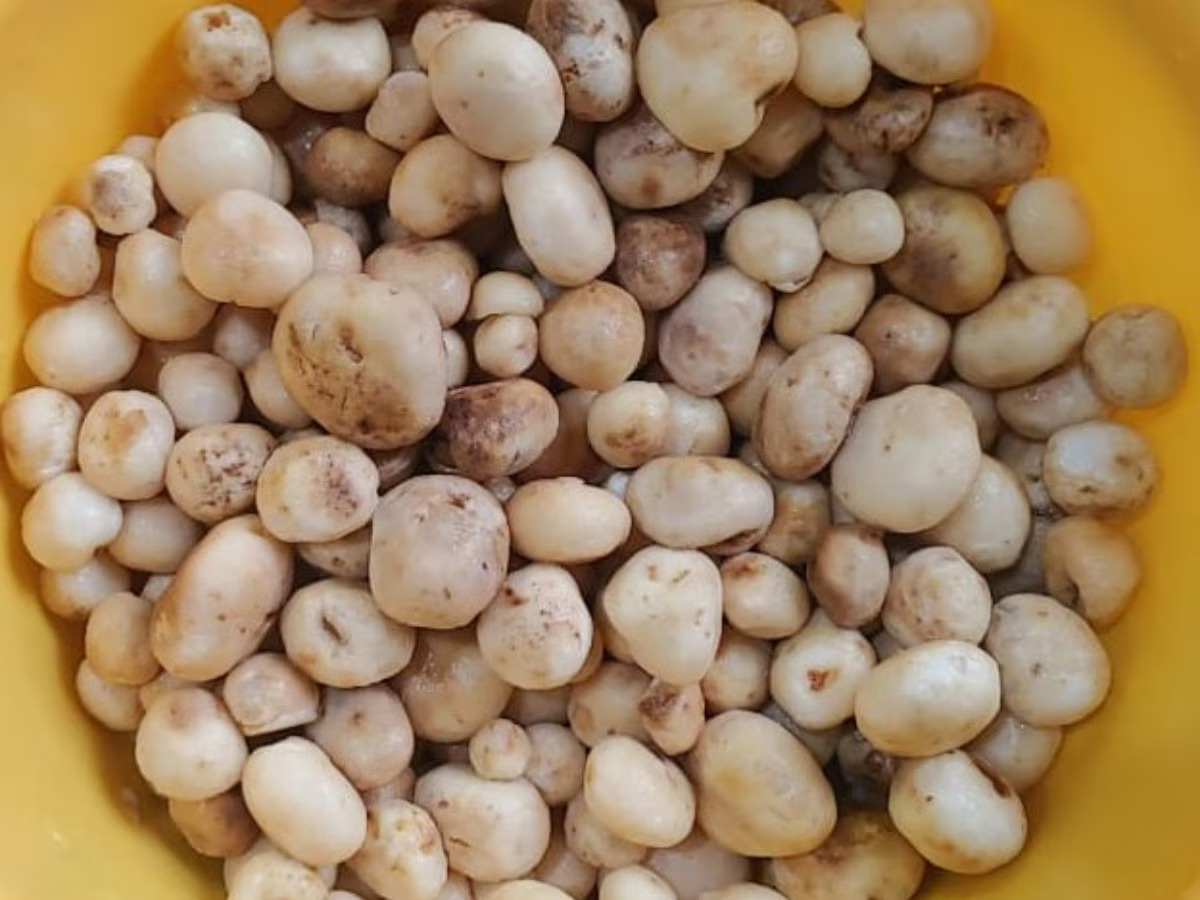
It cannot be farmed, and the reason is that it lives off the roots of the sal tree. The mushroom and the tree feed each other. Take the mushroom away from the tree and there is no mushroom.
It comes up after the first heavy rain and it is gone in about six weeks. Forty-five days a year, and no more.
The price says everything about how uncertain it is. Rugra sells for anywhere between twenty rupees a kilo and two thousand. Same mushroom, different week, different forest.
Mongabay followed a woman called Anjali Lakra from Tetri village, near the sal forest outside Ranchi. She searched for four hours. She came back with enough for two meals, for a household of ten.
People there say the thunder helps it grow, by putting something into the soil that the mushroom takes up. That may be true and nobody has shown it. It goes here as what people say, because that is what it is.
This is a dish that cannot be moved, stored, farmed or planned. It belongs to a tree, which is what happens when the ground a place sits on decides what people can eat. The five day Jharkhand journey runs through that country.
Gendada adde is a rice cake cooked on coals. The name says so. Boiled rice is made into a batter, mixed with jaggery, caramelised onion and coconut, and cooked slowly over hot coals until it sets. It is eaten in the monsoon.
It belongs to the Tuluva people of the coast of Dakshina Kannada, in Karnataka.
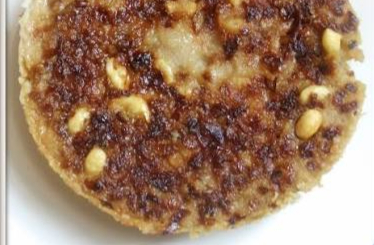
The reason you have not read about it is that the Tuluva script has been out of use for decades. When a script stops being used, everything that was only ever written in it stops being readable. And most of this food was never written at all. It was said out loud, in kitchens, to whoever was standing there.
One notebook from that community sits in the FLAME archive. It was kept by somebody who left the coast for Mumbai and wrote recipes down so as not to lose them. Both places show up in it. The food of home and the food of the city they moved to, in the same handwriting, without a word of explanation attached. The coastal Karnataka and Western Ghats journey works that coast.
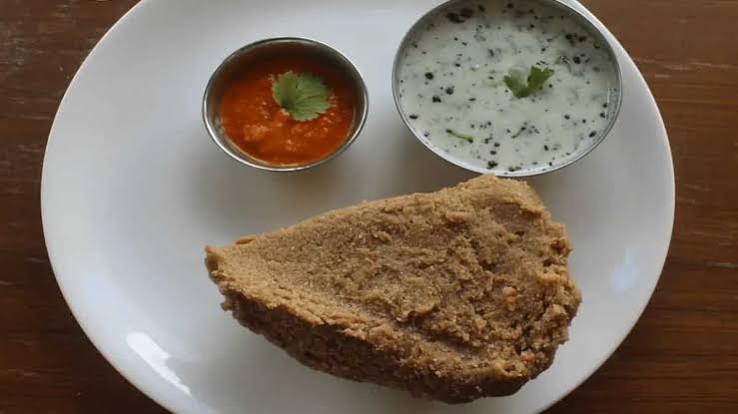
Paba and tangtur. Almost every restaurant in Leh sells thukpa, a noodle soup, and almost none of them sell this.
Paba is a dough. Several flours are roasted and mixed, usually barley, wheat, peas, buckwheat and the local black beans, then stirred into boiling water until it is stiff enough to shape by hand. Tangtur is buttermilk with green leaves in it, often mustard leaves, boiled first and chopped. It is served cool.
The barley is the point. Barley grows at that altitude and in that short summer. Rice did not, and was a luxury item within living memory.
There is a small detail worth keeping. The dough is stirred with a wooden ladle called a skya, and cooks say a skya cut from apricot wood puts something of the apricot into the food.
Paba was the everyday food of Ladakh and it is close to disappearing. Not because anything happened to the barley. Because a visitor asks for thukpa, a restaurant cooks thukpa, and a household follows. The eight day cultural journey through Ladakh stops the night at Phyang, where the farms still work the old way.
The kitchen at the Jagannath temple in Puri is called the Rosaghara. It cooks for tens of thousands of people a day in earthen pots over wood fires, in thirty-two rooms, with new pots every day and no gas, no mixers and no grinders. The food is called abadha. The cooks are called suaras.
The food is entirely vegetarian. It also refuses onion, garlic, bottle gourd and potatoes.
The potato is the interesting one. Potatoes came to India from South America with the Portuguese. A kitchen that refuses potatoes is telling you when its rules were written. Either the rule is older than the potato, or the rule was made to keep out anything that arrived late. Either way, the list of what a kitchen will not cook is a date.
Water for the cooking comes from two wells beside the kitchen, called Ganga and Jamuna. Hearths are separated by job. Rice on one, dal and vegetables on another, sweets on a third.
And there is a story about this kitchen that everybody tells. That seven earthen pots are stacked one on top of another over a single fire, and the pot at the top cooks first.
It is a story, and it should be read as one. No outsider is allowed into that kitchen. Every account of it comes from someone who was told, not someone who watched. The accounts do not agree with each other. Some say seven pots, some say five or six. Some say the top cooks first, and at least one says the heat spreads evenly so everything finishes together. That is a good story about a real kitchen, and it is worth knowing that nobody has shown it.
Twelve kilometres away is Raghurajpur, which makes the painted cloth for the chariots that carry the gods out during Rath Yatra, and which almost nobody visits. The coastal and tribal route through Odisha passes both.
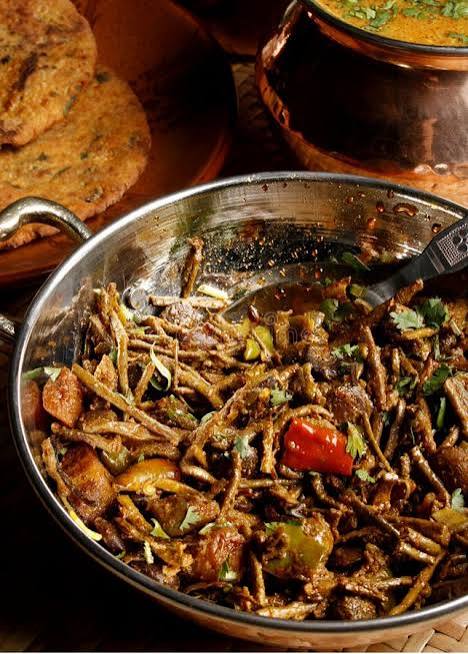
Ker sangri is made from two desert plants, and neither of them is farmed the way a vegetable normally is.
Ker is a small sour berry from a thorny shrub that grows without irrigation. Sangri is a long thin pod from the khejri tree, which sends its roots very deep and stays green when nothing else does. Both are gathered, dried in the sun, and kept.
They are hard and bitter when dry. Before cooking they are soaked, sometimes overnight, sometimes in buttermilk, and then cooked with oil and spices.
The dish exists because of what the desert does not have. No steady water, so no reliable green vegetable, so a household needs something that keeps. Drying is how you make a vegetable last until the next one. The route through Marwar and the Thar crosses the country these two plants come from.
Dal baati gets written about constantly and this does not. Ker sangri is the one that actually explains the desert.
Chainsoo is made from black gram, and the difference is that the dal is dry-roasted first and then ground before it ever meets water.
Most dals go into the pot whole. This one is roasted in a pan until it darkens and smells nutty, ground coarse, and only then cooked. It comes from the hills of Uttarakhand and it is heavy food, eaten in cold weather with rice.
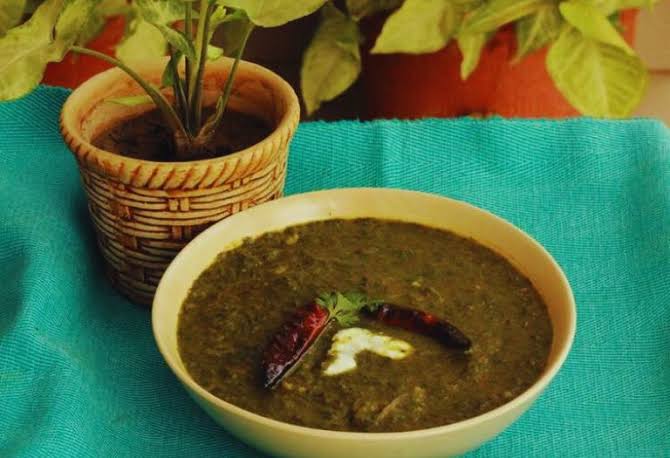
Roasting and grinding are labour, and the labour is the recipe. Somebody worked out that treating the pulse before cooking made it taste of something else entirely. That step cannot be skipped and it cannot be hurried, which is exactly why it disappears first when kitchens get busy.
The Kumaon hills mark their spring with Phool Dei, and the eight day Kumaon spring journey runs through the same villages.
Because the dough has yeast in it, and yeast needs hours. Siddu comes from Himachal Pradesh. Wheat dough is mixed, left to rise for several hours, filled, and then steamed rather than baked or fried.
The fillings change by valley. Ground walnuts, poppy seed, black gram paste, sometimes a green.
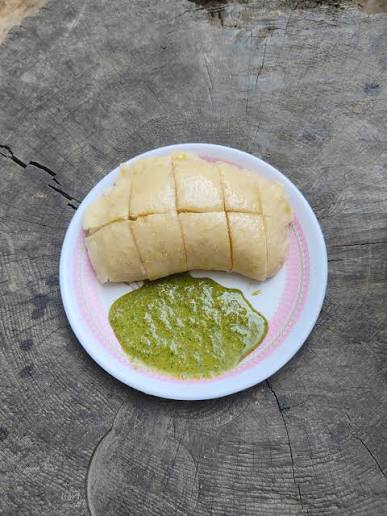
Steaming rather than baking is not a small choice. An oven wants a lot of fuel and a steady one. A pot of water over a small fire wants very little. In a place where firewood is carried uphill, that difference decides what people eat.
Siddu is winter food and it is eaten hot with ghee. The slow Himachal mountain journey works those valleys.
Pumaloi is a Khasi dish from Meghalaya. Rice is soaked, then ground into a coarse powder, then steamed in a cloth or a special pot until it holds together.
That is the whole thing. No oil, no spice, nothing added.
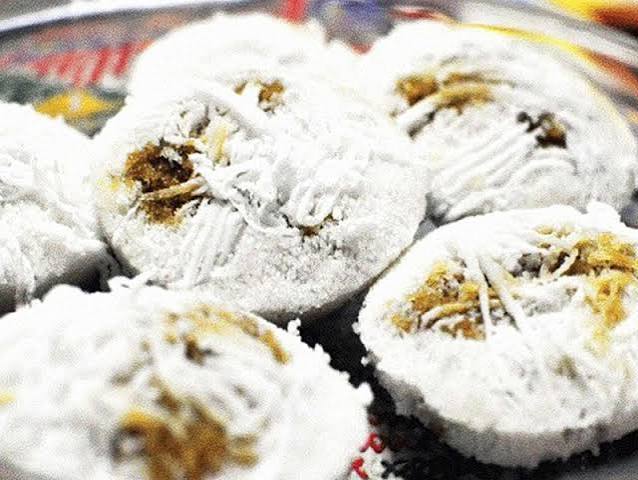
Grinding rice before cooking it changes what rice is. Boiled rice is grains. This is closer to a soft crumb, and it takes whatever is served with it. A cooking method, applied to the plainest possible ingredient, produces something that tastes and behaves like a different food.
Meghalaya's cooking is often described through its fermented dishes, which are remarkable and which get all the attention. This one has no fermentation and no drama in it at all. The seven day root bridges route goes through the Khasi hills.
Puzhukku is tubers and pulses boiled together, usually yam, plantain and a bean, finished with coconut and coconut oil.
Kerala is known for rice and for coconut, and it grows both very well. But it also grows a great many things underground. Yam, taro, tapioca, sweet potato. Roots do something rice cannot. They sit in the ground and wait. A tuber does not need to be harvested on a particular week, and it does not need storing once it is.
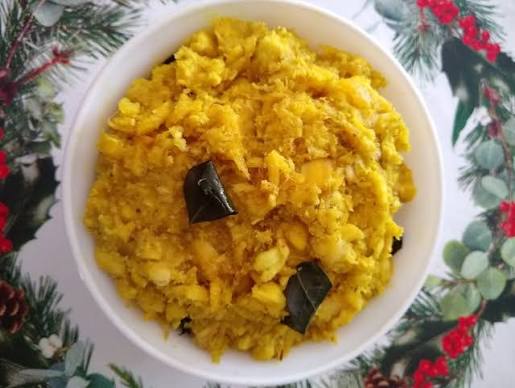
That is a real advantage in a place with heavy rain, and it explains why a coastal state with more rice than it needs also has a dish built on roots.
Tapioca is worth a note here. It is everywhere in Kerala now, and it is South American. It arrived the same way the papaya did. The coastal leg of the Kerala journey goes through the country this comes from.
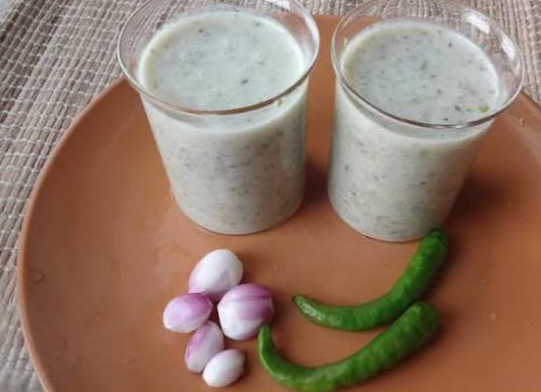
Kambu koozh is a pearl millet porridge from Tamil Nadu. Millet is cooked, then left overnight with water, and by morning it has soured. It is mixed with buttermilk, salted, sometimes given a small onion or a green chilli, and drunk cold.
The souring is fermentation, and it is deliberate. Left alone, the cooked millet turns slightly acidic. That keeps it safe for longer in heat, and it changes the taste.
This is summer food for people working outside. Cold, salted, wet and filling, drunk in the morning before the heat arrives. Pearl millet grows where rice will not, on dry land with little water.
It has never been restaurant food and it has almost never been written down. It is sold from roadside stalls in the hot months and made at home the rest of the time.
Aloo pitika is boiled potato mashed with mustard oil, raw onion, green chilli and salt. Sometimes coriander. That is all of it. It sits on the side of an Assamese meal the way bread sits beside soup.
The potato is from Peru. It reached India on Portuguese ships, along with the chilli in the same mash, and the papaya in the khar this article opened with. Mustard oil and the onion are the only parts of the dish that were here first.
And it does not matter in the least. Nobody in Assam eats pitika and thinks about Peru. The dish is Assamese because Assamese people made it, using what came to hand, in a way that came from somewhere older than the ingredients.
Which is the thing worth taking away. A tradition is not a list of ingredients that has stayed still. It is a way of doing something that keeps working when the ingredients change. Khar took in the papaya without altering by a step. Kerala took in tapioca. The temple at Puri did the opposite and refused the potato, and the refusal is just as much a record.
What none of this tells you is how much more there is. Twelve dishes, and the honest position remains the one at the start. The written record covers the part that could afford to be written. Everything else is in somebody's kitchen, and some of it is going, and the way to find it is to be somewhere ordinary and pay attention.
Khar from Assam, rugra from Jharkhand, gendada adde from coastal Karnataka, paba and tangtur from Ladakh, ker sangri from Rajasthan, chainsoo from Uttarakhand, siddu from Himachal, pumaloi from Meghalaya, puzhukku from Kerala and kambu koozh from Tamil Nadu. Most of these were never printed in a cookbook. They were passed on by hand and by speech inside one community.
Because printing came late and it chose what to print. Cookbooks only start in India in the middle of the nineteenth century, and the first ones were written for British readers. A survey of Indian cookbooks found that authors and buyers were mostly from the upper and middle classes, so some kinds of cooking were recorded repeatedly and others not at all.
An alkaline liquid made by filtering water through the ash of burnt, sun-dried banana stem, peel or root. The best is made from a wild seeded banana called bhim kol. A published study followed the household method and measured the result at pH 13, and kolakhar now carries a Geographical Indication tag.
A wild mushroom that grows under the floor of the sal forests in Jharkhand, Odisha, Chhattisgarh and parts of West Bengal. It cannot be farmed because it lives off the roots of the sal tree, and it is only available for about forty-five days after the first heavy rain. Prices run from twenty rupees a kilo to two thousand depending on where and when.
A rice cake cooked slowly on hot coals, made from boiled rice batter with jaggery, caramelised onion and coconut. It belongs to the Tuluva people of coastal Dakshina Kannada in Karnataka and is eaten in the monsoon. Very little of this food is written down, partly because the Tuluva script has been out of use for decades.
The everyday meal of Ladakh before thukpa took over. Paba is a stiff dough of several roasted flours, usually barley, wheat, peas, buckwheat and local black beans. Tangtur is buttermilk with boiled green leaves in it, served cool, and the pair is now close to disappearing from ordinary kitchens.
Seven earthen pots stacked over one fire, with the top pot cooking first, is what people say about the Rosaghara at Puri. No outsider is allowed inside. Every account comes from someone who was told rather than someone who watched, and the accounts disagree on the number of pots and on whether it happens at all. What is documented is that the kitchen uses only earthen pots and wood fire and refuses onion, garlic, bottle gourd and potatoes.
Two desert plants. Ker is a small sour berry from a thorny shrub, and sangri is a long pod from the khejri tree, whose roots go deep enough to stay green when little else does. Both are gathered, sun-dried and stored, then soaked before cooking, which is how a desert household keeps a vegetable available all year.
The black gram is dry-roasted in a pan until it darkens, then ground, and only after that is it cooked. Most dals go into the pot whole. The roasting and grinding change the taste completely and cannot be hurried, which is usually the first step to be dropped when a kitchen is busy.
Many, and by very different methods. Kambu koozh from Tamil Nadu is cooked pearl millet left overnight in water until it sours, then drunk cold with buttermilk in summer. Siddu from Himachal Pradesh uses yeast in a wheat dough left to rise for hours before it is steamed rather than baked.
Some are and many are younger than they sound. Chilli, potato, tomato, papaya, cashew and groundnut all arrived from the Americas on Portuguese ships from the early sixteenth century, and the first written mention of chilli in India is from 1604. No dish containing them can be older than that, though the way of cooking them often is.
Eat where people eat on an ordinary day rather than where a dish is famous. Ask what is cooked in that house in that month, not what the region is known for, because the answer is usually seasonal and usually not on any menu. Markets in the early morning show what is actually available, which is a faster guide than any list.