
Let’s help you
plan your journey
Explore responsibly, discover offbeat places, guided by locals, rooted in culture.
Let’s help you
plan your journey
Explore responsibly, discover offbeat places, guided by locals, rooted in culture.
Soumen Bhowmick
Soumen Bhowmick founded Pollen Dots in 2024 to plan journeys across India and Bhutan. He works in the Commercial Department of Indian Railways, where he has been since 2000. From 2016 to 2020 he was Head of Business Development and Partnerships at ScoutMyTrip, a community-driven road trip planning platform. There he built a nationwide network of local Scouts who helped travellers on the road, and grew the Road Trippers Club to 16 Indian cities. As a core member of Devil On Wheels, he helped travellers plan Himalayan trips and started Spreading Smiles. He has driven solo from Arunachal to Goa and from Himachal to Karnataka, and has run his own caravan for more than ten years. His photographs have won national and international salon awards, and his writing has appeared in Outlook Traveller.
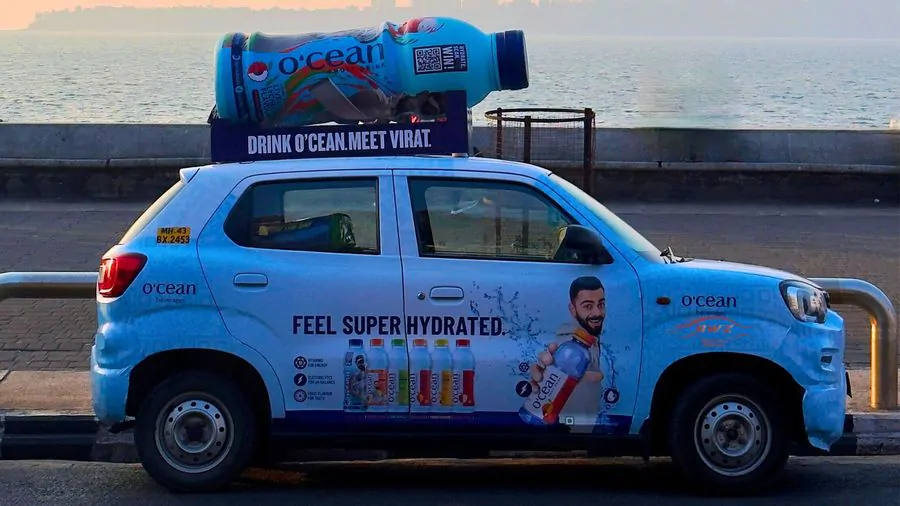
The experiential marketing campaigns in India that get written up come from four industries, which makes the format look narrower than it is. Consumer goods companies have been running the largest road campaigns in the country for over twenty years and appear on none of the lists. If your category is missing from everything you can find, that is a gap in the record rather than a verdict on the format.
A marketing head reads eight of these lists, sees car brands, drinks brands, banks and apps, and concludes the format belongs to somebody else. I have watched that conclusion get reached in a room. It is usually wrong, and the evidence that it is wrong is sitting in the same industry as the person reaching it.
Any campaign where the audience does something instead of watching something. A test drive, a sampling van, a three-day ride, a stall at a village fair.
What those share is that a person met the product in a place, and left with something they did rather than something they were shown.
The definition matters because it decides what you are allowed to borrow from. A music festival activation and a rural van programme sit inside the same definition and share almost nothing else. If you rule out everything that does not look like your industry, you rule out most of what is available to you.
The same set, in roughly the same order. Car manufacturers running driving experiences, drinks and telecom brands at music festivals, banks running workshops, and app brands doing something in an airport or a mall.
Automotive, beverages, banking and technology account for almost every campaign you will find written up in English.
Those four have something in common that has nothing to do with experiential marketing. They all have public relations budgets, they all invite press, and they all produce photographs designed for publication. A campaign enters the record when somebody wrote about it at the time.
Consumer goods, insurance, pharmaceuticals, agricultural inputs, building materials and most business-to-business categories. Between them that is a large share of Indian advertising spend.
Their absence is not evidence that they do not run campaigns. Several of them run the biggest ones in the country.
If you work in one of those categories, the practical consequence is that you will not find a template. You will find campaigns from four industries and have to decide for yourself which parts transfer. Most of it does transfer, and the next section is why.
Vehicle-based programmes that run continuously, rather than events that run once. The scale of them is the part nobody expects.
Hindustan Unilever ran Khushiyon Ki Doli as a mobile marketing programme, sending vans fitted with digital screens into villages. Its earlier Operation Bharat used free samples and demonstrations to reach households that had never bought a packaged product, across a network supplying more than fifty thousand villages. Project Shakti, launched in 2001, had grown to around forty-five thousand entrepreneurs across fifteen states and more than a hundred thousand villages by 2012, and past a hundred thousand entrepreneurs by 2020.
ITC was one of the first to build the van-led model and still runs it. Godrej Consumer and Britannia have both put stock-ready vans onto rural routes, and a van of that kind reaches four to five villages in a day.
A driving experience runs on a closed track for a weekend. These have run for two decades and are still running.
It is built around a subject the brand did not invent, because there is no product to put in anybody's hands. That is the position most categories are in.
A car brand can hand over the car. A drinks brand can pour the drink. An insurer, a bank's business division, a cement company or a component manufacturer has nothing that works that way. Running an event where the product is discussed instead of used produces a conference.
What replaces the product is a reason to be somewhere. The campaign attaches to something real that would have existed anyway, and the brand's role is to make it reachable. Whether a given subject is strong enough to carry that is a separate question with its own tests, set out in what a brand road trip should be about.
The largest ones in India happen almost entirely outside them. That is the opposite of what the lists suggest, since a festival activation and an airport stunt are metro events by definition.
The rural programmes above cover village populations that no metro campaign reaches. They have run for two decades because they kept working, which is a longer trial than any campaign on a list has had.
What changes outside the metros is not whether it works. It is what the campaign has to carry with it. Distance between stops, whether the route can restock, and whether there is somebody in each place who can arrange things. Those are the questions a partner should be answering before a route is drawn.
The consumer goods ones, and it is not close. Project Streamline began in 1998 to reach villages under two thousand people through sub-stockists based in those villages. Operation Bharat launched the same year. Project Shakti followed in 2001 and is past two decades.
Mahindra began the Great Escape in 1996 and it is still running, which is the one campaign on the lists with comparable longevity.
All of them were built around a mechanism that repeats rather than around a moment that happens. If you want something still running in year ten, that is the property to copy, and it is available to any category.
Three different things, and a campaign will deliver one of them properly rather than all three. Coverage, trial, or people who come back.
Coverage is what a launch drive with press aboard produces. It arrives fast and it stops when the news does. Trial is what a sampling programme produces, and it is the reason consumer goods companies keep vans on the road rather than buying activations. People who come back is what a repeated customer programme produces, and it does not show up in any coverage report.
The mistake that costs the most is buying one and measuring it as another. A trial programme measured on published articles looks like a failure every time it runs. Why coverage behaves the way it does for the formats that produce it is set out in the article on campaigns that keep generating organic coverage.
Ask what the audience was doing, not what the brand was doing. If the audience was using something they could not otherwise reach, the campaign transfers. If they were being shown something, it does not.
A driving experience transfers to any brand that has something people can operate. A sampling van transfers to anything with a physical product. A multi-day journey transfers to any brand with a subject worth travelling for, which is almost all of them.
What does not transfer is the setting. Copying a festival activation because it looked good in photographs, when your buyers are not at festivals, is how a campaign ends up with reach and no result. The format moves between industries and the venue does not.
The subject, the guest list and the approvals. Everything else belongs to whoever runs it, and that division is worth agreeing before anything is booked.
The brand holds three things nobody else can. Why the campaign is happening at all, which comes from what the brand is for. Who should be in the room or in the vehicle, because those are the brand's relationships. And the sign-off on anything that will be said about the product.
The operator holds the rest. Route, permissions, vehicles, resupply, medical cover, a contact in every town, and the person answerable when something fails at nine at night. What that adds up to on one format is set out in how a car launch media drive is planned.
Confusion about that line is the most common way these campaigns go wrong. A brand team that ends up sourcing vehicles has lost time it needed for the subject.
Four questions, and they take about two minutes. Ask how many places it stopped and who arranged each one. Ask what went wrong and where, how many people travelled who never appeared in a photograph, and what they would change if they ran it again next month.
Somebody who ran it will have an answer to the last one ready. Somebody citing another company's campaign will answer in general terms about learnings and improvement.
These four do not tell you whether a campaign was good. They tell you whether the person describing it was there, which is what matters when you are deciding who to hand a route to. Which format you are buying in the first place is a separate decision, worked through in the article on brand road trip formats.
Marketing where the audience does something rather than watches something. A test drive, a sampling stall, a demonstration in a village, a multi-day ride. The common element is that a person met the brand in a place and left with something they experienced.
The ones that appear most often are car manufacturers running driving experiences, drinks and telecom brands at music festivals, banks running workshops, and app brands doing something in an airport or a mall. Several much larger programmes are absent from every list.
Because those industries invite press and produce photographs designed for publication, so their campaigns entered the written record at the time. Categories that ran campaigns without a public relations budget left no trail. The lists reflect who documented their work rather than who did the most of it.
It is where the largest Indian programmes are. Hindustan Unilever's rural network has run for over two decades and reaches village populations no metro campaign touches. For a brand with a physical product that people can try, sampling on the ground is closer to a default than an experiment.
The biggest ones happen almost entirely outside them. What changes is what the campaign has to carry with it, meaning distance between stops, whether the route can restock, and whether somebody local can arrange things in each place. Those are questions for whoever runs it, not reasons to avoid the format.
A campaign built around a subject that exists independently of the brand. Most categories are in this position, including insurance, banking, services and component manufacturers. The campaign attaches to something real and the brand's contribution is making it reachable.
That depends on which of three outcomes you are buying. Coverage arrives in days and stops when the news does. Trial and repeat participation build over years, which is why the longest running Indian programmes are the ones aimed at those two.
The subject, the guest list and the approvals. Why the campaign exists, who should be in it, and sign-off on anything said about the product. Route, permissions, vehicles, resupply and ground contacts belong to whoever runs it.
Look at what the audience was doing rather than at what the brand was doing. If they were using something they could not otherwise reach, it transfers to your category. If they were being shown something, it does not.
Ask how many places it stopped and who arranged each one. Ask what went wrong and where, how many people travelled who never appeared in a photograph, and what the people who ran it would change. Those four answers separate somebody who was there from somebody quoting a case study.