
Let’s help you
plan your journey
Explore responsibly, discover offbeat places, guided by locals, rooted in culture.
Let’s help you
plan your journey
Explore responsibly, discover offbeat places, guided by locals, rooted in culture.
Soumen Bhowmick
Soumen Bhowmick founded Pollen Dots in 2024 to plan journeys across India and Bhutan. He works in the Commercial Department of Indian Railways, where he has been since 2000. From 2016 to 2020 he was Head of Business Development and Partnerships at ScoutMyTrip, a community-driven road trip planning platform. There he built a nationwide network of local Scouts who helped travellers on the road, and grew the Road Trippers Club to 16 Indian cities. As a core member of Devil On Wheels, he helped travellers plan Himalayan trips and started Spreading Smiles. He has driven solo from Arunachal to Goa and from Himachal to Karnataka, and has run his own caravan for more than ten years. His photographs have won national and international salon awards, and his writing has appeared in Outlook Traveller.
Brand road trip formats are usually the last thing decided, which is why a brief can name six cities and eight days without saying what the trip is for. In India the word expedition is used for a one-day event and for a sixteen-day one, in the same magazines. What decides which format you need is who is in the vehicle and what you want left over a year later.
Briefs come to me with the route already drawn. Six cities, eight days, a fleet, a list of publications. What is missing is one sentence saying what the trip is for. Without that sentence the route is a guess. This happens in every industry, not only in cars, because the choice is about people and time rather than about what the company makes.
Five. The launch drive, the experience drive, the expedition, the dealer drive and the campaign drive.
I get five by asking two questions. Who is in the vehicle? And what do you want to still have twelve months later? Answer those two and the five separate cleanly. Ask a third question, such as who pays or how far it goes, and you get a longer list that helps less. There is no official list in this business. These five are mine, and they are the splits that change how a trip has to be built.
What your company makes does not come into it. A bank, a paint company, a phone network and a car maker all answer the same two questions. For three of those four the vehicle is only transport.
The split is needed because the words used in trade coverage do not tell you anything. Expedition is the word everyone reaches for, and it gets used for things that have almost nothing in common.
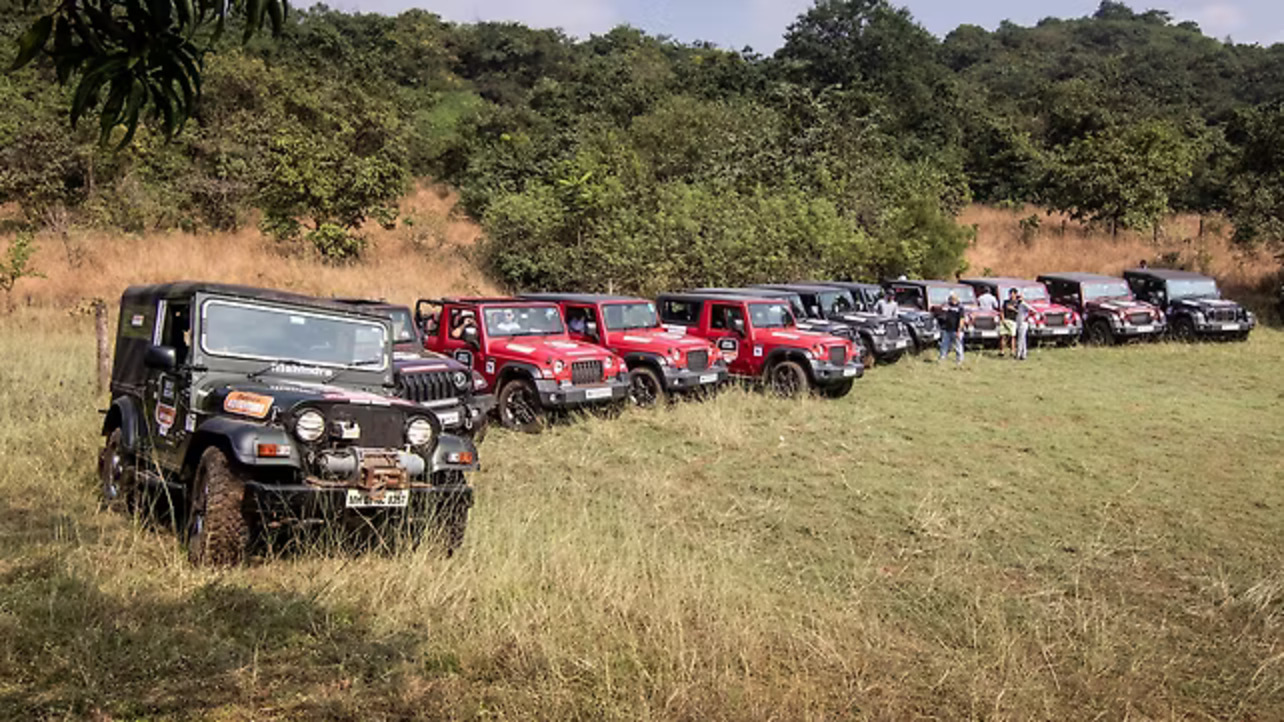
Mahindra started the Great Escape in 1996. It is an off-road event for people who already own a Mahindra. They drive their own vehicle. The local dealer handles service. One edition lasts a day.
Royal Enfield's Himalayan Odyssey runs for sixteen days. It starts and finishes in Chandigarh and goes through Himachal Pradesh, Zanskar and Ladakh, over some of the highest roads in the world.
One day against sixteen days. The same magazines call both of them expeditions.
None of those details is what makes either one an expedition. They are descriptions of two events. The point is that one word covers both and tells you nothing about either. If a brief says expedition, it has not said anything yet.
Nothing else settles it either. A company can run an expedition every two weeks or once every three years and it is still an expedition. The same goes for whether people pay, how hard the route is, and how many vehicles go. Those are choices, not categories.
The examples here are from car companies for one reason. Car companies are the only ones in India who publish this much detail about their own events. Everyone else runs the same five formats and leaves no record. So companies in other industries copy a car company's programme without ever working out which of the five they copied.
A launch drive puts journalists and creators in something that is not on sale yet, at a time and place you control, with an agreed date before which nobody can publish. You need one when the product itself is the news.
It is not only for cars. An airline opening a route, a hotel opening a property, a phone company, an appliance company, a whisky brand. Same shape. Controlled access, one release date, one reveal.
It is the quickest format to organise, because everyone involved has run one before. It is also the format whose coverage ends soonest. The date passes, everything goes up at once, and within a week the story is finished.
That is not a complaint. A launch drive that fills a day with reviews has done its job. The mistake is expecting it to keep working afterwards, which is what people are really asking when they ask why the coverage stopped. The car version is explained step by step in the article on car launch media drives.
The people in the vehicles are customers, not press. What they are doing is already on sale, so there is no news in it, and there is not meant to be.
An experience drive takes customers somewhere they would not go on their own, with the company handling the risk and the arrangements. If you make vehicles, that means owners driving their own. If you do not, the road is only the venue and you hire the vehicles.
The Great Escape shows what the format is for. No competition. Customers only. Run region by region. Dealers handling service. None of that produces press coverage.
What it produces is people coming back. A customer who has done three of these is not a sales lead any more. Advertising does not buy what those three weekends built.
The trap is measuring it like a launch drive. Count published articles and it looks like a failure every time. Count how many people came back over three years instead.
Distance and difficulty are the point. An expedition is not a longer drive. It is a different thing being offered to the people in it.
The 2026 Himalayan Odyssey ran sixteen days, starting and finishing in Chandigarh, through Himachal Pradesh, Zanskar and Ladakh. That year it was split into four routes for different levels of rider. The difficulty is stated openly rather than played down.
It suits any company whose position rests on toughness, terrain or reach. That is a lot more companies than the ones that build vehicles.
One thing in the public record is worth knowing before you commit. Royal Enfield's own page says the ride began in 1997. The same page says the 2025 edition marked 21 years. Both cannot be true if it ran every single year. I am not going to guess which is right, because the information to settle it is not public.
What that gap suggests is how hard this format is to keep running on schedule. If you commit to repeating an expedition, plan for the years it will not happen.
Three things. A reason for the dealer to speak honestly, somebody senior enough to decide things sitting in the vehicle, and long stretches of the day with nothing scheduled in them.
Dealer here means anyone who sells your product for you. Distributors, stockists, franchisees, channel partners. Building materials, paint, appliances, pharmaceuticals, farm inputs and cars all run this format.
Honesty comes first, because it is the one people assume they already have. A journalist is paid to form an opinion and publish it, so saying what they think costs them nothing. A dealer depends on you commercially, and saying what they think can cost them a great deal. The trip has to make it safe. That means no targets, no rankings, and nobody being scored while they are on it.
Second, seniority. A journalist wants the product and someone who can explain it. A dealer wants the person who can actually change something. If the most senior person on the trip cannot approve anything, the dealer has spent three days away from their business for a brochure.
Third, empty hours. A media drive is packed on purpose, because journalists want the most access in the least time. A dealer drive needs the opposite. The conversation you are paying for does not happen in a session. It happens in the vehicle, four hours in, between two people who have run out of small talk.
All three get designed out for the same reason. A dealer drive brief usually comes from sales rather than from the communications team, and it arrives with a number attached. A number wants to be shown to somebody. So a morning session gets added. Then a review after dinner. Then a target announcement. By the time the schedule is finished it is a conference with a drive attached, and the drive is what gets dropped when the day runs late.
The dealer drives I have seen work best are the ones where nobody presents anything at all. The business conversation still happens. It happens in the vehicle, and it goes further than it would have in a hall.
That is what makes the difficulty worth it. A dealer who has spent three days driving with your regional head behaves differently for the next year. No discount scheme does that.
A campaign drive is built around a subject that exists whether or not your company does. You run it to produce stories you could not have bought. It is for companies whose product is not news on its own.
Most companies are in that position, which makes this the format the largest number of them actually need. A food company, a bank, a services firm, a parts manufacturer. There is no press fleet to hand over and no release date, because nothing is being revealed. What you have is a reason to be somewhere and a road that goes there.
It stands or falls on the subject. That is a separate question with its own tests, worked through in what a brand road trip should actually be about. A weak subject gives you a very expensive holiday with a logo on it.
Four questions, in order. Each one removes formats rather than ranking them.
One. Is there news? If the product is not on sale yet and there is a release date, it is a launch drive and nothing else will do. This closes the decision more often than the other three, so ask it first.
Two. Who has to be in the vehicle? Press, customers, dealers or creators. Each answer rules out at least two formats. A brief that wants all four in one convoy has not been thought through.
Three. What do you want to still have in twelve months? Reviews, customers who come back, stories people still refer to, or a sales channel that pushes harder. Those are four different things, and one trip will not give you more than one of them properly.
Four. Does it have to happen again? Something expensive to repeat is a one-off and has to be paid for as one. The Great Escape repeats because it is small, local and the same every time.
Running those four questions before anyone draws a route is Journey Architecture applied to a road campaign instead of to a room.
The campaign drive, because its subject outlasts the product. Everything else on the list is tied to something with an expiry date.
Launch drive coverage lasts about as long as the product does. There is a lot of it and it arrives fast, and people stop reading it the month a new version appears. Expedition coverage arrives once a year and competes with its own earlier years for the same searches. Experience drives barely produce coverage at all.
Campaign drive coverage behaves differently, because the story is about something real that your company happened to be there for. Those pieces keep getting linked to and quoted years after the budget closed. Why that happens is set out in why the coverage keeps generating years later.
There is a second answer worth holding next to the first. If you care about the asset rather than the coverage, something cheap to repeat builds up more than one large event does. No single edition of it has to be impressive.
Between one and eighteen. The number comes from what has to happen inside the vehicle, not from the distance on the map.
One car company shows the whole range. Mahindra Adventure runs single-day Great Escapes, multi-day trips such as the Monastery Escape, Authentic Bhutan and the Himalayan Spiti Escape, and above those the Summit, a fourteen-day drive to Everest base camp. Same company, same vehicles, three different formats. The Himalayan Odyssey main route runs sixteen days.
These are the ranges I work to when costing a campaign.
The total is not what matters. What matters is how many hours in it are unplanned. A four-day trip with every hour booked gives you less than a two-day trip with two free afternoons. The number on the brief does not tell you which one you have bought. The same argument at a larger scale is in the road trip marketing strategy piece.
Four signs, and they arrive at four different times, which is why this is usually caught too late.
While planning, the route keeps growing. Cities get added because nobody can say what the trip is for, and when the purpose is unclear the answer is always more distance. A route that gets longer at every meeting is the earliest warning you will get.
On the road, every hour is booked. Nobody has an unplanned conversation. This is where it stops being fixable, because the schedule has already gone out to everyone.
In the week after, all the coverage says the same thing. Everyone was handed the same material and given no time to find anything else. That looks like reach and is the opposite of it, because search engines and AI systems have no reason to pick one identical account over another.
A year later, nobody refers to it. That is the expensive one, and you cannot see it at the time, which is why it never appears in a campaign report.
The simplest check is this. If nobody in the room can say which of the five you bought, you bought the launch drive. It is the one every agency knows how to sell, and it is what you get by default.
Five that behave differently enough to need separate planning. The launch drive, the experience drive, the expedition, the dealer drive and the campaign drive. The number comes from two questions, who is in the vehicle and what you want left after twelve months, rather than from any official list. There is no official list in this business.
The purpose is the reliable difference. A media drive exists to produce coverage, and every hour in it is arranged around that. An expedition exists to put people through the journey, and coverage is a side effect if it happens at all.
Between one and eighteen days depending on the format. The total matters less than how many hours in it are unplanned. A four-day trip with every hour booked gives you less than a two-day trip with two free afternoons. Set the length from what has to happen between people, not from the distance.
Almost none, and they are not built to. An experience drive puts existing customers in something they already own or already buy, so there is no news in it for anyone to report. Judge it on how many people come back the following year instead of on articles published.
No. A dealer meet is a conference. A dealer drive is a journey that happens to carry dealers. The thing to protect is the drive itself, which turns into the meet when the brief comes from sales with a target attached and the schedule fills up with presentations.
The experience drive, because it is small, local and the same every time. A single day in one region, with customers arriving in their own vehicles, costs a fraction of a multi-day expedition to run again. That is a cost difference rather than a rule, and it decides how often you can realistically go back.
A launch drive can be put together in six to eight weeks, because everyone involved has run one before. A campaign drive needs three to four months, and most of that goes into the subject rather than the logistics. An expedition needs a year, and the first one should be treated as a trial rather than as the campaign.
Rarely, and it is worth being honest about why. Press need access, something exclusive, and time to form an opinion. Customers need support, safety margins and a good day out. A brief asking for both in one convoy usually means the format question was never settled, and the trip ends up doing neither job properly.
Booking a launch drive without deciding to. It is the format every agency knows how to sell and the quickest to organise. It gets chosen whenever nobody in the room can say which format the campaign actually needs. The sign shows up a year later, when nothing refers to the campaign.
Yes, and most companies running them do not make vehicles. The five formats are about who travels, for how long, and what you want left afterwards. None of that depends on what the company makes. The published examples are from car companies only because car companies are the ones in India who report this level of detail about their own events.