
What to Buy in Uttarakhand: GI Crafts, Hill Grain and Wool

8 minutes read
Tips
Traditions

About the Author

Soumen Bhowmick

Soumen Bhowmick founded Pollen Dots in 2024 to plan journeys across India and Bhutan. He works in the Commercial Department of Indian Railways, where he has been since 2000. From 2016 to 2020 he was Head of Business Development and Partnerships at ScoutMyTrip, a community-driven road trip planning platform. There he built a nationwide network of local Scouts who helped travellers on the road, and grew the Road Trippers Club to 16 Indian cities. As a core member of Devil On Wheels, he helped travellers plan Himalayan trips and started Spreading Smiles. He has driven solo from Arunachal to Goa and from Himachal to Karnataka, and has run his own caravan for more than ten years. His photographs have won national and international salon awards, and his writing has appeared in Outlook Traveller.
Blog Image

Shopping guides answering what to buy in Uttarakhand stop at prasad, framed prints and whatever the shrine gates are selling. The state took Geographical Indication tags for eighteen products on one day in December 2023, and the list is mostly hill grain, pulses and Kumaoni craft rather than souvenir. Buy from the register the state keeps, buy it in the district that makes it, and skip the shrine gates.

That register is the useful correction, because it is the only list here that somebody had to prove. A GI tag is a legal statement about where a thing was made, which is a different claim from the one a shop window makes. The guide to preparing for travelling in India handles money and documents, and this handles the shopping.

What to buy in Uttarakhand

  • Hill grain and pulses. Manduwa, jhangora, gahat, kala bhatt and Munsiyari rajma. Light, cheap, and they survive the journey home.
  • Thulma. A thick hand-woven woollen blanket, and the thing most worth the money in this state.
  • Aipan. The red and white ritual painting of Kumaon, sold on paper and cloth.
  • Ringaal craft. Baskets, mats and containers woven from hill bamboo, also written ringal.
  • Bhotia woollens. Carpets, shawls and dann, woven by the Bhotia communities of the high valleys.
  • Bicchubooti fabric. Woven from Himalayan nettle fibre, a GI product and almost unknown outside the state.
  • Burans squash. Rhododendron flower cordial, made where the tree grows.
  • Berinag tea. A named hill tea with a GI tag of its own.

The eighteen products that took a GI tag in one day

On 4 December 2023 Uttarakhand received Geographical Indication registration for eighteen products at once, which the state recorded as the first time any Indian state had taken eighteen in a single day.

  • The craft side. Aipan painting, ringaal, copperware, Bhotia woollens, thulma, Kumaoni pichora, likhai wood carving, bicchubooti fabric and the Chamoli Ramman masks.
  • The food side. Manduwa, jhangora, red rice, gahat, kala bhatt, chaulai, malta, Munsiyari rajma, Berinag tea, Almora Lakhori chilli and burans squash.
  • What it tells you about the state. Most of the registered craft is Kumaoni and most of the registered food is grown across both divisions.
  • Why the date matters in a shop. The tags are recent enough that sellers are still learning to cite them, and recent enough that fakes have not caught up.
  • What it does not cover. Prasad, rudraksha and framed prints, which is most of what is sold at the shrines.
  • The total is not quoted here. Published counts of the state's full GI list disagree, so the eighteen-in-a-day figure is the one worth carrying.

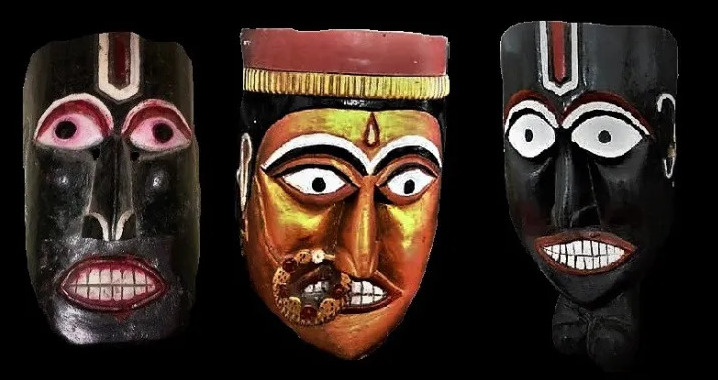
One of the eighteen carries a second distinction. The Ramman masks come from Chamoli, a Garhwal district on the Char Dham road. Ramman itself went onto UNESCO's Representative List of Intangible Cultural Heritage in 2009, as the only Indian element inscribed that year. It is a ritual theatre of the Garhwal Himalayas, and the masks are carved for it rather than for sale.

Grain, pulses and hill foods worth carrying home

The food is the best buy in Uttarakhand, because it is grown where you are standing and costs almost nothing.

  • Manduwa. Finger millet, sold as flour. Dark, nutty, and the staple grain of the hills.
  • Jhangora. Barnyard millet, cooked like a coarse rice.
  • Gahat. Horse gram, used for the soup every hill kitchen makes in winter.
  • Kala bhatt. Black soybean, roasted or cooked whole.
  • Munsiyari rajma. Small dark kidney beans from high Kumaon, worth the premium over the plains kind.
  • Malta. A hill citrus, eaten fresh in season and sold as squash out of it.
  • Where to buy it. Roadside shops and co-operative outlets, by weight rather than in packets.

What a region eats is a shorter route into it than what a region sells, which is a longer argument made elsewhere.

Aipan, ringaal and the Kumaoni crafts

Kumaon holds most of the state's registered craft, which is the opposite of where most visitors spend their shopping money.

  • Aipan. Red ochre ground with white rice paste, painted at thresholds and on walls for ceremonies. Sold on paper, cloth and wood.
  • Pichora. The Kumaoni veil, yellow with a red pattern, worn at weddings and rituals.
  • Likhai. Carved wooden panels, doorframes and window pillars, a Kumaoni woodworking tradition.
  • Thulma. Thick, heavy, hand-woven and warm enough to argue with a Himalayan night. Judge it by weight in your hands.
  • Dann and Bhotia carpets. Geometric rather than floral, woven in the high valleys.
  • Ringaal. Hill bamboo split and woven into baskets, mats, pen stands and food covers. Cheap, light and genuinely local.
  • How to tell hand from machine. Hand-woven wool is uneven on the reverse and the pattern does not repeat perfectly. Machine goods look identical on both faces.

Where to shop in Kumaon and Garhwal

Buy in the market towns rather than at the shrines or the viewpoints, where the range narrows and the prices do not.

  • Almora. The best single market in Kumaon for craft, and the source of the Lakhori chilli.
  • Nainital. The widest range in the eastern hills, and candles with a GI tag of their own.
  • Munsiyari. For the rajma and for Bhotia wool close to where it is woven.
  • Joshimath. The Bhotia wool trade's own town in Garhwal, and the best place in the division for thulma and dann.
  • Haridwar and Rishikesh. The widest selection overall, including the state emporium ranges, and the best place to buy grain by weight.
  • Government emporia. Fixed prices and verified provenance, with a narrower range than the markets.
  • Co-operatives and women's self-help groups. Named on their own signage, and the money stays closer to the weaver.

Kumaon's craft towns are where this shopping list actually lives, which is what our eight day cultural journey through Kumaon is built around.

What not to buy at the shrine gates

  • Machine-printed aipan sold as hand-painted. The perfect repeat gives it away.
  • Anything described as an antique. Objects over a hundred years old cannot leave India without clearance from the Archaeological Survey of India.
  • Plants, stones or fossils taken from the hills. Gangotri National Park, the Valley of Flowers and the Kedarnath Wildlife Sanctuary are all protected and removing material from them is not permitted.
  • Anything made from wildlife. Shahtoosh, ivory, claws, bone and fur are illegal to buy and to carry.
  • Bottled water by the case. Refill instead. The hills carry what the season leaves behind.
  • Volume at a temple queue. A poor negotiating position, and the same goods sit cheaper downhill.

Most of what is sold at the shrines was made somewhere else, and most of what Uttarakhand actually makes is sold quietly, by weight, in shops without signboards. Customised tours is where those market towns get built into a route instead of squeezed between stops.


Also Read

  1. Things to Know Before Planning a Trip to Uttarakhand
  2. Cultural Places to Visit in India, and What Most People Miss
  3. Responsible Travel Destinations in India, and How to Get There

Frequently Asked Questions

What is worth buying in Uttarakhand?

Hill grain and pulses, thulma blankets, aipan painting, ringaal basketry and Bhotia woollens. The food is the best value because it is grown on the route and costs very little. The wool is the best object, and Joshimath and Munsiyari are the places for it.

Which Uttarakhand products have a GI tag?

On 4 December 2023 the state took Geographical Indication registration for eighteen products at once. They include aipan painting, ringaal, copperware, Bhotia woollens, thulma, Kumaoni pichora, likhai wood carving, bicchubooti nettle fabric, the Chamoli Ramman masks, manduwa, jhangora, gahat, kala bhatt, Munsiyari rajma, Berinag tea and burans squash.

What is thulma?

A thick hand-woven woollen blanket from the Uttarakhand hills, and one of the products registered under a Geographical Indication tag. It is heavy, warm and made for Himalayan winters rather than for luggage. Judge it by the weight in your hands before you buy.

What is aipan?

The ritual painting tradition of Kumaon, done in white rice paste on a red ochre ground, at thresholds and on walls for ceremonies and festivals. It carries a Geographical Indication tag. It is sold on paper, cloth and wood, and the hand-painted work does not repeat perfectly.

Where do you shop in Uttarakhand?

Almora and Nainital for Kumaoni craft, Munsiyari for rajma and Bhotia wool, Joshimath for thulma in Garhwal, and Haridwar or Rishikesh for the widest range and for grain by weight. The shrines themselves sell religious goods at prices that do not improve.


Leaving Pollen Dots You are about to visit the following url Invalid URL

Loading...
Comments


Comment created and will be displayed once approved.