
What to Buy in Sikkim: Organic Labels, Temi Tea and Thangka

7 minutes read
Tips
Traditions

About the Author

Soumen Bhowmick

Soumen Bhowmick founded Pollen Dots in 2024 to plan journeys across India and Bhutan. He works in the Commercial Department of Indian Railways, where he has been since 2000. From 2016 to 2020 he was Head of Business Development and Partnerships at ScoutMyTrip, a community-driven road trip planning platform. There he built a nationwide network of local Scouts who helped travellers on the road, and grew the Road Trippers Club to 16 Indian cities. As a core member of Devil On Wheels, he helped travellers plan Himalayan trips and started Spreading Smiles. He has driven solo from Arunachal to Goa and from Himachal to Karnataka, and has run his own caravan for more than ten years. His photographs have won national and international salon awards, and his writing has appeared in Outlook Traveller.
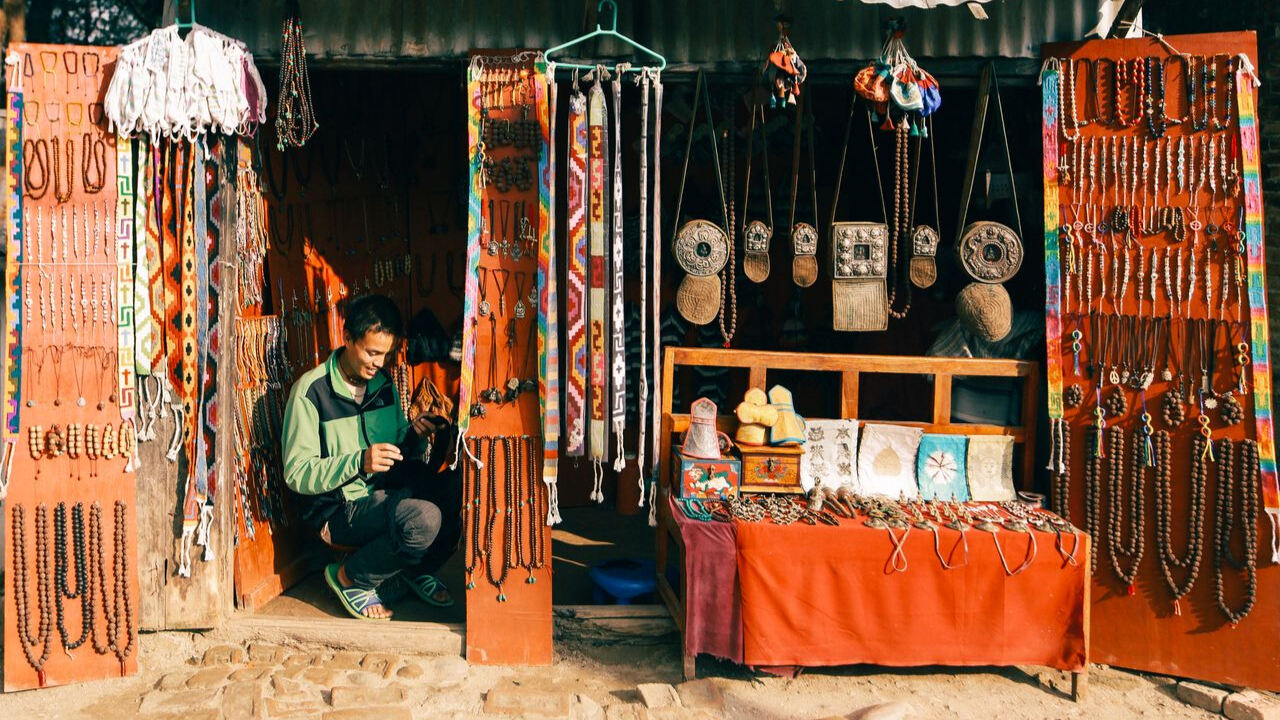
Blog Image

Most lists of what to buy in Sikkim read like a list from the tea hills below with the names changed. Sikkim tea has never received a Geographical Indication tag, and what the state has instead is a farming policy: all of its farmland is certified organic. Buy on the strength of that policy, buy Temi rather than a substitute for something else, and buy the cardamom and the crafts where provenance is not a question.

That difference between the two kinds of credential is the useful thing to understand before spending anything here. A Geographical Indication certifies where a thing was made. Organic certification covers how it was grown. The guide to preparing for travelling in India handles money and documents, and this handles the shopping.

What to buy in Sikkim

  • Large cardamom. Smoked over wood, dark and resinous, and nothing like the green cardamom sold in the plains.
  • Temi tea. The state's oldest and largest garden, founded in 1969, and a different thing from anything grown below the state line.
  • Chhurpi. Hard yak cheese, sold in blocks, and the most portable food on this list.
  • Dalle khursani. The round red chilli of this region, sold fresh, dried and in pickle.
  • Thangka paintings. Bought from monastery workshops rather than street stalls.
  • Handwoven woollens. Blankets, shawls and carpets from the Sikkim and Tibetan weaving traditions.
  • Handmade paper. Made in the state and used for religious texts.
  • Bamboo and cane work. Baskets and containers, made across the hills.

What organic means on a Sikkim label

Sikkim's label carries more weight than most, because the policy behind it is statewide rather than a certification somebody bought for one farm.

  • All of Sikkim's farmland is certified organic. Not a share of it.
  • The transition covered more than 66,000 farming families.
  • The sale and use of chemical pesticides is banned in the state.
  • It won the Future Policy Gold Award in 2018, run with the Food and Agriculture Organization, which called it the first organic state in the world.
  • What that changes in a shop. Organic here is the default condition of the state's agriculture, not a premium claim about one supplier.
  • What to buy on the strength of it. Large cardamom, Temi tea, buckwheat, ginger, turmeric and honey.
  • The year it completed is not quoted here. Published accounts give different dates for when the conversion finished, so the award and the policy are the facts worth carrying.

Temi tea, and why Sikkim tea has no GI tag

Temi was founded in 1969 by Palden Thondup Namgyal, the last Chogyal, to provide work for Tibetan refugees in the region. It is the state's oldest and largest garden and the only government-run estate.

  • Not the only garden. Bermiok is a boutique estate founded in 2002, and there are other small growers.
  • The organic credential. Sikkim tea's organic status is certified by the Institute for Market Ecology.
  • The missing credential. Sikkim tea has never received a Geographical Indication tag. The tea grown below the state line has held one since 2004.
  • Why that matters in a shop. Nothing legally stops a packet from borrowing the look of a more famous hill tea. The garden name is the information.
  • What Temi actually tastes of. A black tea in its own right, and worth buying as Temi rather than as a substitute for something else.
  • Where to buy it. The garden itself, the government outlets in Gangtok, and established dealers.

Large cardamom, chhurpi and the food to carry home

The food is the best value in Sikkim, because it is grown where you are standing and it travels well.

  • Large cardamom. Dried over wood smoke, which is where the resinous flavour comes from. Buy it whole.
  • Chhurpi. Hard yak cheese. The soft version is eaten fresh and the hard version lasts months.
  • Dalle khursani. Hot, round and red. The pickle is the easiest form to carry.
  • Buckwheat, millet and ginger. All organic by default under the state policy.
  • Honey. From the hills, and covered by the same policy.
  • Where to buy it. Lal Bazaar in Gangtok and the co-operative outlets, by weight rather than in packets.

What a region eats is a shorter route into it than what a region sells, which is a longer argument made elsewhere.

Thangka, carpets and the Sikkim crafts

The craft here is Himalayan Buddhist rather than Indian plains, which is the most useful thing to know before buying any of it.

  • Thangka. Scroll paintings on cloth, religious objects before they are decorative ones. Buy from monastery workshops and government centres.
  • Carpets. Hand-knotted in the Tibetan tradition, with the dragon and geometric patterns that go with it.
  • Woollen blankets and shawls. Heavy, warm, and judged by weight in the hand like any hill wool.
  • Wooden masks and choktse tables. Carved and painted, from the same workshop tradition as the thangka.
  • Handmade paper. Made in the state and used for religious texts.
  • How to tell hand from machine. Hand-knotted carpets are uneven on the reverse and the pattern does not repeat exactly. Printed thangka have no brush texture at all.
  • Where to buy. The government handicraft centres in Gangtok and the monastery shops, where provenance is not a question.

What not to buy at a roadside stall

  • Printed thangka sold as painted. Hold it to the light and look for brush texture.
  • Tea sold with no garden name. The garden is the information. Without it, the packet is telling you nothing.
  • Anything made from wildlife. Shahtoosh, ivory, fur, bone and claws are illegal to buy and to carry.
  • Antiques. Objects over a hundred years old cannot leave India without clearance from the Archaeological Survey of India.
  • Bottled water by the case. The state has restricted single-use plastic since 1998 and refilling is straightforward.
  • Volume on a viewpoint road. The same goods sit cheaper in Gangtok, and with somebody standing behind them.

Buy the produce on the strength of a policy rather than a sticker, and the shopping here becomes the clearest explanation of the state you will get. Our six day cultural journey through Darjeeling and Sikkim runs the monasteries, which is also where the craft buying happens. Customised tours is where a garden or a workshop visit gets built into the route rather than squeezed between viewpoints.


Also Read

  1. Things to Know Before Planning a Trip to Sikkim
  2. Cultural Places to Visit in India, and What Most People Miss
  3. Responsible Travel Destinations in India, and How to Get There

Frequently Asked Questions

Does Sikkim tea have a GI tag?

No. Sikkim tea has never received a Geographical Indication tag. Its organic status is certified by the Institute for Market Ecology instead. The tea grown below the state line has held a GI since 2004, which is a different kind of credential covering origin rather than method.

What is Temi tea?

Sikkim's oldest and largest tea garden, founded in 1969 by Palden Thondup Namgyal, the last Chogyal, to provide work for Tibetan refugees. It is the only government-run estate in the state, though not the only garden. Bermiok is a boutique estate founded in 2002.

Is everything in Sikkim actually organic?

All of Sikkim's farmland is certified organic, and the sale and use of chemical pesticides is banned in the state. The transition covered more than 66,000 farming families, and the policy won the Future Policy Gold Award in 2018 with the Food and Agriculture Organization.

What is large cardamom and how is it different?

A larger, darker pod than the green cardamom sold in the plains, dried over a wood fire, which gives it a smoky and resinous flavour. It is one of Sikkim's signature crops and it is organic by default under the state policy. Buy it whole rather than ground.

What should I buy in Gangtok?

Large cardamom, chhurpi and dalle khursani from Lal Bazaar and the co-operative outlets, and thangka, carpets or handmade paper from the government handicraft centres and monastery workshops. Buy craft where provenance is not a question, which here means the centres rather than the stalls.


Leaving Pollen Dots You are about to visit the following url Invalid URL

Loading...
Comments


Comment created and will be displayed once approved.