
Let’s help you
plan your journey
Explore responsibly, discover offbeat places, guided by locals, rooted in culture.
Let’s help you
plan your journey
Explore responsibly, discover offbeat places, guided by locals, rooted in culture.
Soumen Bhowmick
Soumen Bhowmick founded Pollen Dots in 2024 to plan journeys across India and Bhutan. He works in the Commercial Department of Indian Railways, where he has been since 2000. From 2016 to 2020 he was Head of Business Development and Partnerships at ScoutMyTrip, a community-driven road trip planning platform. There he built a nationwide network of local Scouts who helped travellers on the road, and grew the Road Trippers Club to 16 Indian cities. As a core member of Devil On Wheels, he helped travellers plan Himalayan trips and started Spreading Smiles. He has driven solo from Arunachal to Goa and from Himachal to Karnataka, and has run his own caravan for more than ten years. His photographs have won national and international salon awards, and his writing has appeared in Outlook Traveller.
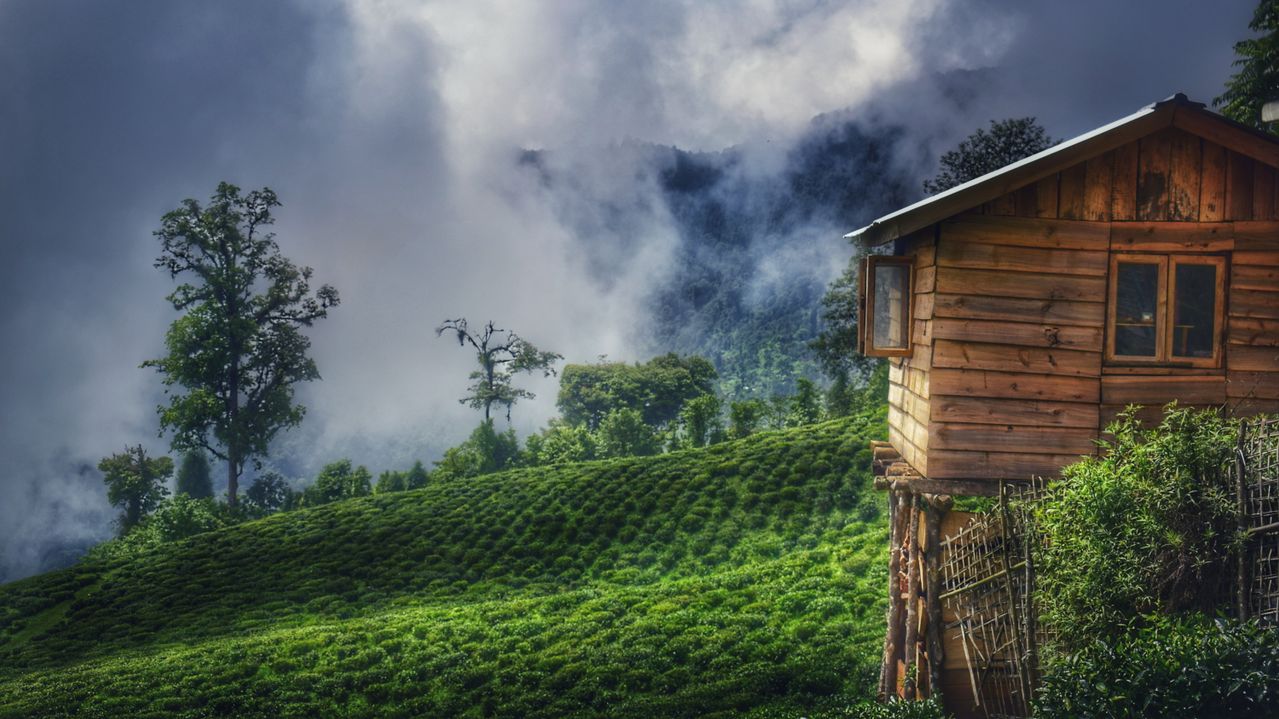
One national park in this state is listed by UNESCO for both its nature and its culture, which is the thing to know first about the places to visit in Sikkim. Khangchendzonga National Park is India's first and only mixed World Heritage Site, inscribed in July 2016 under four criteria at once. Pick between the high north, the monastery towns, and the two capitals the state had before Gangtok.
That last point is the one most itineraries miss. Sikkim has had three capitals, and the first two are in the west, within a short drive of each other. The guide to preparing for travelling in India takes the practical questions, and this takes the places.
Inscribed by UNESCO in July 2016, at its 40th session, under criteria three, six, seven and ten. Those four span cultural and natural value, which is what makes it a mixed site.
The capital and the most visited corner of the state, and the base for the two day trips everyone takes.
The high country, in Mangan district, reached from the capital through Lachen and Lachung.
West Sikkim holds the two capitals that came before Gangtok, and both are reachable from Pelling.
The mountain is the point of most viewpoints in the state and it is hidden for a good part of the year.
The state rewards picking one corner and going properly into it rather than a route that touches all four and arrives at none of them. Our six day cultural journey through Darjeeling and Sikkim runs the monasteries, which is the version of this state that needs the fewest permits. Customised tours is where the north, the viewpoints and the passports in the group get arranged around one another.
It was inscribed in July 2016 under four criteria covering both cultural and natural value, which makes it India's first and only mixed World Heritage Site. It covers 1,784 square kilometres across Mangan and Gyalshing districts and ranges from 1,829 metres to over 8,550.
Yuksom, established in 1642, where Phuntsog Namgyal was crowned by three lamas at Norbugang. The capital then moved to Rabdentse, which served from 1670 to 1814, before Gangtok. Both of the earlier capitals are in the west, within a short drive of Pelling.
8,586 metres, which makes it the third highest peak on Earth, after Everest and K2. It sits on the border between Sikkim and Nepal and gives Khangchendzonga National Park its name. The clearest views are from Pelling and from inside the park.
Partly. Both Indian citizens and foreign nationals need an additional permit for North Sikkim, and foreign nationals must travel in groups of at least two with a registered operator. Gurudongmar Lake is closed to foreign nationals entirely, as is Nathu La in the east.