
Let’s help you
plan your journey
Explore responsibly, discover offbeat places, guided by locals, rooted in culture.
Let’s help you
plan your journey
Explore responsibly, discover offbeat places, guided by locals, rooted in culture.
Soumen Bhowmick
Soumen Bhowmick founded Pollen Dots in 2024 to plan journeys across India and Bhutan. He works in the Commercial Department of Indian Railways, where he has been since 2000. From 2016 to 2020 he was Head of Business Development and Partnerships at ScoutMyTrip, a community-driven road trip planning platform. There he built a nationwide network of local Scouts who helped travellers on the road, and grew the Road Trippers Club to 16 Indian cities. As a core member of Devil On Wheels, he helped travellers plan Himalayan trips and started Spreading Smiles. He has driven solo from Arunachal to Goa and from Himachal to Karnataka, and has run his own caravan for more than ten years. His photographs have won national and international salon awards, and his writing has appeared in Outlook Traveller.
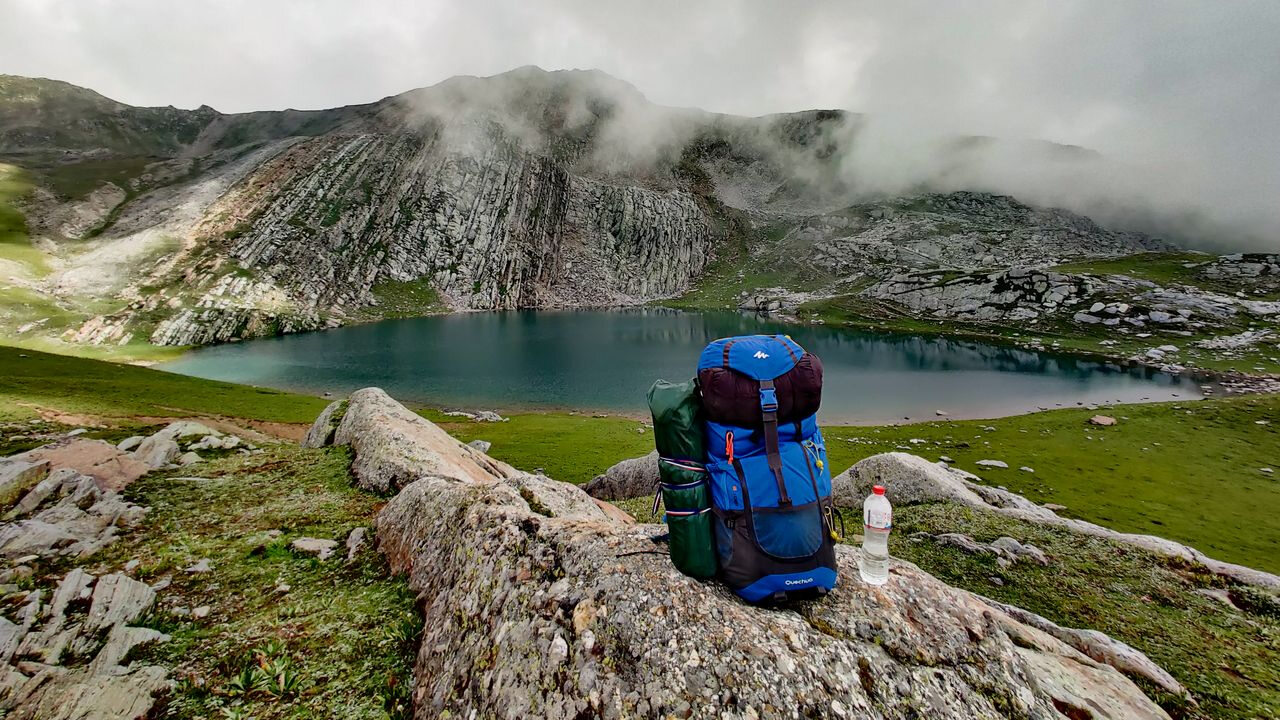
Gangtok sits low enough to ignore and Gurudongmar sits at 5,150 metres, which is the range a packing list for Sikkim has to cover. The monsoon closes roads in this corner of the Himalaya more often than anywhere else in India, so the rain layer matters more than the warm one. Pack for wet, for cold at the high lakes, for a monastery dress code, and for the permits the border asks for.
Most lists for this state are written for the Gangtok week, which is a hill trip with a sweater in it. North Sikkim is a different trip inside the same booking. The guide to preparing for travelling in India carries the general kit, and this adds what the rain and the border need.
The core list, which holds for any month and any part of the state.
Two different answers, and the gap between them is the whole problem with packing for this state.
Two different days that most itineraries include in the same week.
The high lake runs climb from Gangtok to above 5,000 metres across two days, which is a faster gain than the Char Dham shrines ask for. Our six day cultural journey through Darjeeling and Sikkim stays on the monasteries and the tea hills, which needs a lighter bag than the north does.
Sikkim adds paperwork that most states do not, and the north adds a short list on top of that.
Nothing on this list is exotic, which is the point. The bag that fails here is the one packed for a Gangtok week and then asked to stand at 5,150 metres in wind. Customised tours is where the permits and the high days get settled before anyone packs.
Three thin layers under a proper waterproof shell, with full-length trousers and sleeves for the monasteries. Gangtok and Pelling are cool year round and cold after dark. At Gurudongmar, at 5,150 metres, it is freezing or near it on any morning in any month.
Shoes with grip and ankle support, worn in before you travel, are enough for the lakes and the monastery days, which are drives rather than treks. Proper trekking boots are for Dzongri and Goecha La, which start at Yuksom and need a separate permit.
Yes, if North Sikkim is on your itinerary. Gurudongmar Lake sits at 5,150 metres, higher than any Char Dham shrine, and the climb from Gangtok is made in about two days. Sikkim publishes no medical screening rule, so nobody checks for you.
An umbrella as your only rain protection, single-use plastic bottles, new shoes, hard-wheeled suitcases and drones. The most common error is packing for a Gangtok week and then being asked to stand at 5,150 metres in wind.