
Let’s help you
plan your journey
Explore responsibly, discover offbeat places, guided by locals, rooted in culture.
Let’s help you
plan your journey
Explore responsibly, discover offbeat places, guided by locals, rooted in culture.
Soumen Bhowmick
Soumen Bhowmick founded Pollen Dots in 2024 to plan journeys across India and Bhutan. He works in the Commercial Department of Indian Railways, where he has been since 2000. From 2016 to 2020 he was Head of Business Development and Partnerships at ScoutMyTrip, a community-driven road trip planning platform. There he built a nationwide network of local Scouts who helped travellers on the road, and grew the Road Trippers Club to 16 Indian cities. As a core member of Devil On Wheels, he helped travellers plan Himalayan trips and started Spreading Smiles. He has driven solo from Arunachal to Goa and from Himachal to Karnataka, and has run his own caravan for more than ten years. His photographs have won national and international salon awards, and his writing has appeared in Outlook Traveller.
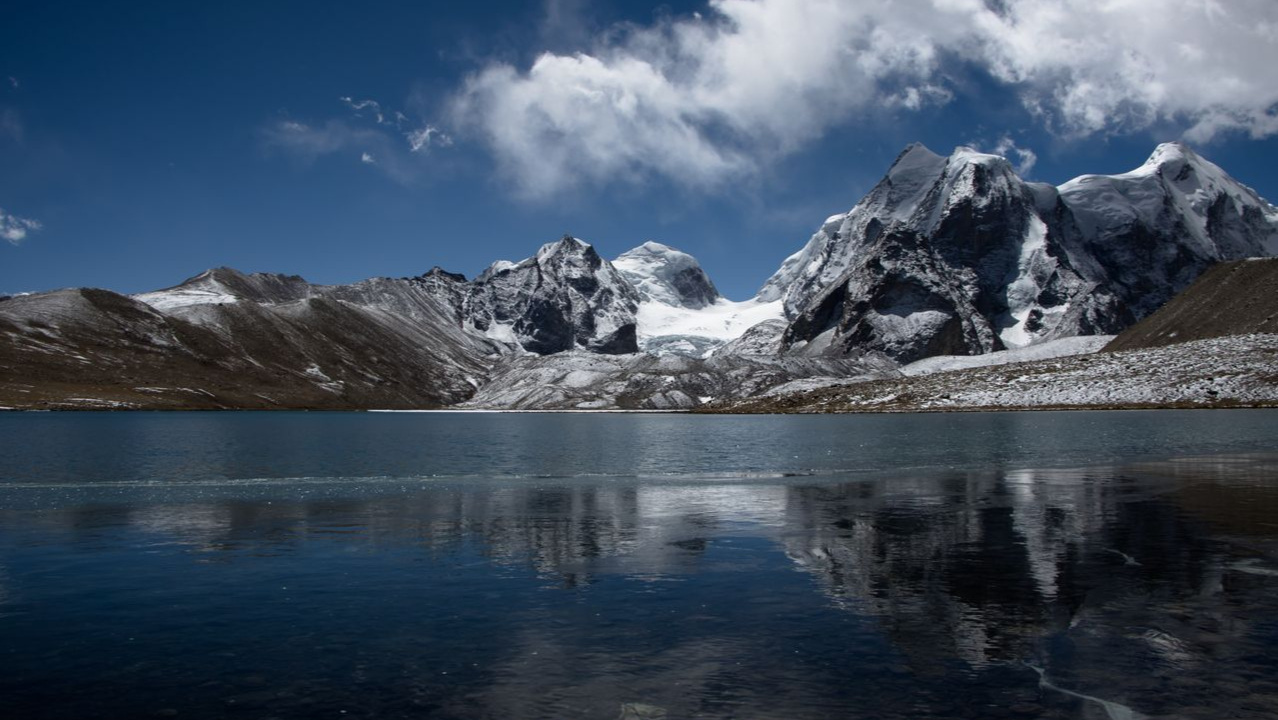
Two different permit regimes meet on a trip to Sikkim, and which passport you hold decides which one applies. Foreign nationals need a permit to enter the state at all and Indian citizens need none, and Nathu La and Gurudongmar are closed to foreign nationals entirely. Every visitor over five now pays a fifty rupee entry fee as well, collected at check-in.
That inversion is worth stating plainly because most travel writing has it the other way round. Sikkim became India's twenty-second state on 16 May 1975, after a referendum ended the Chogyal monarchy, and it still runs an entry system of its own. The guide to preparing for travelling in India opens the general case, and this adds what the border adds.
October to early December is the clearest window of the year, with March to May a close second. The monsoon between them lands hard on this corner of the Himalaya.
Indian citizens need no permit to enter Sikkim. Foreign nationals do. That is the opposite of how most Indian destinations work, and it catches people out in both directions.
The name is the confusing part. The four northeastern states use Inner Line Permit for a document that binds Indian citizens. Sikkim uses the same words for the document that binds foreign nationals, and the document Indians need here is a Protected Area Permit instead.
Two of the best, and that is unusual enough to plan around if your group holds more than one kind of passport.
Fifty rupees per person, under the Sikkim Registration of Tourist Trade Rules, 2025, charged since March 2025. There is nothing to arrange in advance.
By air or rail to the plains below, then by road up. The state has one airport of its own and it is not the busy one.
Gangtok asks nothing of you. The high lakes do, and the jump is made in a single run.
Six to eight days covers the state properly. Shorter than that and the north drops off the itinerary.
A trip planned without checking the passports in the group is the one that fails here, because the permit rules are not the same for everybody travelling together. Our six day cultural journey through Darjeeling and Sikkim runs the monasteries and the tea hills rather than the high lake run. Customised tours is where the permits, the season and the group get settled together.
Not for standard entry, and not for Gangtok, Pelling, Ravangla or Namchi. A separate Protected Area Permit is needed for specific border and protected areas, which covers North Sikkim, Tsomgo and Nathu La. Foreign nationals need an Inner Line Permit to enter the state at all.
No. Both are closed to foreign nationals. Nathu La is open to Indian tourists only, who need permission a day in advance, and the pass is closed on Mondays and Tuesdays. Gurudongmar Lake requires a Protected Area Permit and foreign nationals cannot visit it.
Yes. Fifty rupees per person under the Sikkim Registration of Tourist Trade Rules, 2025, applying since March 2025. Registered hotels, homestays and guesthouses collect it at check-in through the ATITHI Guest Information System, and it covers a stay of up to 30 days.
Children under five, Sikkim residents, and government employees travelling on official duty. Everyone else pays fifty rupees, once per stay of up to 30 days. Returning after 30 days means paying again.
October to early December for the clearest mountain views, or March to May for the orchid bloom and the hills at their best. Avoid June to September, when the monsoon brings landslides. Nathu La closes in winter and reopens in May.
5,150 metres, which is higher than any of the four Char Dham shrines in Uttarakhand. It sits in North Sikkim, in Mangan district, and is reached from Lachen. Foreign nationals cannot visit it and Indian citizens need a Protected Area Permit.
Six to eight days covers the state at a reasonable pace. Three days does Gangtok, Tsomgo and Rumtek. Five to six adds West Sikkim at Pelling and Yuksom. Add two more for North Sikkim, with the permits arranged in advance.