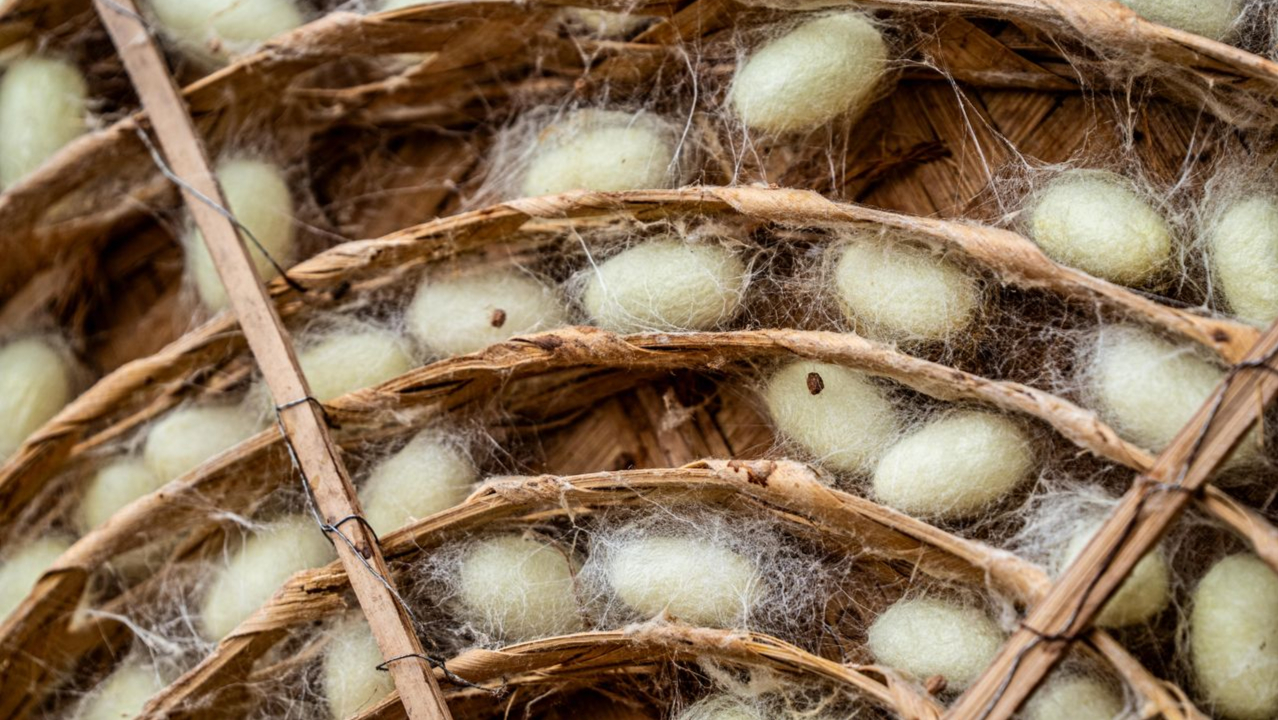
Deciding what to buy in Assam comes down to three things, and one of them cannot be bought anywhere else at all. Muga silk comes from a silkworm that lives only in Assam, which is why it holds a Geographical Indication and why a cheap one is not muga. Buy silk at the weaving town rather than the airport, tea by the flush rather than the brand, and bell metal by weight.
Everything below is sold openly and legally, and none of it needs a permit to carry home. The general guide to preparing for travelling in India covers customs and baggage questions across the country.
What to buy in Assam
Six things, in the order of how hard they are to find elsewhere.
- Muga silk. Golden, unbleached, and made nowhere else.
- Eri silk. Warm and matte. Shawls and stoles.
- Pat silk. Mulberry-fed and brilliant white. The formal one.
- Assam tea. Single-garden lots that never reach a supermarket.
- Bell metal. The xorai, the bota and eating bowls.
- Bamboo and cane. The japi hat, baskets, and furniture if you can ship it.
Muga, eri and pat, the three Assam silks
Three different worms, three different leaves, three different cloths. Most shops sell all three and not every one explains the difference.
- Muga. From Antheraea assamensis, a silkworm endemic to Assam. The fibre arrives golden brown without dye, and it gets glossier with washing rather than duller.
- Eri. From a worm fed on castor leaves. Matte, warm and soft, and sold as non-violent silk because the moth leaves the cocoon before the fibre is taken.
- Pat. From mulberry-fed worms. Brilliant white or off-white, smooth, and the one most often made into a formal mekhela chador.
A gamosa is the other cloth worth buying and it is cotton rather than silk. It carries its own Geographical Indication and is the thing most households actually hand to a guest.
How to tell if muga silk is real
Ask for the Geographical Indication mark, which muga has held since 2007. Price is the second check, because real muga is never cheap.
- Colour is not a test. Muga takes dye like any other silk, so a coloured piece is not automatically fake and a golden one is not automatically real.
- The mark is. The authenticity logo is registered with the Assam Science Technology and Environment Council, and the Central Silk Board has the authority to inspect what is sold as muga.
- Ask where it was woven. A shop that cannot name the loom or the cluster is selling something it bought as stock.
- Weight and handle. Muga is heavier and stiffer than pat, and it softens over years rather than in the shop.
- Treat a bargain as a different fabric. Usually viscose or a blend, sometimes sold honestly as art silk and sometimes not.
Where to buy silk in Assam
Sualkuchi for the loom and Guwahati for the showroom, and the difference is price rather than quality.
- Sualkuchi, in rural Kamrup district, is the handloom town. Buying at the cluster puts you closer to the weaver and the price.
- Guwahati showrooms carry the same cloth with a markup, a bill and a wider choice of finished garments.
- Government emporia are the safe option if you are not confident, because the mark and the receipt come as standard.
- Airports and hotel arcades carry the least and charge the most.
Assam tea worth carrying home
Ask for second flush, which is the malty cup Assam is known for, and buy it as a single-garden lot rather than a blend.
- Second flush, picked around May and June, is the one with the body and the malt.
- First flush is lighter and brisker and rarely what people are after when they ask for Assam tea.
- Single-garden lots sold at estate shops near Jorhat and Dibrugarh never reach a supermarket shelf.
- Orthodox against CTC. Orthodox leaf is the one worth carrying; CTC is what goes into everyday chai.
- Buy sealed and buy recent. Ask for the plucking season, not just the year.
Bell metal, bamboo and cane
Sarthebari in Barpeta district is the bell metal town, and the objects it makes are still in daily use rather than made for visitors.
- Xorai. The footed tray, used to offer things to a guest or at a shrine.
- Bota. The smaller offering tray that goes with it.
- Bowls and plates. Heavy, and they outlive the person who buys them.
- Japi. The bamboo and cane hat. The decorated one is a gift and the plain one is working headgear.
- Cane furniture. Worth the shipping only if you are buying more than one piece.
Our fourteen-day journey through the Northeast runs Assam, Arunachal Pradesh and Meghalaya, and the craft changes at every state line. If the shopping has to fit around fixed dates, customised tours is where that gets settled.
Also Read
- Things to Know Before Planning a Trip to Assam
- Destinations in India: Discovering Places Through Culture, Stories and Everyday Life
- Understanding the Land: How Ecology Shapes Local Life
Frequently Asked Questions
Why is muga silk so expensive?
Because the worm that produces it lives only in Assam and cannot be farmed elsewhere, so supply is fixed by one state's rearing cycle. The yarn is also reeled and woven by hand. A full mekhela chador in muga is the most expensive thing most Assam silk shops stock.
What is Sualkuchi known for?
Handloom silk weaving. It sits in rural Kamrup district and is the centre of the Assam silk handloom industry, producing muga, eri and pat. Buying there puts you at the cluster rather than at a reseller.
Which flush of Assam tea is best?
Second flush, picked around May and June, as an orthodox single-garden lot. That is the malty cup the region is known for. First flush is lighter, and CTC is the grade that goes into everyday chai rather than into a tin worth carrying home.
What is a xorai used for?
Offering something to a guest, to an elder or at a shrine. It is a footed bell metal tray from Sarthebari in Barpeta district, and it is still in daily household use rather than made for visitors. The smaller companion tray is the bota.
Can you take Assam silk and tea out of India?
Yes. Neither needs a permit or a certificate to carry home as personal baggage. Keep the receipt for silk, because it names the fabric and the mark, which is useful if a customs officer asks what it is.