
Let’s help you
plan your journey
Explore responsibly, discover offbeat places, guided by locals, rooted in culture.
Let’s help you
plan your journey
Explore responsibly, discover offbeat places, guided by locals, rooted in culture.
Soumen Bhowmick
Soumen Bhowmick founded Pollen Dots in 2024 to plan journeys across India and Bhutan. He works in the Commercial Department of Indian Railways, where he has been since 2000. From 2016 to 2020 he was Head of Business Development and Partnerships at ScoutMyTrip, a community-driven road trip planning platform. There he built a nationwide network of local Scouts who helped travellers on the road, and grew the Road Trippers Club to 16 Indian cities. As a core member of Devil On Wheels, he helped travellers plan Himalayan trips and started Spreading Smiles. He has driven solo from Arunachal to Goa and from Himachal to Karnataka, and has run his own caravan for more than ten years. His photographs have won national and international salon awards, and his writing has appeared in Outlook Traveller.
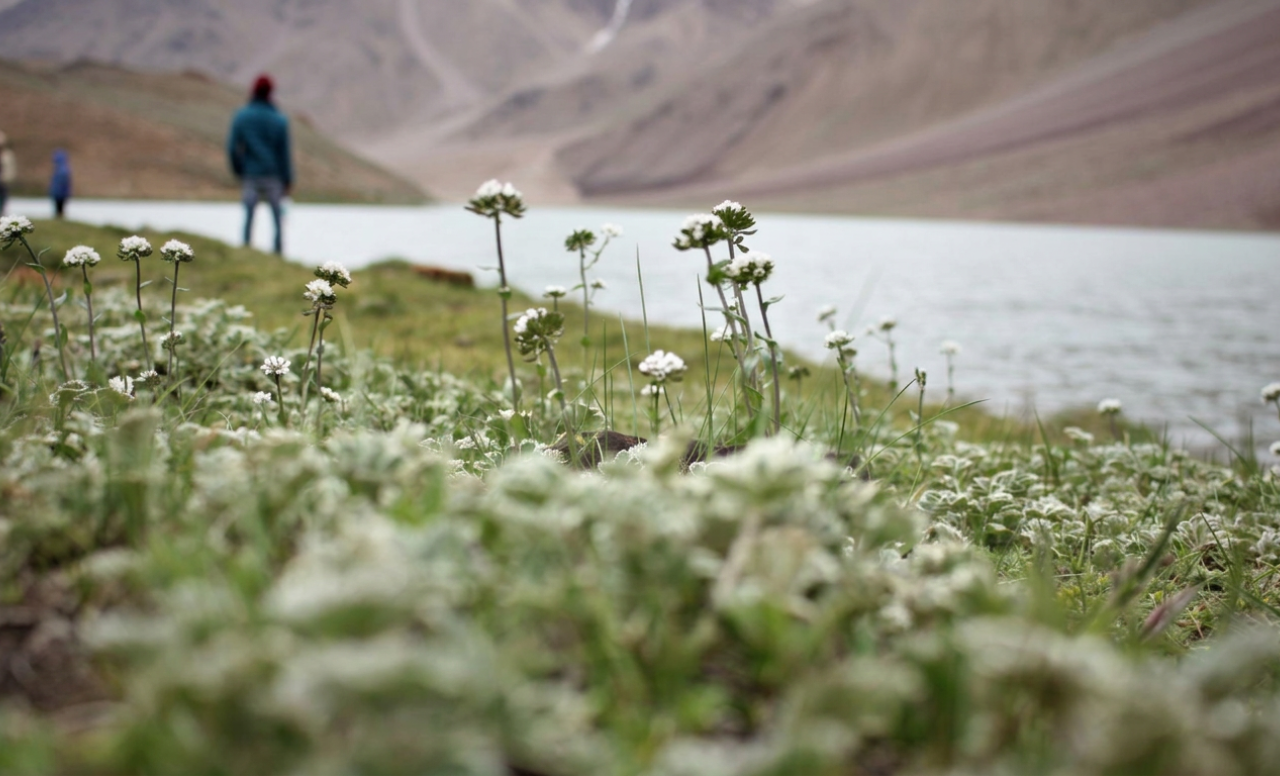
Two roads reach Spiti and only one of them stays open all year, which is the first decision a trip to Spiti turns on. Indian passport holders need no permit for Spiti or Kinnaur, because the orders that cover the valley carry the word Foreigners in their titles. Settle the road, the season and the altitude, and the money and the length of the trip follow from them.
Almost everyone arrives by road from inside India, which makes this a domestic journey with a high-altitude problem attached. The guide to preparing for travelling in India covers the general version, and Spiti sits inside it rather than beside it.
May to October for the full circuit, and the rest of the year for one road only. The season is set by Kunzum La rather than by the weather in the valley.
The valley is dry all year. The monsoon that closes roads in Kinnaur mostly stops at the Himalayan crest, which is why Spiti can be clear while the approach to it is not.
Shimla through Kinnaur is the all-year road. Manali over Kunzum La is the one that shuts, and it shuts for roughly half the year.
Spiti being cut off in winter is the most repeated thing said about it and it is not quite true. The Manali road closes. The valley stays reachable from the Shimla side, and people live and work there through the winter.
Indian citizens need nothing. Foreign nationals need an Inner Line Permit for the stretch past Jangi, and the distinction is in the name of the law rather than in the name of the place.
The confusion is worth naming once. The Inner Line Permit that binds Indian citizens comes from an 1873 regulation and applies in four northeastern states. What covers Spiti and Kinnaur is the Foreigners (Protected Areas) Order and the Foreigners (Restricted Areas) Order, and the word Foreigners is in both titles.
Kaza is the valley's subdivisional headquarters and sits well above 3,500 metres, with villages above it at 4,000 and higher. The approach decides how the altitude feels far more than fitness does.
Cash, a full tank and low expectations of signal. Kaza has the valley's only reliable infrastructure and everything beyond it thins out quickly.
Seven days from Shimla and back, nine to do the full circuit out through Manali, and under five is a drive rather than a visit.
Spiti punishes a compressed itinerary more than most places, because the altitude profile is the schedule. Our eleven day high-altitude journey through Spiti is built around the pace the valley requires rather than the distance it covers. Customised tours is where the dates and the road status get settled together. The Ladarcha fair at Kaza is the one week of the year when the valley's small bed count comes under real pressure.
No. Indian passport holders need no permit for Spiti or for Kinnaur. You will be asked to register at the Jangi and Sumdo checkposts with photo identity and vehicle papers, which is a record rather than a permission. The permit requirement beyond Jangi applies to foreign nationals.
Yes, from the Shimla and Kinnaur side. The Manali road over Kunzum La closes for roughly half the year, but the Kinnaur road stays open in principle through winter. Heavy snow can still shut the Nako to Kaza stretch for two or three days at a time, so winter travel needs slack in the schedule.
September and October for the clearest skies and the most stable roads, and mid-May to June if you want both roads open. July and August are warmest and are also when the Kinnaur approach is most prone to landslides. Winter is for people who want the valley empty and can absorb a delay.
Seven days up through Kinnaur and back covers the valley at a reasonable pace. Nine to ten allows the full circuit out over Kunzum La with Chandratal included. Under four days is possible from Manali in summer and most of it is spent driving.
There are machines at Kaza, but they run out of cash and go offline, and there is nothing dependable beyond the town. Draw what you need at Reckong Peo on the way up and treat anything in the valley as a bonus. Most village homestays take cash only.
Come up through Kinnaur rather than over Kunzum La, because the gradient is gentler and spread across two days. Sleep lower than the highest point you reached that day, and leave Langza, Komic and Hikkim until you have had a night or two at Kaza. If symptoms do not settle, going down is the only treatment that works.