
Let’s help you
plan your journey
Explore responsibly, discover offbeat places, guided by locals, rooted in culture.
Let’s help you
plan your journey
Explore responsibly, discover offbeat places, guided by locals, rooted in culture.
Soumen Bhowmick
Soumen Bhowmick founded Pollen Dots in 2024 to plan journeys across India and Bhutan. He works in the Commercial Department of Indian Railways, where he has been since 2000. From 2016 to 2020 he was Head of Business Development and Partnerships at ScoutMyTrip, a community-driven road trip planning platform. There he built a nationwide network of local Scouts who helped travellers on the road, and grew the Road Trippers Club to 16 Indian cities. As a core member of Devil On Wheels, he helped travellers plan Himalayan trips and started Spreading Smiles. He has driven solo from Arunachal to Goa and from Himachal to Karnataka, and has run his own caravan for more than ten years. His photographs have won national and international salon awards, and his writing has appeared in Outlook Traveller.
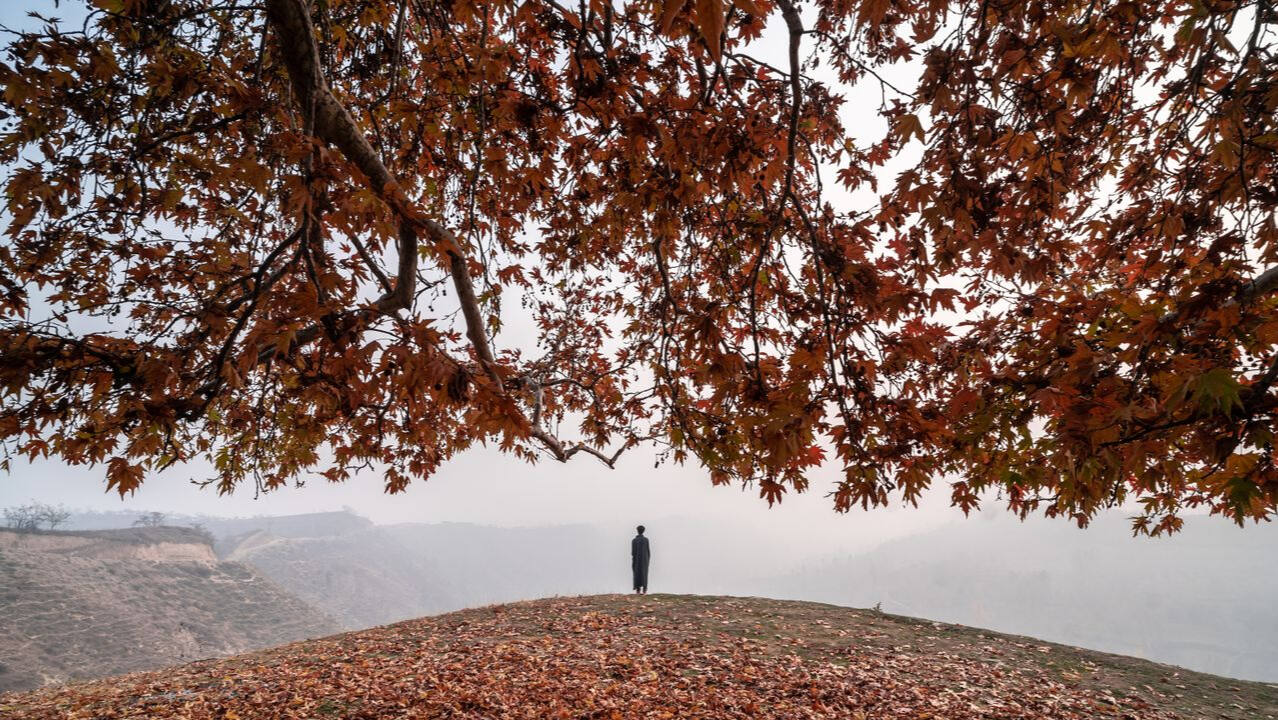
The places to visit in Kashmir sit within a day of Srinagar, which is why the valley reads smaller on a map than it feels on the ground. Six Mughal gardens built in the 1600s went on to the UNESCO tentative list in December 2010, four of them in Srinagar and two near Anantnag in the south. Dal Lake, the gardens, three hill stations and one national park make the whole of a first visit.
Srinagar is the base for all of it, not because of where you arrive but because the distances work from there. Gulmarg is about fifty kilometres west. Pahalgam is about ninety kilometres south. Sonamarg is about eighty kilometres east, on the road that climbs to Zojila. Each is a day trip and each is better as a night.
Srinagar, Gulmarg, Pahalgam and Sonamarg, with Dachigam and the quieter valleys behind them. The list is short and the drives are not long, which is unusual in the Himalaya.
| Place | Distance from Srinagar | Known for |
|---|---|---|
| Srinagar | Base | Dal Lake, Mughal gardens, old city crafts |
| Gulmarg | About 50 km | Snow, the gondola, the meadow |
| Pahalgam | About 90 km | The Lidder river, Aru, Betaab, Chandanwari |
| Sonamarg | About 80 km | Thajiwas glacier, the road to Zojila |
| Dachigam | 22 km | The hangul, Kashmir's own deer |
| Yusmarg and Doodhpathri | 40 to 50 km | Meadows with almost nobody on them |
| Gurez | Over Razdan Pass | Border valley, open in summer only |
Sonamarg is where the valley ends and the road to Ladakh begins. Zojila closes through the winter, so anything beyond Sonamarg is a summer plan.
Shalimar Bagh, Nishat Bagh, Chashma Shahi and Pari Mahal, all on the Zabarwan slope above Dal Lake. Achabal and Verinag, the other two on the UNESCO tentative list, are near Anantnag in south Kashmir.
Shalimar was built by Jahangir for Nur Jahan in 1619 and is the largest. Nishat was built by Asif Khan, Nur Jahan's brother, in 1633, and it is the terraced one that steps straight down to the lake. Chashma Shahi is the smallest and is built around a spring. Pari Mahal was built by Dara Shikoh, Shah Jahan's eldest son, around 1650, and it was used for teaching astronomy rather than for pleasure.
India submitted the six to the UNESCO tentative list on 13 December 2010. They have not been inscribed, and the dossier has been restarted more than once.
A shikara ride, a night on a houseboat, and the floating vegetable market at dawn. The lake is a working place as well as a view, with gardens and villages inside it.
Shikaras are the small covered boats that take visitors across. Houseboats are fixed, wooden, carved inside, and moored along the banks. The floating market happens early in the morning, when growers bring produce out from the floating gardens in their own boats and trade on the water.
Nigeen Lake, next to Dal and joined to it, is quieter and has houseboats of its own. The old city behind the lake holds the craft workshops, the Jamia Masjid and the shrines, and it gets a fraction of the lake's traffic.
Snow in winter and meadows in summer, in three different settings. Gulmarg is the highest of the three and the one built around the gondola.
Gulmarg sits at about 2,650 metres, which is around a thousand metres above Srinagar. The gondola runs in stages up the Apharwat side, and the top stage is weather dependent and often shuts in wind. In January and February this is the busiest place in Kashmir. In August it is an empty green bowl.
Pahalgam sits on the Lidder river and is the gentlest of the three. The side valleys, Aru, Betaab and Chandanwari, are the reason to stay rather than visit. Sonamarg is the highest road head before Zojila and it holds the Thajiwas glacier, which is reached on foot or on a pony in summer. Sonamarg had its first snowfall of the 2026 season on 12 November, which is when the high roads around it start closing.
At Dachigam National Park, 22 kilometres from Srinagar. The hangul is the Kashmir stag and it is the only surviving Asiatic subspecies of red deer.
The park covers 141 square kilometres on the Zabarwan range and climbs from the valley floor to high meadow. Dachigam holds the last viable population of the animal anywhere. The count is taken every two years by the line transect method with the Wildlife Institute of India, and the last published census, in 2023, put it at 289.
Lower Dachigam is open through the warmer months and Upper Dachigam is a summer visit. The park also holds one of the larger Asiatic black bear populations in the region, which is a reason to stay in the vehicle.
Yusmarg, Doodhpathri and Gurez. The first two are forty to fifty kilometres from Srinagar and carry a fraction of the traffic that Gulmarg does.
Yusmarg is a meadow ringed by pine, reached through Charar-i-Sharief. Doodhpathri is a stream running over a flat grass bowl, and the name means valley of milk. Both are day trips with almost no infrastructure, which is the point of them.
Gurez is different in kind. It lies over Razdan Pass in Bandipora district, close to the Line of Control, and it is open in summer and early autumn only. Indian nationals need no permit but original photo identity is checked and logged at posts along the road. There is no reliable ATM in the valley and the signal is patchy. If the pass is shut on your dates, the trip can be rebuilt around the valley floor instead, which is the sort of change we make on Journeys, Just for You. Our guide to getting ready for a trip in India covers the documents that go with roads like this one.
Srinagar for Dal Lake, the Mughal gardens and the old city, then Gulmarg, Pahalgam and Sonamarg. All three hill stations are between fifty and ninety kilometres from Srinagar. Dachigam, 22 kilometres out, takes half a day and is easy to add.
Six are on India's UNESCO tentative list, submitted on 13 December 2010. Shalimar Bagh, Nishat Bagh, Chashma Shahi and Pari Mahal are in Srinagar. Achabal and Verinag are near Anantnag in south Kashmir.
Yes, for a different reason than in winter. The meadow is green and largely empty between May and August, and the gondola runs in clear weather. Winter is the snow and ski season and is far busier.
At Dachigam National Park, 22 kilometres from Srinagar, which holds the last viable population of the Kashmir stag anywhere. The hangul is the only surviving Asiatic subspecies of red deer. The 2023 census put the number at 289.