
What to Buy in Kerala: Aranmula Mirrors, Monsooned Coffee and Spices

8 minutes read
Tips
Traditions

About the Author

Soumen Bhowmick

Soumen Bhowmick founded Pollen Dots in 2024 to plan journeys across India and Bhutan. He works in the Commercial Department of Indian Railways, where he has been since 2000. From 2016 to 2020 he was Head of Business Development and Partnerships at ScoutMyTrip, a community-driven road trip planning platform. There he built a nationwide network of local Scouts who helped travellers on the road, and grew the Road Trippers Club to 16 Indian cities. As a core member of Devil On Wheels, he helped travellers plan Himalayan trips and started Spreading Smiles. He has driven solo from Arunachal to Goa and from Himachal to Karnataka, and has run his own caravan for more than ten years. His photographs have won national and international salon awards, and his writing has appeared in Outlook Traveller.
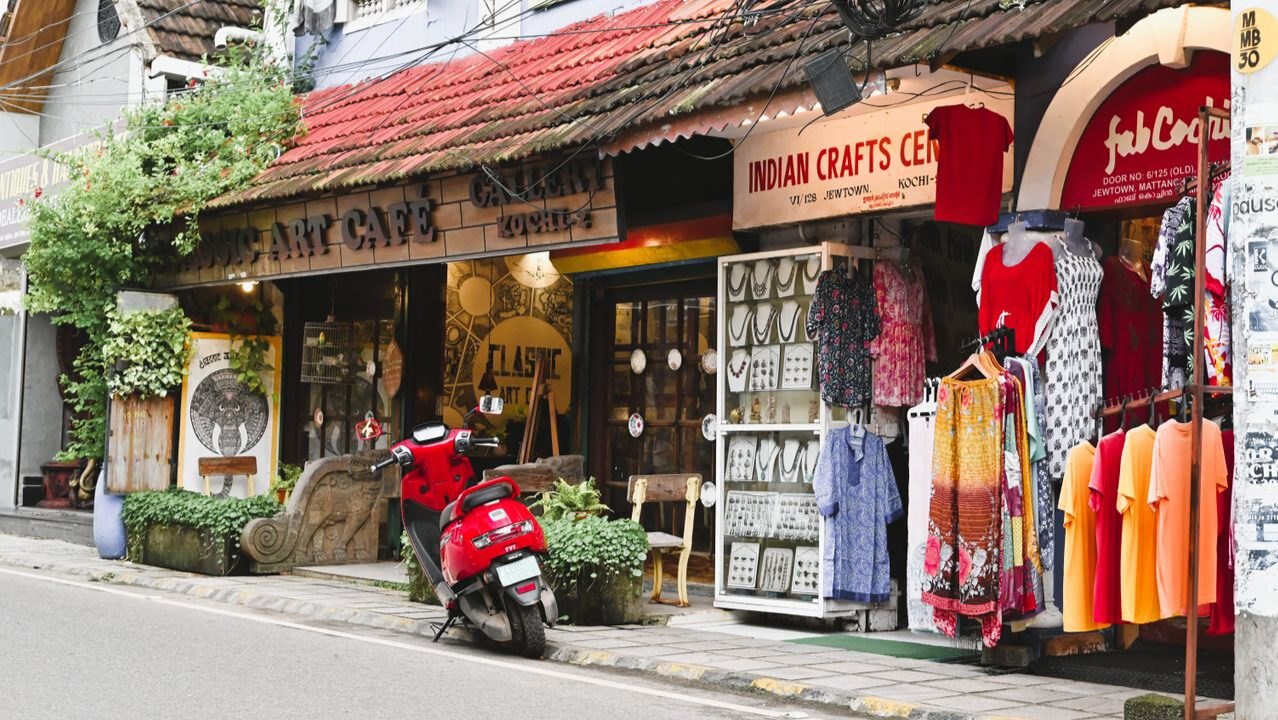
Blog Image

Most lists of what to buy in Kerala open with spices and stop at the tea. The Aranmula metal mirror holds application number 3 in India's Geographical Indications registry, behind only Darjeeling tea, which holds numbers 1 and 2. Buy the mirror from the society that holds the registration, buy the cardamom and the coffee against their own records, and buy the coir and the weaves where the district is named.

Kerala holds more than thirty registered Geographical Indications and the oldest of them is a mirror made of metal. The guide to preparing for travelling in India handles money and documents, and this handles the shopping.

What to buy in Kerala

  • Aranmula kannadi. A mirror cast from metal rather than cut from glass, and the oldest Kerala registration of all.
  • Alleppey green cardamom. Registered in 2008, and grown nowhere near Alleppey.
  • Monsooned Malabar coffee. Beans deliberately left open to the monsoon until they swell and turn pale.
  • Marayoor jaggery. Dark cane jaggery from the Marayoor valley in Idukki, registered in 2019.
  • Alleppey coir. Registered to the Coir Board in 2007, and still made along the same backwater belt.
  • Handloom from Balaramapuram, Kuthampully and Chendamangalam. Three separate registrations, three districts.
  • Screw pine and coconut shell craft. Both registered, both sold through the state outlets.
  • Malabar pepper, Pokkali rice and Palakkadan Matta rice. Registered foods you can carry home.

Why the Aranmula mirror carries the third application in India's GI registry

Aranmula Kannadi is application number 3 in the Geographical Indications registry, with a certificate dated 19 September 2005 and a registration running to 7 December 2033. Darjeeling tea holds applications 1 and 2, which makes the mirror the first handicraft ever registered in India.

  • Who holds it. The Viswabrahmana Aranmula Kannadi Nirman Society, in class 20, as a handicraft.
  • What it is made of. Bronze, an alloy of copper and tin. There is no glass in it anywhere.
  • Why that matters to the eye. A glass mirror reflects from the back, behind a layer of glass, so it carries a faint second image. The Aranmula mirror reflects from its own front surface and has none.
  • How it is made. Cast in clay moulds, then polished by hand for days until the surface reflects.
  • Where to buy it. From the society's own workshops at Aranmula, in Pathanamthitta district, where the registration sits.
  • What a copy looks like. A glass mirror in a brass frame. Hold it at an angle and the second image appears.

Why Alleppey cardamom does not come from Alleppey

Alleppey green cardamom is a trade name, not an origin. It takes the name from Alleppey because that was the depot where the cardamom was processed and sold under the Travancore monopoly, not because anything is grown there.

  • Where it is grown. On the southern slopes of the Western Ghats, between about 800 and 1,300 metres, across southern Kerala and into Tamil Nadu.
  • The registration. Application 72, certificate dated 28 March 2008, held by the Spices Board in class 30.
  • What the grade means. It describes the processing and the cure that Alleppey gave the crop, which is why the name survived the trade that created it.
  • Where to buy it. The Kumily and Thekkady spice markets sit inside the growing belt, which is nearer the source than any shop in Alappuzha.
  • How to judge it. Green rather than bleached, and heavy for its size.
  • What else the same hills give. Malabar pepper, nutmeg, clove and cinnamon, all sold loose by weight in the same markets.

Why the monsoon is used to finish coffee on the Malabar coast

Monsooned Malabar is coffee deliberately left open to the monsoon until it changes. The process began as an accident of the sea route. Beans spent up to six months in the humid hold of a sailing ship around the Cape of Good Hope, and arrived in Europe swollen and pale.

  • What the voyage did. The beans took up moisture, grew in size and faded from green to a pale yellow. Buyers came to expect that taste.
  • What replaced it. Steam cut the voyage short, so the coast recreated the conditions on land.
  • How it is done now. From June to September the beans are spread in open warehouses and raked for 12 to 16 weeks, with the monsoon wind blowing through.
  • What it does to the cup. The beans swell, turn pale gold and lose most of their acidity.
  • The registrations. Both Monsooned Malabar Arabica and Monsooned Malabar Robusta are registered, and Wayanad robusta carries its own.
  • Where to buy it. The roasters along the Malabar coast and the Wayanad estates, where the sacks carry the crop year.

Coir, weaves and the crafts with their own registrations

Kerala's handicraft registrations are held by societies and boards rather than by shops. The name on the label tells you which district the thing came from.

  • Alleppey coir. Application 54, certificate dated 16 May 2007, held by the Coir Board in class 27. Mats, rope and matting from the backwater belt.
  • Balaramapuram. Fine cotton, plain white with a gold border, woven near Thiruvananthapuram.
  • Kuthampully and Chendamangalam. The set mundu and the dhoti, each registered to its own village.
  • Kasargod sarees. From the far north, in their own colour sets.
  • Screw pine craft. Mats and boxes woven from the leaf, registered for the whole state.
  • Brass embroidered coconut shell craft. Bowls and containers cut from shell and inlaid with brass.
  • Where to buy. The government handloom and handicraft outlets and the weavers' societies, where the district and the society are stated on the label. What a region eats and makes is a shorter route into it than what it sells to visitors, which is a longer argument made elsewhere.

What not to buy at a roadside stall

  • A mirror with glass in it, sold as Aranmula. Tilt it. A second image means it is glass.
  • Cardamom sold loose with no crop year. The hills are full of this year's crop, so last year's has to be cheap for a reason.
  • Spices ground in front of you from an unlabelled sack. Whole spice travels better and is harder to adulterate.
  • Anything made from wildlife. Ivory, shell, coral, fur and feather are illegal to buy and to carry.
  • Sandalwood with no bill. It is a regulated timber and a receipt is the only thing that makes it portable.
  • Antiques. Objects over a hundred years old cannot leave India without clearance from the Archaeological Survey of India.

Buy against a registration where one exists and against a named society where it does not. Our eight day journey through the Kerala highlands stops at the Kumily spice markets and at Mattancherry, which are two ends of the same trade. Customised tours is where a weavers' society or a working roastery gets built into the route.


Also Read

  1. Things to Know Before Planning a Trip to Kerala
  2. What to Buy in North Bengal: Darjeeling Tea, Kalimpong Cheese and Hill Oranges
  3. Indian Destinations Explained Through Regional Food Culture

Frequently Asked Questions

Does the Aranmula mirror have a GI tag?

Yes, and it is one of the oldest in the country. Aranmula Kannadi holds application number 3 in India's Geographical Indications registry, with a certificate dated 19 September 2005 and a registration running to 7 December 2033. Darjeeling tea holds applications 1 and 2, which makes the mirror the first registered handicraft in India.

Why is it called Alleppey green cardamom?

Because Alleppey was the depot where the cardamom was processed and sold under the Travancore monopoly, not because it grows there. It is grown on the southern slopes of the Western Ghats between about 800 and 1,300 metres. The registration is application 72, certified on 28 March 2008 and held by the Spices Board.

What is Monsooned Malabar coffee?

Coffee deliberately exposed to the monsoon wind in open warehouses from June to September, for 12 to 16 weeks. The beans swell, turn pale gold and lose most of their acidity. The process copies what used to happen by accident on the six month sailing voyage to Europe around the Cape of Good Hope.

Which Kerala products are GI registered?

More than thirty, including Aranmula Kannadi, Alleppey coir, Alleppey green cardamom, Marayoor jaggery, Malabar pepper, Pokkali rice, Palakkadan Matta rice, Nilambur teak and the handlooms of Balaramapuram, Kuthampully and Chendamangalam. Published totals differ by date, so these are the ones with registry records attached.

What should I buy in Fort Kochi?

Spices by weight from the Mattancherry godowns, coir matting from the backwater belt, and coffee from a roaster that states the crop year. Mattancherry has been a spice trading street for centuries and the godowns still work. Buy the handloom and the handicraft from the government outlets, where the district and the society are named.


Leaving Pollen Dots You are about to visit the following url Invalid URL

Loading...
Comments


Comment created and will be displayed once approved.