
Let’s help you
plan your journey
Explore responsibly, discover offbeat places, guided by locals, rooted in culture.
Let’s help you
plan your journey
Explore responsibly, discover offbeat places, guided by locals, rooted in culture.
Soumen Bhowmick
Soumen Bhowmick founded Pollen Dots in 2024 to plan journeys across India and Bhutan. He works in the Commercial Department of Indian Railways, where he has been since 2000. From 2016 to 2020 he was Head of Business Development and Partnerships at ScoutMyTrip, a community-driven road trip planning platform. There he built a nationwide network of local Scouts who helped travellers on the road, and grew the Road Trippers Club to 16 Indian cities. As a core member of Devil On Wheels, he helped travellers plan Himalayan trips and started Spreading Smiles. He has driven solo from Arunachal to Goa and from Himachal to Karnataka, and has run his own caravan for more than ten years. His photographs have won national and international salon awards, and his writing has appeared in Outlook Traveller.
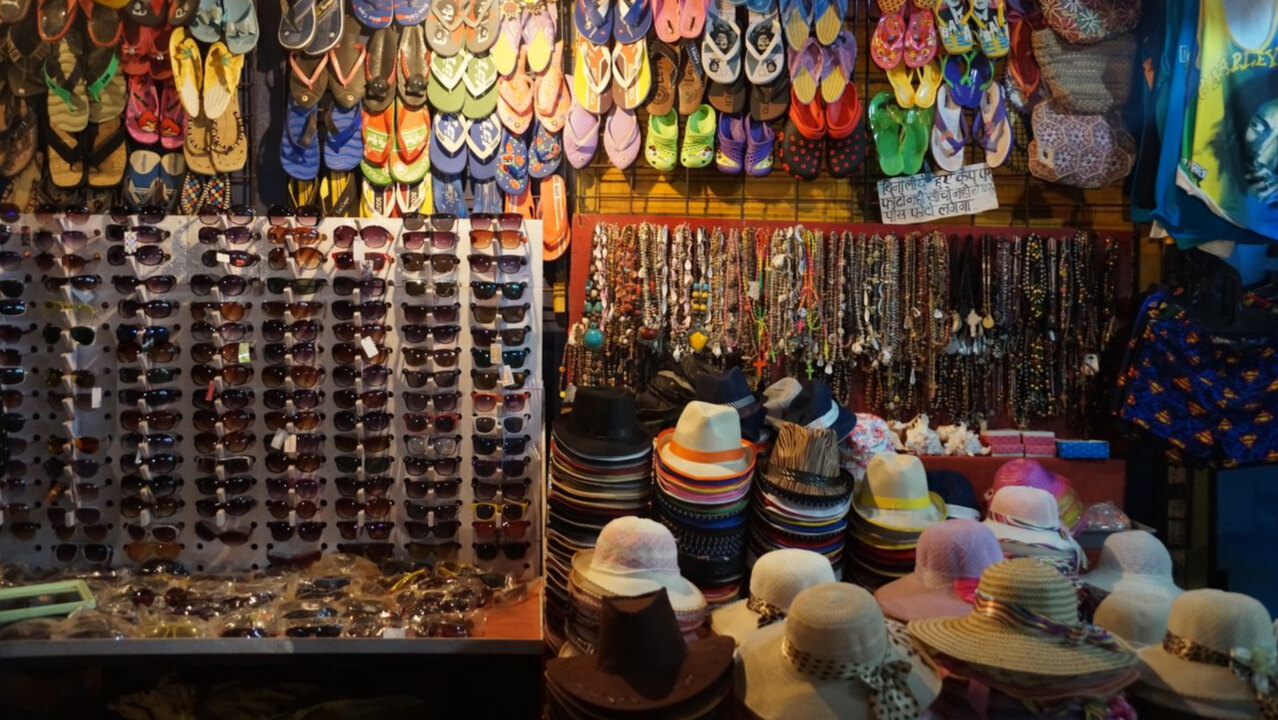
Anybody working out what to buy in Goa is looking for a craft and the register says there is not one. Goa holds fifteen Geographical Indications and not a single one of them is a handicraft, where most Indian states protect craft first. Twelve are agricultural, two are food and one is feni, which is India's first spirit to carry a protected name.
A Geographical Indication ties a product name to a place and a method, and it is a public record you can check after the fact. Gujarat has twenty-one protected handicrafts. Goa has none, so the honest answer to the shopping question here is food, fruit and a bottle. The preparation guide for travelling in India covers the rest of what to settle before you travel.
Fifteen names, in three classes and no fourth. These are the protected ones, and a product not on the list is not protected whatever the shop says.
A bottle of feni, because it is the one thing on the list you cannot buy at home. It is Goa's only manufactured GI, it is India's first spirit to carry one, and national rules keep it inside the state.
If you want something other than a bottle, these are the named options and the places they belong to.
Ask for the registered name in every case, because the name is what the protection attaches to.
Because national rules still treat it as country liquor. The Goa Excise Duty Amendment Bill of 2016 declared feni the heritage spirit of Goa and lifted it out of that category in state law. The category it sits in nationally is what governs sale across state lines.
The practical effect is simple. A bottle bought in Goa cannot lawfully be carried into a neighbouring state in the way an ordinary bottle can, and you will not find it on a shelf in most of India.
Buy it in Goa, drink it in Goa, and check the limits for the state you are driving into before you pack it.
The fruit and the season. Cashew feni is distilled from the juice of the cashew apple and coconut feni from palm sap, and they taste nothing like each other.
Cashew feni is the one that carries the protected name. Coconut feni is older in Goa and does not hold a registration of its own.
Cashew feni is also seasonal in a way that is easy to check. The cashew apple is harvested roughly February to May, the fruit cannot be stored, and the distilling follows the harvest rather than the demand.
Twelve agricultural names, and they are the reason a Goa shopping list reads like a market list. Three are mangoes, two are brinjals and two are chillies.
The mangoes and the cashew apple are seasonal and most of them are a March to May purchase. The chillies, the rice and the cashew kernel travel all year.
In the talukas the names come from, because each registration carries its own place. No single market holds all fifteen.
Our six day slow coastal journey through Goa runs through the coastal talukas where most of this is sold. Journeys Just for You builds the same around your own dates.
Fifteen. Twelve are agricultural, two are food and one, feni, is manufactured. None of the fifteen is a handicraft, which separates Goa from most Indian states.
No. Every registered Goan name is food, farm produce or feni. If you are shopping for a protected craft the way you would in Gujarat or Kashmir, Goa does not have one to sell you.
Not easily. Feni is classified as country liquor under national rules, which is why it is not sold across India and cannot lawfully be carried into a neighbouring state the way an ordinary bottle can. Check the rules for the state you are entering.
No, from the cashew apple, which is the fleshy fruit the nut hangs from. The harvest runs roughly February to May and the fruit cannot be stored, so distilling happens in that window.
A layered Goan sweet made with coconut milk, egg yolk and flour, baked one layer at a time. It is one of Goa's two registered food names, the other being Goan Khaje.