
Let’s help you
plan your journey
Explore responsibly, discover offbeat places, guided by locals, rooted in culture.
Let’s help you
plan your journey
Explore responsibly, discover offbeat places, guided by locals, rooted in culture.
Soumen Bhowmick
Soumen Bhowmick founded Pollen Dots in 2024 to plan journeys across India and Bhutan. He works in the Commercial Department of Indian Railways, where he has been since 2000. From 2016 to 2020 he was Head of Business Development and Partnerships at ScoutMyTrip, a community-driven road trip planning platform. There he built a nationwide network of local Scouts who helped travellers on the road, and grew the Road Trippers Club to 16 Indian cities. As a core member of Devil On Wheels, he helped travellers plan Himalayan trips and started Spreading Smiles. He has driven solo from Arunachal to Goa and from Himachal to Karnataka, and has run his own caravan for more than ten years. His photographs have won national and international salon awards, and his writing has appeared in Outlook Traveller.
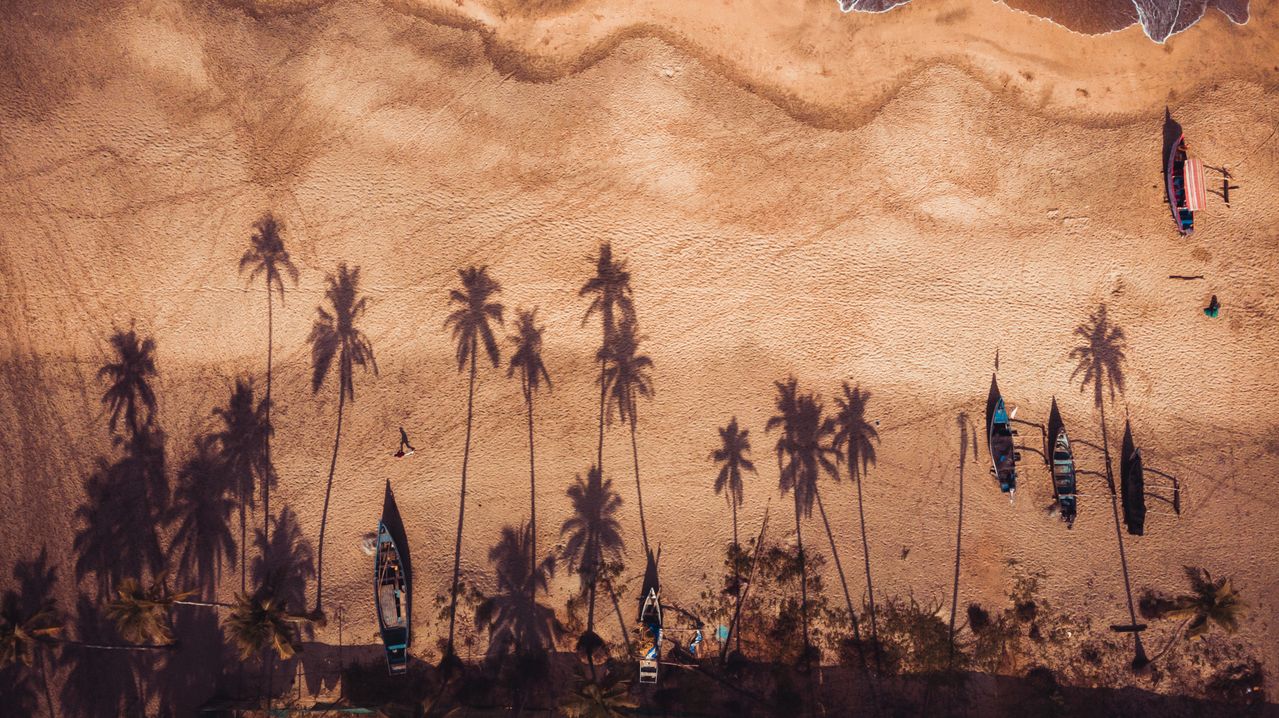
Anybody planning a trip to Goa is handed the same short list of beaches and told that is the state. Goa's own stretch of the Western Ghats was left out of the UNESCO Western Ghats listing, which covers thirty-nine sites across four states and not one of them here. What Goa does hold is one World Heritage property, four sanctuaries on its eastern edge and four protected turtle beaches.
Half the planning problem is that north Goa and south Goa are sold as the same holiday. They are an hour and a half apart on a good day, the coast runs about a hundred kilometres, and the forest sits behind all of it. The wider preparation guide for travelling in India covers the bookings and paperwork that sit above any of this.
November to February, if you want the coast and the forest in the same week. The monsoon runs June to September and it closes more than the beach shacks.
No. There is no entry permit, no liquor permit and no inner line requirement anywhere in the state. The only permissions you need are site permissions, which is a different thing and is the subject of a section further down.
This matters if you are coming from a state where it works otherwise. Gujarat, for one, asks a visitor for an alcohol permit before they drink anything at all. Goa asks for nothing at the border.
Drinking alcohol in an open public place, a beach included, is an offence. The Goa Assembly amended the Goa Tourist Place (Protection and Maintenance) Act on 31 January 2019. It covers drinking, cooking and littering in public places, and it carries imprisonment of up to three months.
The fine attached to it has been quoted differently by the state at different times, so no figure is given here. What is settled is that the offence exists, that it applies on the beach, and that cooking in the open is covered by the same amendment.
Bars, restaurants, shacks and your own room are not public places for this purpose. Carrying a bottle onto the sand is the thing the law is aimed at.
No, and the eastern half of the state is the part most itineraries skip. Four protected areas sit along the Western Ghats edge: Mhadei, Bhagwan Mahavir with Mollem National Park, Netravali and Cotigao.
Bhagwan Mahavir with Mollem is the largest at around 240 square kilometres. Together the four cover roughly 750 square kilometres, which in a state this size is a serious share of the land.
They are also where the twelfth century Mahadev temple at Tambdi Surla stands, and where Dudhsagar falls sits. Neither is a beach and both are an hour or more inland.
One, and it is the Churches and Convents of Goa at Old Goa, inscribed in 1986. It is a serial property of religious buildings in the former Portuguese capital, and the Basilica of Bom Jesus and the Se Cathedral are the two most visited of them.
The Western Ghats property is the one people get wrong. It was inscribed in 2012 as thirty-nine component sites in Kerala, Karnataka, Tamil Nadu and Maharashtra. Goa's sanctuaries were not part of the nomination, so a page calling Mhadei or Mollem a UNESCO site is wrong about which listing it means.
The forest, mostly. The Goa Forest Department suspends the Dudhsagar jeep safari from around mid June until after October, and in 2025 it closed on 10 June. Walking the railway line to the falls is banned by the railways and policed.
Beach shacks are seasonal structures and come down for the monsoon. Water sports stop. The falls themselves are at their heaviest in exactly the months you cannot easily reach them, which is the trade the season forces on you.
Our six day slow coastal journey through Goa is built around that calendar rather than against it. Journeys Just for You does the same for dates of your own.
No. Goa sells alcohol freely and taxes it lightly, which is part of why it is cheap there. What is restricted is where you drink it, because consumption in open public places including beaches was made an offence in 2019.
No. Goa has no visitor liquor permit of the kind Gujarat requires. The restriction in Goa is on public consumption rather than on possession or purchase.
One. The Churches and Convents of Goa at Old Goa, inscribed in 1986. The Western Ghats World Heritage property has thirty-nine component sites and none of them is in Goa.
It depends what you came for. The state is green and empty and cheap, and the waterfalls are full. The jeep safari to Dudhsagar is suspended, the shacks are down and water sports stop, so a monsoon trip is a different holiday rather than a cheaper version of the same one.
The coast runs about a hundred kilometres and the drive between the busy north beaches and the quiet southern ones takes roughly an hour and a half in season. Treating them as interchangeable is the most common planning mistake.
Roughly October to April, which overlaps the peak tourist season almost exactly. Four beaches are notified nesting sites under the Coastal Regulation Zone notification of 2011: Morjim, Ashwem with Mandrem, Agonda and Galgibaga.