
What to Buy in Arunachal Pradesh: Yak Churpi, Monpa Paper and Tribal Weaves

7 minutes read
Tips
Traditions

About the Author

Soumen Bhowmick

Soumen Bhowmick founded Pollen Dots in 2024 to plan journeys across India and Bhutan. He works in the Commercial Department of Indian Railways, where he has been since 2000. From 2016 to 2020 he was Head of Business Development and Partnerships at ScoutMyTrip, a community-driven road trip planning platform. There he built a nationwide network of local Scouts who helped travellers on the road, and grew the Road Trippers Club to 16 Indian cities. As a core member of Devil On Wheels, he helped travellers plan Himalayan trips and started Spreading Smiles. He has driven solo from Arunachal to Goa and from Himachal to Karnataka, and has run his own caravan for more than ten years. His photographs have won national and international salon awards, and his writing has appeared in Outlook Traveller.
Blog Image

Most lists of what to buy in Arunachal Pradesh name the weaves and stop before the food. Arunachal Pradesh Yak Churpi is the first yak milk product in India to carry a Geographical Indication, registered on 3 October 2023 under application 809. Buy the churpi from the Brokpa herders' outlets, buy Khamti rice and Tangsa textile against their own registrations, and buy the weaves and the cane where the maker is named.

Three hill cheeses sit along this stretch of the Himalaya and only one of them is registered. The guide to preparing for travelling in India handles money and documents, and this handles the shopping.

What to buy in Arunachal Pradesh

  • Yak churpi. Fermented yak milk, dried hard, and the one food here with a Geographical Indication of its own.
  • Khamti rice. A sticky rice from Namsai district, registered at the same time as the churpi.
  • Tangsa textile. Woven by the Tangsa sub-tribes, mainly in Changlang district, and registered alongside both.
  • Monpa handmade paper. Made in the Tawang belt from the bark of a local shrub, and revived after nearly dying out.
  • Apatani and Adi weaves. Geometric bands on plain cloth, bought where the weaver is named.
  • Cane and bamboo work. Baskets, hats and containers, made across every district.
  • Wancho and Nocte wood carving. From the Tirap and Longding side.
  • Local honey, millet and oranges. Sold by weight in the valley markets.

Why yak churpi carries India's first yak milk GI

Arunachal Pradesh Yak Churpi was registered as a Geographical Indication on 3 October 2023, under application 809, in class 29. The registration runs to 27 December 2031.

  • Who applied. The ICAR National Research Centre on Yak at Dirang, which is the national institute for the animal.
  • What makes it a first. It is the first yak milk product in India to carry a Geographical Indication.
  • What churpi is. A naturally fermented milk product, dried until hard, and a source of protein that keeps without refrigeration.
  • Where it comes from. The high pastures, where it is prepared at altitude rather than in a dairy.
  • What it is used for. Herding households eat it in place of vegetables, at altitudes where vegetables do not grow.
  • Where to buy it. The herders' outlets around Dirang and the state emporia, rather than a general store.

The Brokpa herders and how churpi is made

The Arunachali yak is reared by tribal pastoralists called Brokpas. The registration exists because of them and the animal they keep.

  • Where they move. Above 10,000 feet in summer and down to mid-altitude in winter, with the herds.
  • Why the altitude matters. The milk, the fermentation and the drying all happen where the yaks are, at altitude, rather than in a dairy lower down.
  • What the hard version is for. It lasts months, which is why it travels and why it is the form sold.
  • How to eat it. Slowly. It softens in the mouth over a long time rather than being chewed.
  • The soft version. Eaten fresh near the pastures and not the one to carry.
  • What the institute does. ICAR's centre at Dirang works with the Brokpas on the breed and on the products made from its milk.

Khamti rice, Tangsa textile and what else is registered

The GI Registry granted tags to yak churpi, Khamti rice and Tangsa textile together, which is the group reported in October 2023.

  • Khamti rice. A sticky rice grown in Namsai district, in the state's southeast.
  • How it is used. Steamed and eaten by hand, and it holds together without the stickiness of a dessert rice.
  • Tangsa textile. Woven mainly in Changlang district, with several Tangsa sub-tribes contributing their own patterns and colour sets.
  • What the registration covers. The place and the community. A copy woven outside the state cannot carry the name.
  • What is not claimed here. A total count of the state's registrations. Published figures differ by date, so this names the ones with dates attached.
  • Where to buy them. The state emporia in Itanagar, the district outlets, and the weavers' co-operatives.

Tribal weaves, cane and wood, and where to buy them

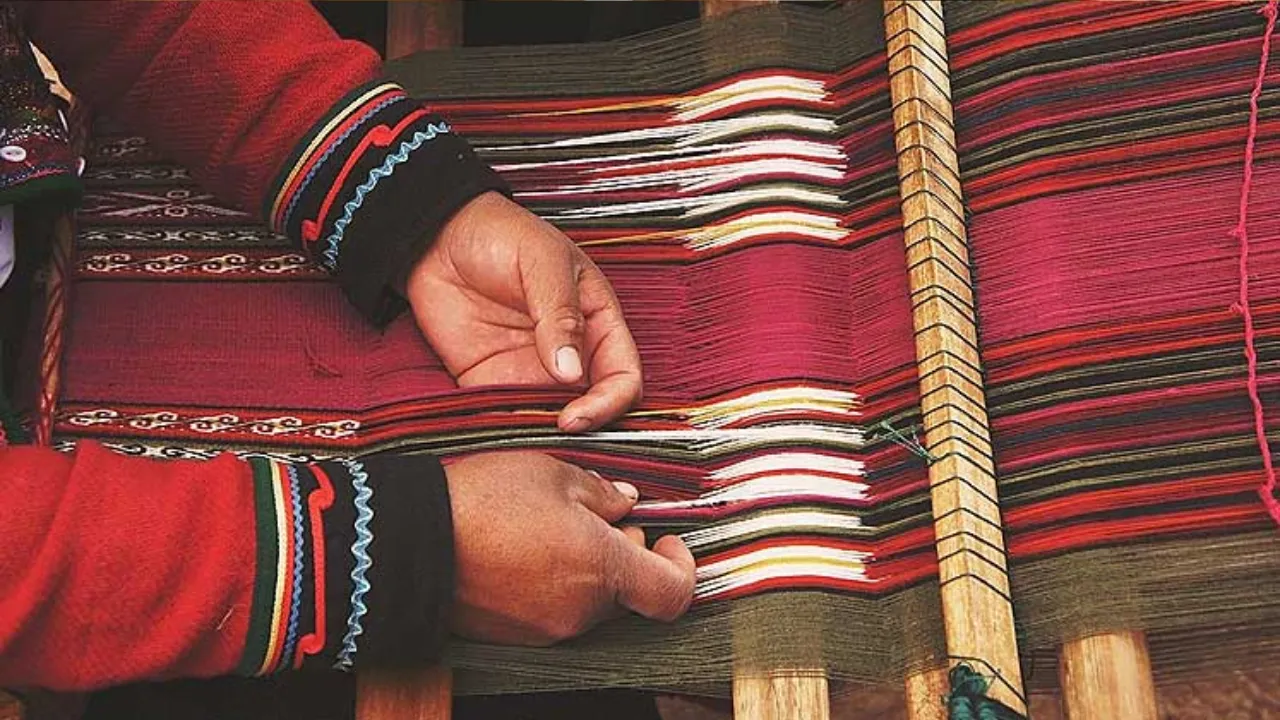
Arunachal holds more than twenty major communities and most of them weave. The pattern is the identification, not the label.

  • Apatani weaves. From the Ziro valley, in narrow geometric bands on a plain ground.
  • Adi weaves. From the Siang belt, heavier, and the ones most often seen as shawls.
  • Monpa weaves and carpets. From the Tawang and West Kameng side, with Tibetan Buddhist motifs.
  • Monpa handmade paper. Made from the bark of a local shrub in the Tawang belt, used for religious texts.
  • Cane and bamboo. Hats, baskets and the cane belts worn across several communities.
  • Wood carving. Wancho and Nocte work from Tirap and Longding.
  • Where to buy. The government emporia and the weavers' co-operatives, where the community and the district are stated. What a region eats and makes is a shorter route into it than what it sells to visitors, which is a longer argument made elsewhere.

What not to buy at a roadside stall

  • Churpi with no source named. The registration exists to answer that question and the seller should be able to.
  • A weave sold as tribal with no community named. More than twenty communities weave here and the pattern says which.
  • Anything made from wildlife. Fur, feathers, bone, claws, horn and ivory are illegal to buy and to carry.
  • Hornbill beaks or feathers. These appear on traditional headgear and buying them is an offence.
  • Antiques. Objects over a hundred years old cannot leave India without clearance from the Archaeological Survey of India.
  • Volume on a pass road. The same goods sit cheaper in the valley towns, with somebody standing behind them.

Buy against a registration where one exists and against a named maker where it does not. Our ten day Northeast India expedition moves at the pace a workshop visit needs. Customised tours is where a herders' outlet or a weavers' co-operative gets built into the route.


Also Read

  1. Things to Know Before Planning a Trip to Arunachal Pradesh
  2. Cultural Places to Visit in India, and What Most People Miss
  3. Indian Destinations Explained Through Regional Food Culture

Frequently Asked Questions

Does yak churpi have a GI tag?

Yes. Arunachal Pradesh Yak Churpi was registered as a Geographical Indication on 3 October 2023, under application 809, in class 29, with the registration running to 27 December 2031. The ICAR National Research Centre on Yak at Dirang applied for it. It is the first yak milk product in India to hold one.

What is churpi and how do you eat it?

A naturally fermented yak milk product, dried until it is hard, which keeps for months without refrigeration. Herding households eat it in place of vegetables. The hard version is eaten slowly and softens in the mouth over a long time. The soft version is eaten fresh near the pastures.

Which Arunachal products are GI registered?

Yak churpi, Khamti rice and Tangsa textile were granted tags together, reported in October 2023. Khamti rice is a sticky rice from Namsai district and Tangsa textile is woven mainly in Changlang. Published totals for the state differ by date, so these are the ones with dates attached.

Who are the Brokpa?

Tribal yak pastoralists who rear the Arunachali yak. They move with their herds above 10,000 feet in summer and down to mid-altitude in winter. The churpi is made where the animals are, at altitude, which is part of what the Geographical Indication records.

What should I buy in Tawang?

Monpa weaves and carpets with Tibetan Buddhist motifs, Monpa handmade paper made from the bark of a local shrub, and yak churpi from the herders' outlets on the Dirang side. Buy from the government emporia or the co-operatives, where the community and the district are stated.


Leaving Pollen Dots You are about to visit the following url Invalid URL

Loading...
Comments


Comment created and will be displayed once approved.