
Let’s help you
plan your journey
Explore responsibly, discover offbeat places, guided by locals, rooted in culture.
Let’s help you
plan your journey
Explore responsibly, discover offbeat places, guided by locals, rooted in culture.
Soumen Bhowmick
Soumen Bhowmick founded Pollen Dots in 2024 to plan journeys across India and Bhutan. He works in the Commercial Department of Indian Railways, where he has been since 2000. From 2016 to 2020 he was Head of Business Development and Partnerships at ScoutMyTrip, a community-driven road trip planning platform. There he built a nationwide network of local Scouts who helped travellers on the road, and grew the Road Trippers Club to 16 Indian cities. As a core member of Devil On Wheels, he helped travellers plan Himalayan trips and started Spreading Smiles. He has driven solo from Arunachal to Goa and from Himachal to Karnataka, and has run his own caravan for more than ten years. His photographs have won national and international salon awards, and his writing has appeared in Outlook Traveller.
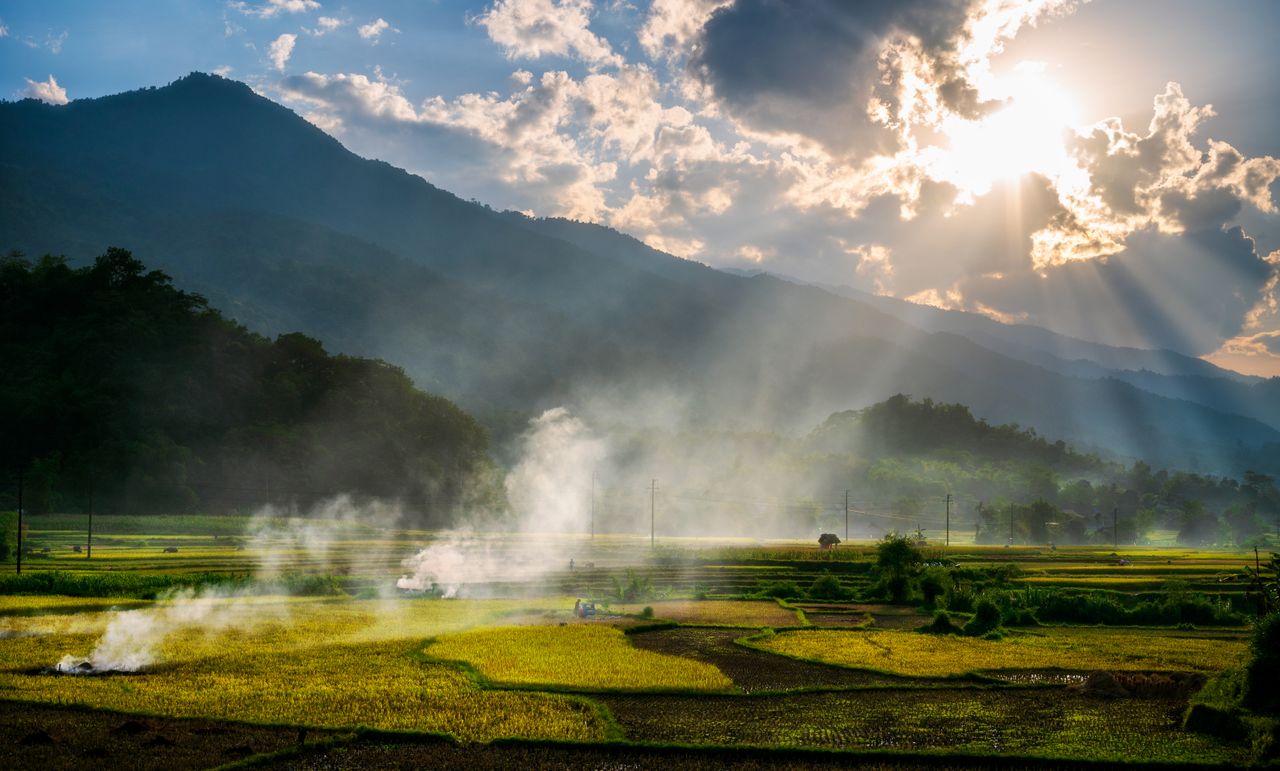
The places to visit in Arunachal Pradesh run from a forest at 200 metres to a pass at 4,200. Namdapha holds the tiger, the leopard, the clouded leopard and the snow leopard, which its own forest department calls probably the only protected area in the world to carry all four. Choose between Namdapha, the Tawang monastery and the Sela crossing, the Apatani valley at Ziro, the Siang belt, and the first sunrise at Dong.
The state is large and the corridors do not connect to each other. Two of these in one trip is the practical limit. The guide to preparing for travelling in India takes the practical questions, and this takes the places.
The Arunachal forest department calls Namdapha probably the only protected area in the world to hold the tiger, the leopard, the clouded leopard and the snow leopard together. It was declared a tiger reserve in 1983, as India's fifteenth.
Tawang Monastery was founded in 1680 by Merak Lama Lodre Gyatso, at the wish of the fifth Dalai Lama. Its Tibetan name, Galden Namgey Lhatse, is given as celestial paradise in a clear night.
The Apatani Cultural Landscape was submitted to UNESCO's tentative list on 15 April 2014, under cultural criteria three and five. It is a living landscape rather than a monument.
The eastern half of the state, where the Siang comes down out of Tibet and becomes the Brahmaputra a little further on.
Dong sits at 1,240 metres in Anjaw district, on the left bank of the Lohit, about 7 km from Walong. It stands at the meeting point of India, Myanmar and China.
The state does not reward a route that tries to cover it. Two corridors in one trip is the limit, and the drives between them are measured in days. Our fourteen day cultural journey through Northeast India runs the Tawang corridor rather than the east. Customised tours is where the permits, the corridor and the driving days get arranged around one another.
Both, and two more. The Arunachal forest department calls it probably the only protected area in the world holding the tiger, the leopard, the clouded leopard and the snow leopard together. It runs from 200 metres to 4,571 metres inside one park, and those four cats between them occupy that whole span.
It was founded in 1680 by Merak Lama Lodre Gyatso, at the wish of the fifth Dalai Lama. Its Tibetan name, Galden Namgey Lhatse, is given as celestial paradise in a clear night. It is described as the largest monastery in India and second in the world after the Potala Palace in Lhasa.
Not yet. The Apatani Cultural Landscape was submitted to UNESCO's tentative list on 15 April 2014, under cultural criteria three and five, and has not been inscribed. The tentative list is a list of proposals, which is a different thing from a World Heritage Site.
Dong, in Anjaw district, at 1,240 metres on the left bank of the Lohit, about 7 km from Walong. Seeing it means starting at around 2 am and walking about three hours to the viewpoint, where the sun appears around 4.30. It is roughly 400 km from Dibrugarh.