
Let’s help you
plan your journey
Explore responsibly, discover offbeat places, guided by locals, rooted in culture.
Let’s help you
plan your journey
Explore responsibly, discover offbeat places, guided by locals, rooted in culture.
Soumen Bhowmick
Soumen Bhowmick founded Pollen Dots in 2024 to plan journeys across India and Bhutan. He works in the Commercial Department of Indian Railways, where he has been since 2000. From 2016 to 2020 he was Head of Business Development and Partnerships at ScoutMyTrip, a community-driven road trip planning platform. There he built a nationwide network of local Scouts who helped travellers on the road, and grew the Road Trippers Club to 16 Indian cities. As a core member of Devil On Wheels, he helped travellers plan Himalayan trips and started Spreading Smiles. He has driven solo from Arunachal to Goa and from Himachal to Karnataka, and has run his own caravan for more than ten years. His photographs have won national and international salon awards, and his writing has appeared in Outlook Traveller.
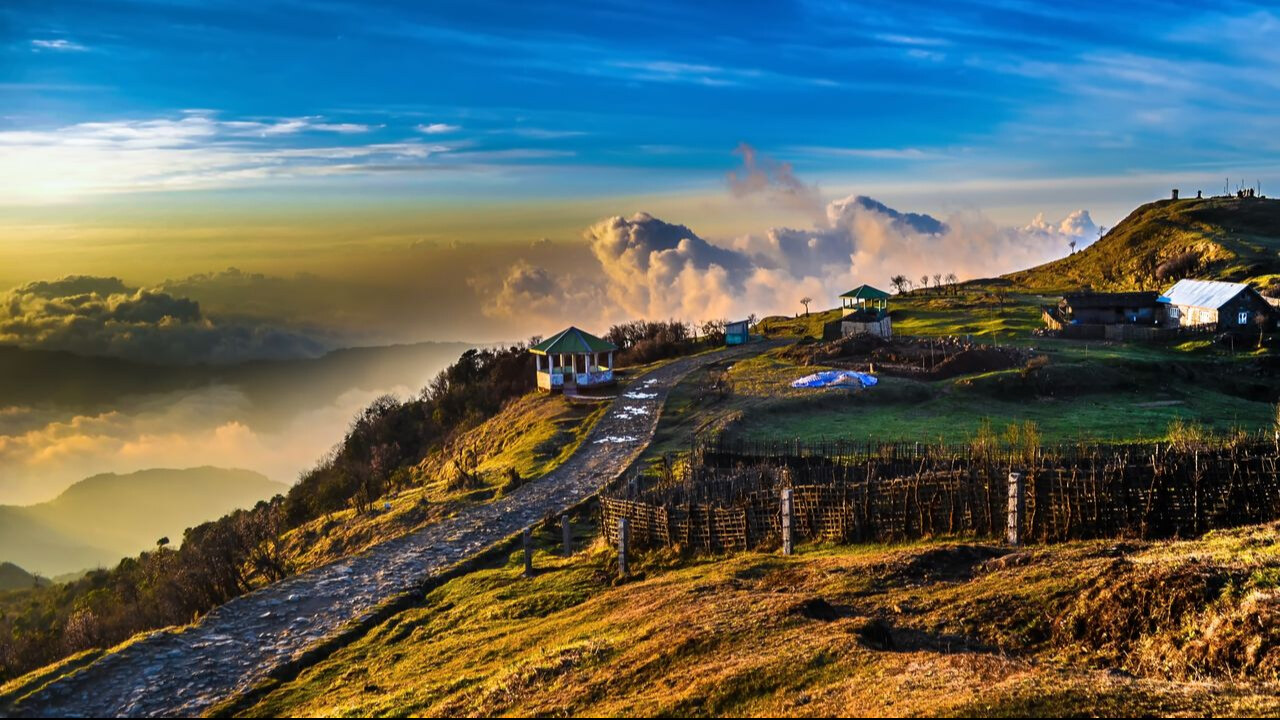
A trip to North Bengal covers a hill station at 2,000 metres and a floodplain forest a few hours below it. The road to Sandakphu is itself the India Nepal border, and some of the lodges on the Singalila trek stand on the Nepal side. Plan around the months when the mountain is visible, the permits Singalila asks for, and the weeks when the parks and the forests close.
Nothing is checked at the state line here and the paperwork is thin. The dates need checking. The Dooars forests and the one national park in the hills each shut for part of the year, and not on the same dates. The guide to preparing for travelling in India covers the general case, and this one covers the closures and the border.
October to early December is the clearest window, with March to May a close second. The monsoon between them is heavy in both the hills and the plains.
Nothing for entering the region, for Indian citizens or foreign nationals. One national park charges an entry permit and requires a guide for trekking.
Two different closure calendars in one region, and neither one is the monsoon dates people assume.
One airport and one major railhead serve the whole region, and both sit within an hour of each other near Siliguri.
The lowest and the highest points in this region are about three and a half kilometres apart vertically and a day apart by road.
Six to eight days covers the hills or the Dooars properly. Covering both takes about ten.
A plan made without the closure dates is the one that comes apart here, because the two halves of the region shut on different calendars and both are decided before you arrive. Our six day cultural journey through Darjeeling and Sikkim runs the tea hills and the monasteries rather than the forests. Customised tours is where the closures, the safaris and the driving days get settled together.
Not to enter the region, and not for Darjeeling, Kalimpong, Kurseong, Mirik, Siliguri, the Dooars or Cooch Behar. Singalila National Park charges an entry permit from the forest range office at Manebhanjang, at Rs 120 for Indian nationals and Rs 500 for others, plus Rs 400 per vehicle.
Yes. A guide is required for trekking through Singalila National Park, including the Sandakphu route, and is not required for a jeep safari. The Highlander Guides and Porters Welfare Association at Manebhanjang provides registered guides and porters.
From 16 June to 15 September each year. When open it runs 7 am to 2 pm daily, and driving inside the park after 2 pm is prohibited. The Dooars forests close for the monsoon on their own dates, usually mid June to mid September.
October to early December for the clearest mountain views, or March to May for warm hill weather. Avoid June to September, when the monsoon brings landslides in the hills and the forests are shut. The Dooars are at their best from November to March.
Bagdogra, which serves the hills, the Dooars, Sikkim and parts of the Northeast. New Jalpaiguri is the main railhead, about an hour away, with Siliguri Junction and Alipurduar on the same network. Most road journeys in the region start from Siliguri.
Six to eight days covers either the hills or the Dooars properly, and about ten covers both. Three days does Darjeeling. Five adds Kalimpong and the Teesta valley. The Dooars need four on their own, and the Sandakphu trek needs five.