
Let’s help you
plan your journey
Explore responsibly, discover offbeat places, guided by locals, rooted in culture.
Let’s help you
plan your journey
Explore responsibly, discover offbeat places, guided by locals, rooted in culture.
Soumen Bhowmick
Soumen Bhowmick founded Pollen Dots in 2024 to plan journeys across India and Bhutan. He works in the Commercial Department of Indian Railways, where he has been since 2000. From 2016 to 2020 he was Head of Business Development and Partnerships at ScoutMyTrip, a community-driven road trip planning platform. There he built a nationwide network of local Scouts who helped travellers on the road, and grew the Road Trippers Club to 16 Indian cities. As a core member of Devil On Wheels, he helped travellers plan Himalayan trips and started Spreading Smiles. He has driven solo from Arunachal to Goa and from Himachal to Karnataka, and has run his own caravan for more than ten years. His photographs have won national and international salon awards, and his writing has appeared in Outlook Traveller.
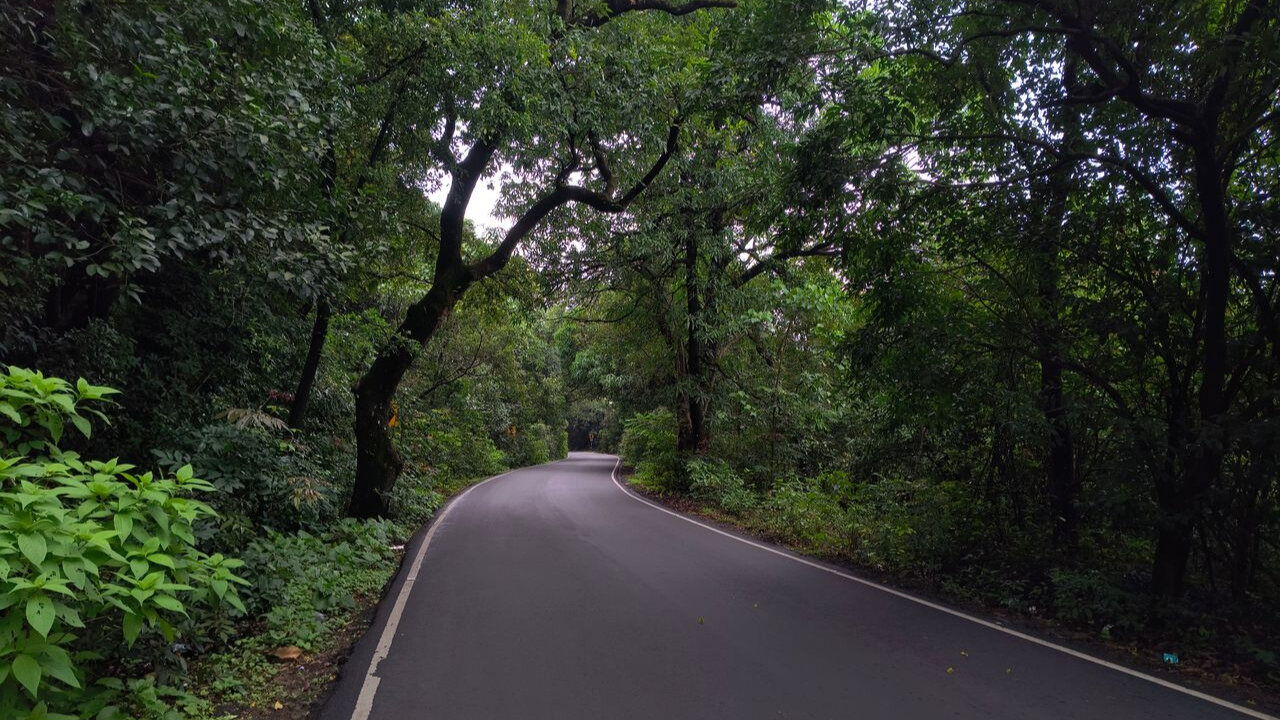
The best places to visit in the Western Ghats are forests and hill ridges rather than towns. The World Heritage site here is not one park but thirty-nine protected forests, put into seven groups and spread over four states. Pick one group of forests, stay in a town nearby for a few days, and walk out from there each morning.
The hills run for about sixteen hundred kilometres, so no single trip covers them. A short guide to getting ready for a trip in India covers the permits and bookings that decide how much you can fit in.
Thirty-nine forests, grouped into seven sets. The group matters more than the town, because the permits and rules follow the forest.
The groups in the north are easiest to reach from Pune. The ones in the south are easiest from Kochi or Coimbatore.
A peak of 1,894 metres, long grass ridges and thick forest below them. It is the second highest peak in Karnataka after Mullayanagiri, which is 1,925 metres.
The walk is about twenty kilometres there and back from the forest gate. Most people start at first light and finish by late afternoon. The Karnataka forest department gives the permits, only a set number each day, and a guide walks with every group of about ten.
The park shuts from about mid June to the end of September. You cannot stay the night inside, even with your own tent.
Because it sits right on the edge of the hills, where the wet sea wind hits the slope and has to rise. Agumbe gets about 7,620 millimetres of rain a year.
The British put a rain gauge there in 1882, and for a long time it was the wettest place in Karnataka. In 2022 and 2023 two other places recorded more rain than Agumbe did.
It is still one of the wettest villages in India. It is rainforest, it is full of snakes and frogs, and it rains there when it is dry almost everywhere else.
Four protected areas in the north of the range, and the flower season on Kas Plateau is the best known of them.
These four get far fewer visitors than the hills further south. They are also the easiest part of the range to reach from Pune or Kolhapur.
Kas Plateau limits how many people can enter each day during the flower season. Tickets are booked online before you go.
Coffee country, and the hills above it. Madikeri is the usual base.
Pushpagiri peak is about 1,712 metres. You need forest department permission to walk it, and the trail is shut from June to September. The walk starts from a forest post near Bhattramane.
Talacauvery is where the river Kaveri starts, and people come to pray there as well as to look. Brahmagiri sits on the line between Karnataka and Kerala.
Most estates in Kodagu take guests. Staying on one is the easiest way to see how coffee is grown, dried and sorted.
Roads and viewpoints stay open. Hill treks mostly do not.
Our seven day journey through coastal Karnataka and the Western Ghats is built around that calendar. Journeys Just for You does the same on your own dates.
It was for a long time. In 2022 and 2023 two other places in the state recorded more rain. Agumbe still gets about 7,620 millimetres a year, which keeps it among the wettest villages in India.
Yes, from the Karnataka forest department. Only a set number of permits are given each day and weekend slots go early. A guide walks with every group of about ten. The park shuts from about mid June to the end of September.
Four. Kas Plateau, Koyna Wildlife Sanctuary, Chandoli National Park and Radhanagari Wildlife Sanctuary. They form the northern end of the World Heritage site.
Anamudi in Kerala, at 2,695 metres. It is the highest peak in India south of the Himalayas. In Karnataka the highest is Mullayanagiri at 1,925 metres, and Kudremukh is next at 1,894 metres.