
Let’s help you
plan your journey
Explore responsibly, discover offbeat places, guided by locals, rooted in culture.
Let’s help you
plan your journey
Explore responsibly, discover offbeat places, guided by locals, rooted in culture.
Soumen Bhowmick
Soumen Bhowmick founded Pollen Dots in 2024 to plan journeys across India and Bhutan. He works in the Commercial Department of Indian Railways, where he has been since 2000. From 2016 to 2020 he was Head of Business Development and Partnerships at ScoutMyTrip, a community-driven road trip planning platform. There he built a nationwide network of local Scouts who helped travellers on the road, and grew the Road Trippers Club to 16 Indian cities. As a core member of Devil On Wheels, he helped travellers plan Himalayan trips and started Spreading Smiles. He has driven solo from Arunachal to Goa and from Himachal to Karnataka, and has run his own caravan for more than ten years. His photographs have won national and international salon awards, and his writing has appeared in Outlook Traveller.
The places to visit in Odisha are spread along a coast and a line of hills, and the drives between them are long. The hall still standing at Konark has been packed with river sand since 1903, nearly twenty metres of it, and the Archaeological Survey only began taking that sand out in 2022. Temple towns, Buddhist hills, a lagoon and two forests sit in four different corners, so the order of a trip follows the map.
The eastern side holds Bhubaneswar, Puri and Konark. The lagoon is an hour or two south of Puri. The Buddhist sites are north of Cuttack. The mangroves are further north again, on the delta, and the forests and hills are in the far north and the far south. Nothing here is close to everything else.
Three temple towns, three protected areas and one group of Buddhist hills carry the state. Bhubaneswar, Puri and Konark stand within seventy kilometres of each other on the coastal side.
| Place | District | Known for |
|---|---|---|
| Bhubaneswar | Khordha | Old temples, Udayagiri and Khandagiri caves, Dhauli |
| Puri | Puri | Jagannath temple, the beach, Raghurajpur |
| Konark | Puri | The Sun Temple |
| Chilika | Puri, Khordha, Ganjam | Dolphins, birds, Asia's largest brackish lagoon |
| Ratnagiri, Lalitgiri, Udayagiri | Jajpur and Cuttack | Buddhist monasteries |
| Bhitarkanika | Kendrapara | Mangroves and saltwater crocodiles |
| Similipal | Mayurbhanj | Tigers, elephants, Barehipani falls |
Dhauli sits just outside Bhubaneswar on the Daya river, and it holds Ashoka's rock edicts. The set there is incomplete on purpose. Edicts eleven, twelve and thirteen are missing, and thirteen is the one that describes the Kalinga war and the remorse that followed it. Two Separate Kalinga Edicts were cut in their place. Ashoka published his confession across the empire and left it out of the country it was about.
The assembly hall, the platform, the wheels and the carvings. The tower over the sanctum fell long ago, so what people photograph today is the hall in front of it.
Konark was built in the thirteenth century as a chariot for the sun god, with twenty four carved stone wheels, twelve on each side, and horses at the front. Sailors on this coast knew it as the Black Pagoda. UNESCO put it on the World Heritage List in 1984.
The hall is hollow in name only. British engineers filled it with river sand in 1903 and sealed the doors, to stop it collapsing like the tower. The sand stands about 19.8 metres deep inside and has since settled by about 5.8 metres, so it now presses on the walls instead of holding them up. The Archaeological Survey began removing it in 2022, more than a century later, and the work goes on while visitors walk the site.
Ratnagiri, Lalitgiri and Udayagiri, on three hills in Jajpur and Cuttack districts. They lie within about twenty five kilometres of each other and about a hundred kilometres from Bhubaneswar.
Lalitgiri is the oldest and the one that gave up a relic. Excavation at the stupa on the hill found stone caskets, a silver casket inside them, a gold casket inside that, and a fragment of bone inside the gold. None of the caskets carries an inscription, so the bone is attributed to the Buddha or to one of his disciples and the question is still open. A site museum on the hill holds them.
Ratnagiri is the best preserved of the three and digging there has turned up colossal Buddha heads in recent years. Udayagiri is the largest of the three.
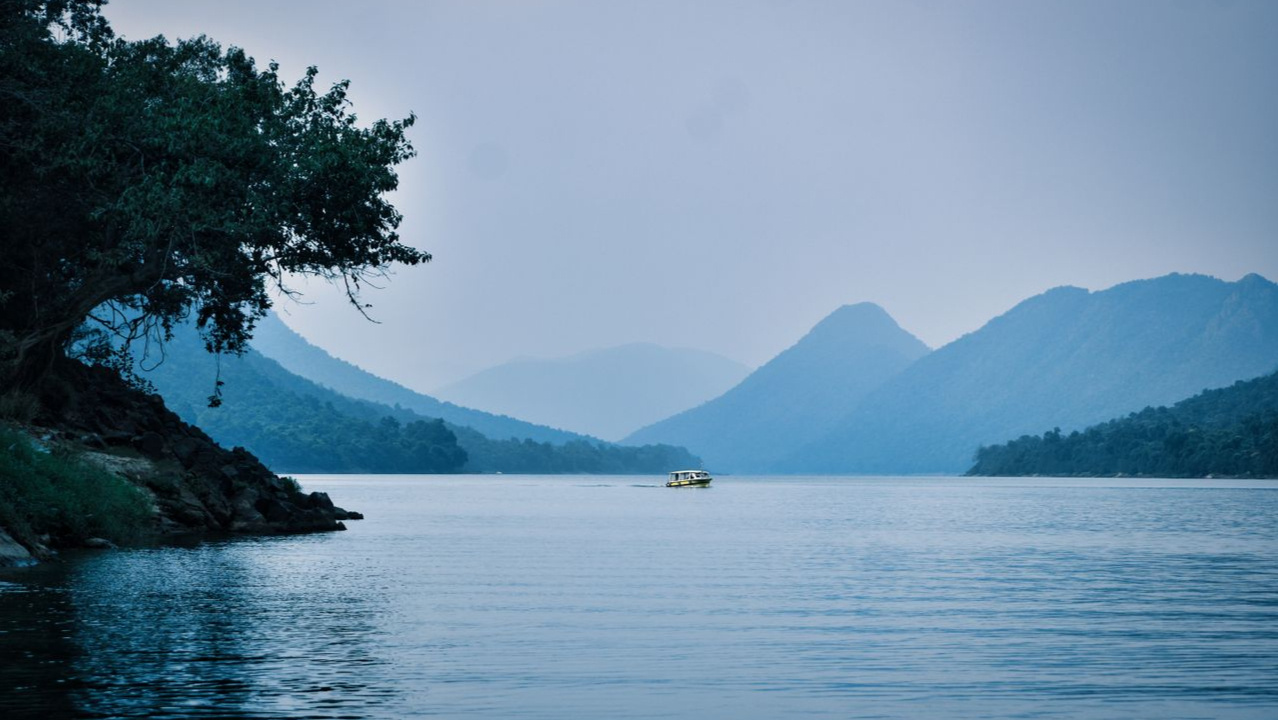
Dolphins, birds and a sea mouth. Chilika is the largest brackish water lagoon in Asia and the first Indian wetland listed under the Ramsar Convention, on 1 October 1981.
Boats for dolphins run from Satapada, about fifty kilometres from Puri. The animals are Irrawaddy dolphins, and the claim that they live in only one or two places on earth is wrong. They live along the coasts of South and Southeast Asia and in the Ayeyarwady, Mekong and Mahakam rivers. What Chilika holds is the largest population of them in any single lagoon in the world, counted at about a hundred and fifty in recent surveys.
Birds are a separate trip. Nalabana, an island of about sixteen square kilometres in the middle of the lagoon, was declared a bird sanctuary in 1987 and goes under water during the monsoon. Visitors are not allowed to land on it, so the birds are watched from the boat, and most birding boats leave from Barkul or from Mangalajodi on the northern edge. Winter is the season for both.
Chilika also went on to the Montreux Record in 1993, the Ramsar list of wetlands in trouble, after its mouth silted up. A new sea mouth was cut and the lagoon came off that list in November 2002.
At Bhitarkanika and at Similipal, and both are in the northern half of the state. Neither is open all year.
Bhitarkanika is the second largest mangrove forest in India after the Sundarbans, and it is seen from a boat through the creeks. The crocodile here is the saltwater crocodile, the largest reptile alive. Guinness World Records documented a seven metre animal from this park in 2006 as the largest ever recorded. The population was down to about ninety five in 1975 when the crocodile project began. The park closes from 1 May to 31 July for nesting.
Similipal is in Mayurbhanj, in the far north, and the plateau forest it belongs to carries on west into Jharkhand. It is the only place in the world where black tigers live in the wild. The coat is pseudo-melanistic, which means the stripes have widened and run together, and genetic work has found the mutation in wild tigers nowhere else. Barehipani falls, inside the reserve, drops 399 metres in two tiers and is the highest in the state.
Deomali, Daringbadi, Hirakud and Chandipur, in that order of distance from the coast. These are long drives and each one is a day.
Deomali in Koraput is the highest point in Odisha at 1,672 metres, with a road to the top. Daringbadi in Kandhamal is the hill station of the south and gets cold at night in December and January. Hirakud, near Sambalpur in the west, is the longest earthen dam in the world, measuring 25.8 kilometres with its dykes, and it holds back the Mahanadi.
Chandipur, sixteen kilometres from Balasore in the north, is the odd one. The sea there goes out up to five kilometres twice a day at low tide and comes back on the next one. People walk out on to the bed in between.
Our guide to getting ready for a trip in India covers the paperwork and the planning for drives of this length. If your dates land inside the Bhitarkanika or Similipal closure, the hills and the temple towns can carry the trip instead. We rebuild routes that way on Journeys, Just for You. Our ten day journey through the sacred coast and tribal heartland of Odisha takes the coast and the southern districts in one run.
Bhubaneswar, Puri and Konark stand within seventy kilometres of each other and hold the old temples and the Sun Temple. Chilika lagoon is an hour or two south of Puri. The Buddhist hills at Ratnagiri, Lalitgiri and Udayagiri are about a hundred kilometres north of Bhubaneswar.
British engineers filled the assembly hall with river sand in 1903 and sealed it, to stop it collapsing as the main tower had. The sand stands about 19.8 metres deep and has settled by about 5.8 metres, so it presses on the walls. The Archaeological Survey began removing it in 2022.
Boats run from Satapada, about fifty kilometres from Puri. The dolphins are Irrawaddy dolphins and Chilika holds the largest population of them in any lagoon in the world. Mornings in winter give the best conditions on the water.
Only at Similipal Tiger Reserve in Mayurbhanj district, Odisha. The coat is pseudo-melanistic, which means the stripes have widened and merged. Genetic work across the whole range of the species has found the mutation in wild tigers nowhere else.