
Let’s help you
plan your journey
Explore responsibly, discover offbeat places, guided by locals, rooted in culture.
Let’s help you
plan your journey
Explore responsibly, discover offbeat places, guided by locals, rooted in culture.
Soumen Bhowmick
Soumen Bhowmick founded Pollen Dots in 2024 to plan journeys across India and Bhutan. He works in the Commercial Department of Indian Railways, where he has been since 2000. From 2016 to 2020 he was Head of Business Development and Partnerships at ScoutMyTrip, a community-driven road trip planning platform. There he built a nationwide network of local Scouts who helped travellers on the road, and grew the Road Trippers Club to 16 Indian cities. As a core member of Devil On Wheels, he helped travellers plan Himalayan trips and started Spreading Smiles. He has driven solo from Arunachal to Goa and from Himachal to Karnataka, and has run his own caravan for more than ten years. His photographs have won national and international salon awards, and his writing has appeared in Outlook Traveller.
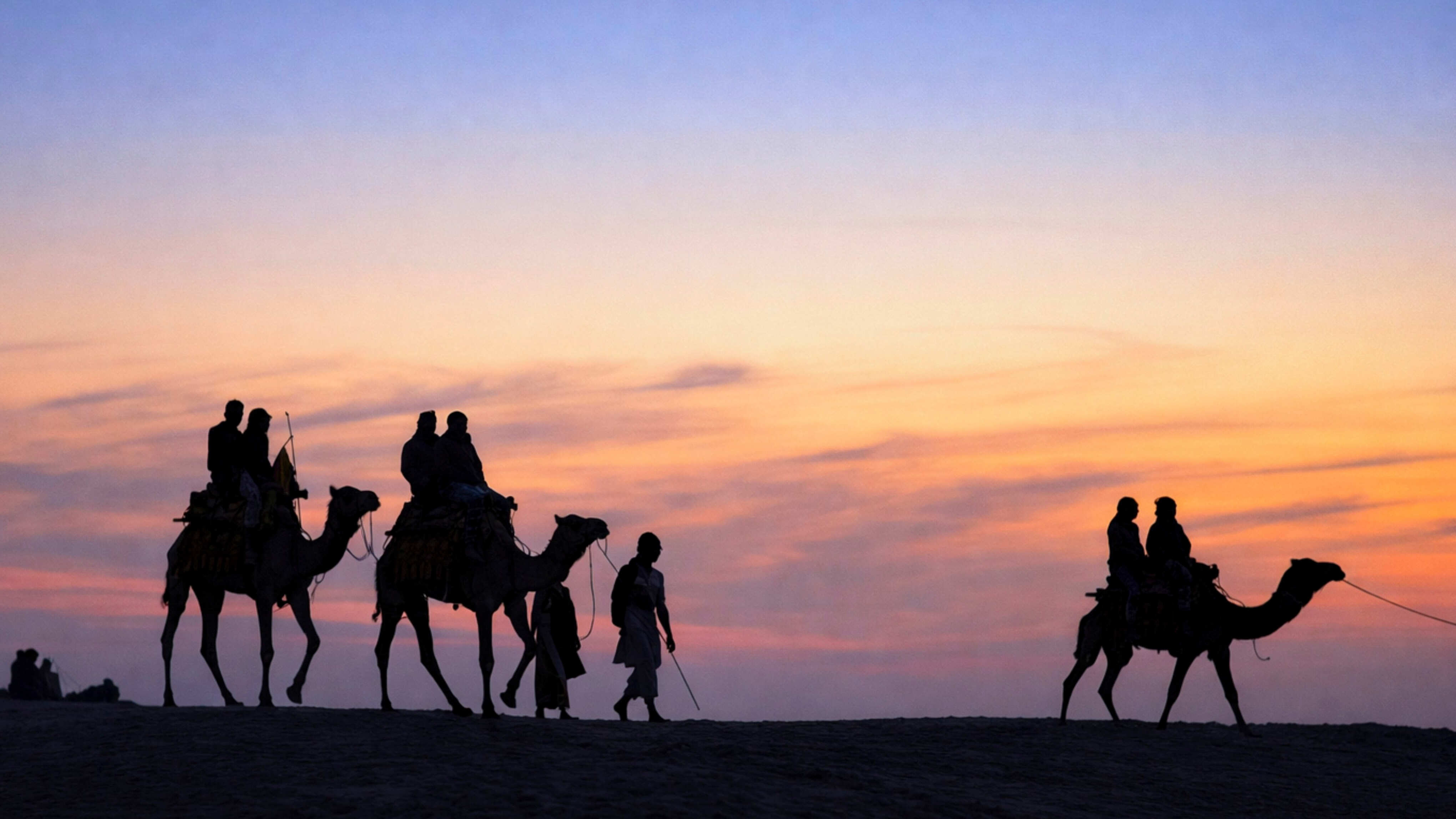
Desert nights are the part of a trip to Rajasthan that people pack wrong, because day and night sit about fifteen degrees apart in every season. Jaisalmer has recorded minus 5.9 degrees, in a desert most itineraries treat as a heat problem and nothing else. Settle the season, the nights, the driving and the permits, and how long you need follows from them.
Everything here assumes arrival from inside India, which is how almost everyone comes. The guide to preparing for travelling in India carries the general version, and Rajasthan adds heat and distance to it.
October to March, and the rest of the year for people who can work around heat. The season is set by the daytime temperature rather than by rain.
The rain is not the reason to avoid the monsoon. The reason is that it is still hot, and the desert gets a fraction of what the rest of India gets.
Cold enough for a proper jacket from December to February, and the swing between day and night barely changes across the year. That is the thing most itineraries get wrong.
A desert that is hot by day and cold by night is not a surprise. The surprise is that the gap is the same size in May as it is in January, so the layers come off and go on at the same hours whichever month you travel.
Indian citizens need nothing. Some border areas are restricted for foreign nationals, and the instrument says so in its own name.
By road for the circuit and by train between the big cities. The distances are the thing to plan around, not the roads, which are good.
The heat is manageable with a schedule and dangerous without one. From April the useful hours are before eleven and after five.
Seven days for the main circuit, ten to add the desert properly, and under five is two cities rather than a state.
Rajasthan rewards fewer stops than most itineraries give it, because the driving between them is long and the forts take longer than people allow. Our eleven day cultural, desert and wildlife journey through Rajasthan is built around that arithmetic. Customised tours is where the season, the nights and the distances get settled together.
October to March. November and February give warm days and comfortable nights, December and January give the clearest light and the coldest nights, and both are peak season. April to June runs into the forties by day and the monsoon from July is hot rather than wet.
Yes, and more than most people expect. Winter mean lows in the west run roughly 7 to 11 degrees and the record low is minus 5.9. A desert camp at night is colder than the towns, because there is nothing holding the day's heat.
Indian citizens need no permit anywhere in the state. Parts of the western border belt are restricted for foreign nationals under the Foreigners (Protected Areas) Order and the Foreigners (Restricted Areas) Order. The list is revised, so a foreign national should check the current one rather than rely on a travel article.
Seven days covers Jaipur, Jodhpur and Udaipur at a reasonable pace. Ten adds Jaisalmer and a night in the desert, which is the reason to go west at all. Under four days is one city done properly, which beats a loop done badly.
It can be, and not for the rain. The west gets about 242 millimetres across four months, so the monsoon brings humidity and green rather than downpours. The heat does not leave until late September, which is the real reason the season starts in October.
With a schedule, yes. Daytime highs run into the forties from April, so the useful hours are before eleven and after five, with two to three litres of water a day. Summer is the wrong season for small children and older travellers, and shifting the trip is better than shifting the hours.