
Let’s help you
plan your journey
Explore responsibly, discover offbeat places, guided by locals, rooted in culture.
Let’s help you
plan your journey
Explore responsibly, discover offbeat places, guided by locals, rooted in culture.
Soumen Bhowmick
Soumen Bhowmick founded Pollen Dots in 2024 to plan journeys across India and Bhutan. He works in the Commercial Department of Indian Railways, where he has been since 2000. From 2016 to 2020 he was Head of Business Development and Partnerships at ScoutMyTrip, a community-driven road trip planning platform. There he built a nationwide network of local Scouts who helped travellers on the road, and grew the Road Trippers Club to 16 Indian cities. As a core member of Devil On Wheels, he helped travellers plan Himalayan trips and started Spreading Smiles. He has driven solo from Arunachal to Goa and from Himachal to Karnataka, and has run his own caravan for more than ten years. His photographs have won national and international salon awards, and his writing has appeared in Outlook Traveller.
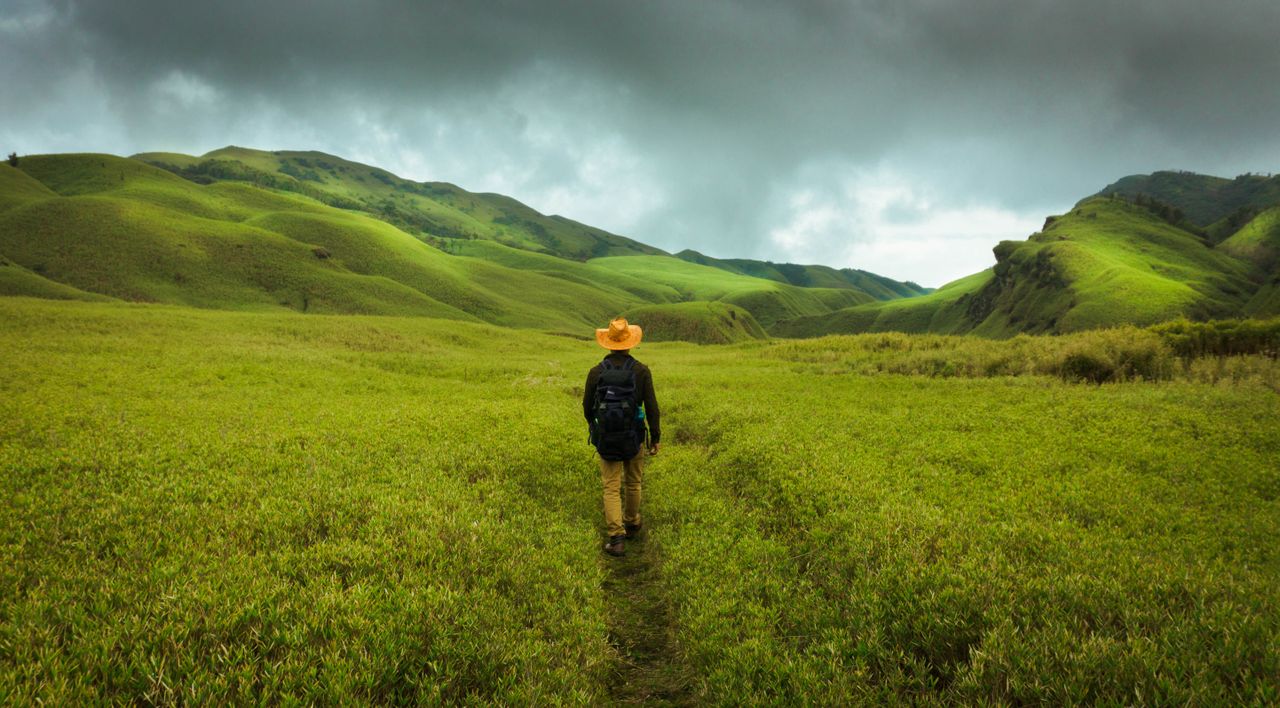
A packing list for Nagaland is built around cold mornings and mild afternoons, because the plains and the hills sit close together here. Dimapur is on the flat at under 200 metres, and Kohima is about 1,450 metres higher and 74 kilometres away. Carry the permit printout, one warm layer, shoes that cope with wet ground, and cash, and most of the list is done.
Nagaland is a hill state with one low corner. The difference between Dimapur and Kohima is felt on the same day, and the villages further east sit higher and colder still. December is the coldest month in the hills and the one that needs the most layers.
Layers, a rain shell, boots and paperwork. The paperwork is the part people forget, and without it the trip does not start.
| Item | Why |
|---|---|
| Inner Line Permit printout | Checked on arrival and at points inside the state |
| Original photo ID and photocopies | Asked for alongside the permit |
| Fleece or warm jacket | Kohima nights in December and January |
| Cotton and light layers | Dimapur and the daytime hours |
| Waterproof shell | Rain outside the dry months, and mountain weather inside them |
| Walking shoes with grip | Village lanes, forest paths and Dzukou |
| Cash | ATMs thin out east of Kohima |
| Torch and power bank | Power cuts and unlit village roads |
Layers you can take off by noon. Kohima mornings in December are cold, the afternoons are mild in the sun, and the evenings drop again.
A thermal base layer, a fleece and a windproof outer jacket cover it. A cap and gloves earn their space for early starts, and the open ground at Kisama holds the cold longer than the town does. The festival runs outdoors from morning to night.
Dimapur does not need any of this. It is a plains town and it stays warm while Kohima is cold. That matters if you are staying down there and driving up each day.
Warm clothes you can sit in for hours, cash, and a small bag. The festival runs on open ground at Kisama and the days are long.
Carry cash for the craft stalls and the food stalls. Card machines and signal are both patchy on the ground. A folding umbrella or a light poncho is sensible even in December. Comfortable shoes matter more than anything else, because the site is spread out and you will be standing.
For photography, bring a fully charged spare battery rather than a bigger lens. There is nowhere to charge on site and the days run from morning into the night carnival.
Proper shoes, water, and a layer more than you think. The Dzukou trek starts from Viswema or Jakhama, both about twenty to twenty five kilometres from Kohima, and it is a climb rather than a walk.
The valley flowers between June and September, which is also the monsoon, so the ground is wet in the season people most want to see it. Outside those months it is dry and cold. Take water, something to eat, and a torch, and start early enough to come down in daylight.
Khonoma and the other village walks are gentler but still steep in places. Our packing list for Meghalaya covers wet hill walking in more detail and much of it applies here.
The permit, original photo identity, photocopies of both, and cash. This is the part of the list that cannot be bought locally if you forget it.
Keep a printed copy of the Inner Line Permit as well as the one on your phone, because signal fails and checkposts do not wait. Foreign nationals carry their Protected Area Permit on the same terms. Carry enough cash for several days once you leave Kohima and Dimapur, since ATMs are few and often empty in the eastern districts. Our guide to getting ready for a trip in India sets out the documents that travel with you anywhere in the country.
Warm layers for a cold morning and a mild afternoon, comfortable shoes, and cash for the stalls. The festival runs outdoors at Kisama from morning into the night carnival. Carry a spare camera battery, because there is nowhere to charge on site.
Cold in the morning and at night, and mild in the afternoon sun. A thermal layer, a fleece and a windproof jacket are enough, with a cap and gloves for early starts. Dimapur, on the plains 74 kilometres away, stays warm on the same days.
Your Inner Line Permit, original photo identity and photocopies of both. Carry a printed permit as well as a copy on your phone, because signal is unreliable. Foreign nationals carry a Protected Area Permit instead of the Inner Line Permit.
Yes. The trek starts from Viswema or Jakhama, about twenty to twenty five kilometres from Kohima, and it climbs. Carry water, food and a torch, and start early enough to be back down in daylight.