
Let’s help you
plan your journey
Explore responsibly, discover offbeat places, guided by locals, rooted in culture.
Let’s help you
plan your journey
Explore responsibly, discover offbeat places, guided by locals, rooted in culture.
Soumen Bhowmick
Soumen Bhowmick founded Pollen Dots in 2024 to plan journeys across India and Bhutan. He works in the Commercial Department of Indian Railways, where he has been since 2000. From 2016 to 2020 he was Head of Business Development and Partnerships at ScoutMyTrip, a community-driven road trip planning platform. There he built a nationwide network of local Scouts who helped travellers on the road, and grew the Road Trippers Club to 16 Indian cities. As a core member of Devil On Wheels, he helped travellers plan Himalayan trips and started Spreading Smiles. He has driven solo from Arunachal to Goa and from Himachal to Karnataka, and has run his own caravan for more than ten years. His photographs have won national and international salon awards, and his writing has appeared in Outlook Traveller.
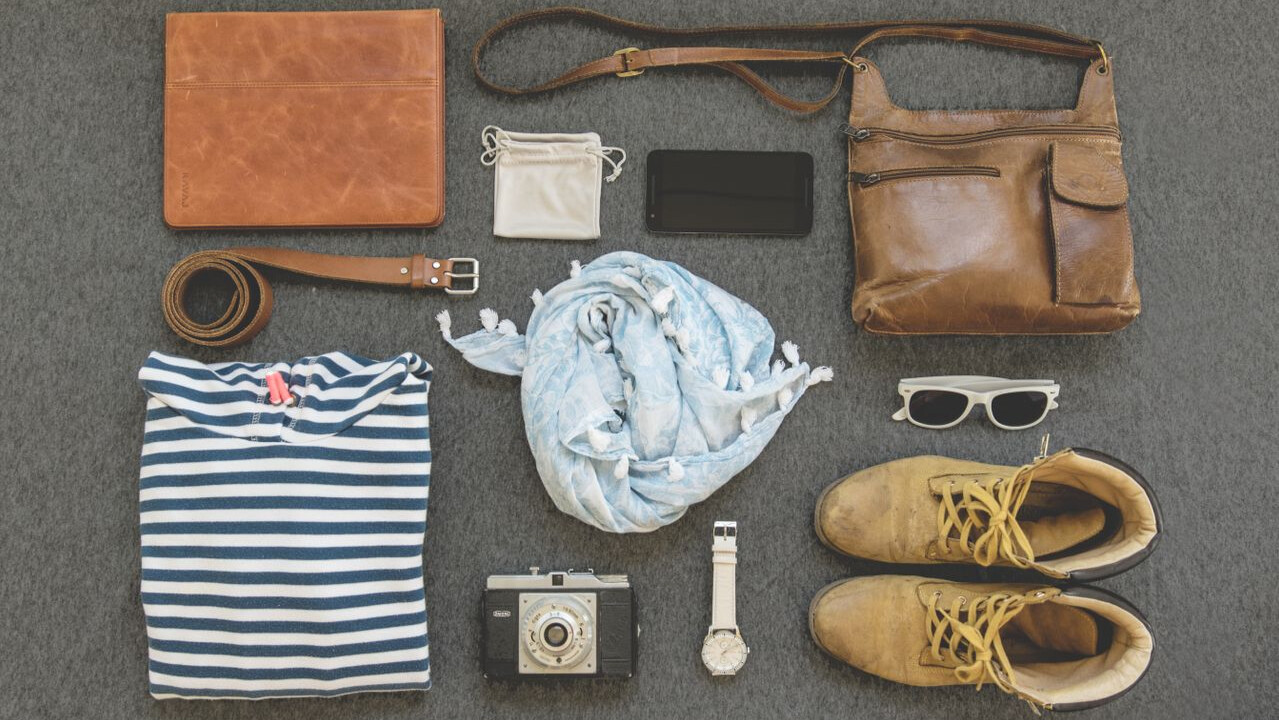
A packing list for Gujarat has to cover a salt desert, a lion forest and a coast in the same suitcase. The Rann carries one of the highest annual evaporation rates in its region, so a day on the white crust takes more water and more eye cover than the temperature suggests. Gir runs on booked safari slots between 16 October and 15 June, and the monsoon changes everything.
Three things set this list apart from a generic India list. The Rann is a reflective surface with almost no shade. Gir is a permit-only park with fixed morning and evening slots. And Gujarat is a dry state, which makes one item in a normal suitcase a prohibited one. The broader preparation guide for travelling in India handles the paperwork, offline maps and bookings that sit above packing.
November to March is the main season, and the packing splits between dry heat by day and open desert at night. Layers do the work, because the Rann has nothing to hold warmth once the sun goes.
Shade and water, in that order, because there is no shelter out there and the surface throws light back at you. The Rann is not sand. It is a hard saline crust with standing residue in places, and it marks footwear.
Bring warm clothing even when the day was hot. The evenings at Dhordo drop away quickly once the light goes.
Muted colours, long sleeves and closed shoes, with everything ready before the slot rather than after. Safari access is by permit booked online at girlion.gujarat.gov.in, and the vehicle leaves on its time.
Leave the drone at home. Gir is a national park and there is no version of this where flying one is allowed.
Almost all of it, and two of the main sights are simply not available. Gir is closed from 16 June to 15 October, and the Arabian Sea floods the Rann through the same months, so the white desert is under water.
What the monsoon does offer is the wetland. The flooded Rann draws birds and the grass comes back across Saurashtra, so a monsoon trip to Gujarat is a wildlife and landscape trip rather than a desert one.
Alcohol, unless you hold a permit. Gujarat is a dry state and carrying your own is the single most common packing mistake a first-time visitor makes.
The permit is applied for online at eps.gujarat.gov.in. A visitor from outside India pays nothing and a visitor from another Indian state pays 100 rupees. It asks for residence and age proof from outside Gujarat, travel proof dated within four days of arrival, and a temporary Gujarat address, which a hotel stay certificate covers. An Aadhaar card is not accepted as proof.
Also leave out the drone, for Gir and for the border areas in Kutch. A separate permit covers entry to the White Rann. The whole northern belt of Kutch sits close to an international border, where a camera in the air is a different matter from a camera in the hand. Our eleven day journey from Kutch to central Gujarat carries the permits and the safari bookings, which takes four of these items off the list. Journeys Just for You does the same for dates of your own.
Yes, between November and March. The days are dry and bright and the nights on the open salt flat lose heat fast, because there is nothing out there to hold it. A fleece or a light jacket is enough for most people, and it matters most on the full moon nights when visitors stay out late.
Without a permit, yes. Gujarat is a dry state and the permit is the legal route, applied for online at eps.gujarat.gov.in before or soon after you arrive. The travel proof you upload has to be dated within four days of arrival, so this is not something to leave for the end of the trip.
Closed shoes with a sole you do not mind salting. The crust is hard and uneven rather than soft, and the residue gets into fabric and stays there. Carry a bag to put them in afterwards and a second pair for the rest of the day.
Covered shoulders and legs, and shoes left outside, which is the ordinary expectation at active temples across the state. A light cotton stole in the day bag handles it without a second outfit. The same cloth is useful on the Rann, where dust and sun both arrive at once.